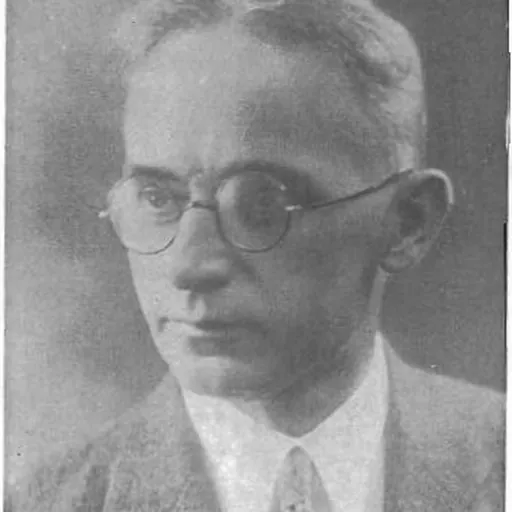
John Abner Snell
American missionary surgeon and hospital administrator in China
About John Abner Snell
Lived 1880 – 1936 (aged 55). John Abner Snell was a surgeon and missionary.
John Abner Snell (28 October 1880 – 2 March 1936), also known as Soo E. Sang, was an American missionary, surgeon, and hospital administrator in Suzhou (Soochow), China. Snell was a devout Christian, and as early as age 14 he stated: "I aim to devote myself to God's service." After graduating from Vanderbilt Medical College in 1908, Dr. Snell applied for a post at the Methodist Missionary Society. He was appointed to the Methodist Episcopal Church (South) Hospital in Soochow.
Snell was known for his skillful surgical work, collection of data regarding syphilis prevalence, research into the host of blood flukes, and public health campaigns against tuberculosis. Under his administration, the Soochow Hospital underwent a large expansion, acquired modern technology, and was held to a very high standard. He was considered one of "the finest and most skillful surgeons ever coming to China." The hospital where Snell once worked, now The First Affiliated Hospital of Soochow University, is still considered one of the best in the region.
Background
Education John Snell was born to Amy Jarett and Leonidas Snell in Knife Falls, Carlton County, Minnesota, as the 5th out of 8 children. He worked as a teacher in Goleta, California from 1903–1904, and in Calistoga from 1904–1905 in order to make enough money to support his younger siblings at home. Upon his return to Tennessee, Snell applied to Vanderbilt Medical University. Snell studied medicine until 1908, when he obtained his M.D., followed by a short internship as a doctor.
Role of religion Religion played a significant role throughout Snell's childhood. He had a Methodist upbringing, and attended Sunday school every week. When he applied for the posting as a missionary, he wrote that at age 11 he had accepted Christ as his personal savior, and that at age 14 he had a desire to devote himself to God's service. Coincidentally, Dr. Walter Lambuth, the Missionary Secretary of the Methodist Episcopal Church, who started the hospital where Snell would go on to work in Soochow, China, was on the advisory committee of the Student Volunteer Movement at the time. Lambuth held popular bible study groups in his home, one of the ways which Snell familiarized himself with Soochow and the missionary work of the Methodist Episcopal Church.
Methodist missionary work: Soochow
Early years In January, 1909, John Snell and Grace Birkett Snell arrived in Soochow, China. The Soochow Hospital, which was also a medical school, was established in 1883 by Dr. Walter Russell Lambuth and Dr. William Hector Park. One of
the first medical colleges in China, it consisted of free standing buildings with enclosed walkways. The school, which taught males and females, was unique in that teachers always instructed in both English and Chinese, with drug names and diseases taught in Latin. No textbooks were available, so lectures were written on blackboards and explained to students as necessary in English or Chinese. This method had great success in reducing dependency on foreign products and doctors in the hospital. The medical school had a variety of notable graduates, including Yang Vee Yuer, who became the superintendent of the Soochow Hospital and a professor at Soochow University. Snell was recorded as earning Mex. $12,236 in the year 1910, comparatively more than many of the missionaries working for the Methodist Episcopal Church at the time. In 1914 Snell's wages increased by $600 per year as he also took on the job of Business Manager of the Chinese Medical Journal. By 1915, the hospital was only dependent on Americans for the wages for American workers, and otherwise was self-sufficient. thumb
In 1916, the hospital recorded treatment for 15,432 in- and out-patients. Approximately 3000 of these patients were treated surgically, and the annual report noted that "in surgery the work has been heavier and more varied than in any preceding year." Snell was one of three surgeons at the hospital according to the report, and therefore was constantly working. This was due to nearby political unrest and conflict of Wukiang in 1916, which resulted in the Red Cross asking the hospital to take on some of their patients. One of Snell's projects included informing the public about the danger of transmission of disease through insects, including flies, mosquitoes, and fruit flies. In 1917, the hospital was responsible for a campaign with the local police department to remove stagnant water and cover fruit at stands, however little success was recorded.
Construction and operation of a new hospital Snell's biggest project and main goal in Soochow was the construction of a new hospital. In 1917, Snell was the head of the hospital and began fundraising for a bigger and better equipped hospital. He visited areas of Korea and China for construction and design ideas with G. F. Ashley, who was hired as the architect. The new hospital costs were estimated to be around $200,000, funds raised by Snell. $80,000 were provided by the Board of Missions of the Methodist Episcopal Church, and $70,000 were raised in China. However, in 1919, a large grant of $50,000 from the Rockefeller Foundation permitted construction to begin. Years later, the Rockefeller Foundation continued to fund the Soochow hospital for maintenance, research, construction and other fees, as indicated by annual reports.
The hospital consisted of a two-story outpatient clinic and a three-story main hospital. The design was primarily Western, although the outpatient wing was still built in a Chinese style, connected to the main hospital through a covered gallery. It was fireproof, and included a rooftop garden, new machines, an X-ray suite, a sterilizing room, a pharmacy, religious offices, electricity, and air conditioning in 2 new well-lit operating rooms, along with other modern features. Additionally, administration obtained a new X-ray machine which greatly improved the hospital's ability for diagnosis. In fact, in 1926, Soochow hospital was one of only four hospitals in China to meet the standards of the American Board of Surgeons, an indicator of its high quality facilities and qualified doctors such as Snell. According to the China Medical Journal, at the new hospital Snell taught a popular laboratory course for technicians in order to improve diagnosis through the use of equipment.
City Hospitals Report
Dr. Snell was a strong advocate for building modern hospitals in urban areas. He also supported the inclusion of Chinese staff on boards and in head positions of hospitals, which made him a primary contributor to the sustainability and reduced American dependence of the Soochow Hospital. In his paper, the "City Hospital", Snell encouraged all major metropolitan areas to build a minimum of one new hospital at the cost of $300,000, with Chinese members on the board and management committees of the hospitals. The report discloses Snell's beliefs on missionary work and how hospitals should be built and managed during the time period. Snell claimed that the aim of a medical mission "should be to primarily prevent and heal disease in the name of the Great Physician," rather than "spread the Gospel of Jesus Christ," as he says mission work does. Snell believed that medical work was much more beneficial to individuals than "submerging the healing by preaching," and continuously pushed for the need for up-to-date medical practice and equipment, one of the reasons that the new aforementioned hospital was such a success.
Snell also established the concept of treating minor medical issues in a cheaper building, while those who were seriously ill could have access to a bed and more extensive care. Another idea which affected the majority of hospitals in the region included the value of sunshine as a disinfectant, and as such he insisted all rooms receive sun. He also set up department heads with his staff, so that each doctor became a specialist in order to have more efficient treatment. These were (1) Medicine, (2), Surgery, (3) Eye, Ear, Nose and Throat, (4) Gynecology and Obstetrics and (5) Pathology. Finally, Snell recommended that small individual missions in the same region should combine to have a resources available in one larger and inclusive facility. This later served as the motive for his extensive research into the Schistosoma japonicum hookworm infections, which he started in 1923. July 1, Soochow Hospital established a field laboratory in order to investigate the hookworm epidemic and spread of the disease. Research included analyzing the lifespan of the parasite and evaluating what could be put in fertilizers to prevent its growth on crops. The report was compiled along with Henry Edmund Meleney and Ernest Carroll, and helped to identify the mollusk as the same species as one located near Shanghai.
Appendicitis Snell wrote a comprehensive report on the 206 treated appendicitis cases admitted to the Soochow hospital from 1914–1927, not including outpatients. Snell estimated that there was someone admitted to the hospital with appendicitis every 25 days, and that 1.1% of all patients at the hospital were diagnosed with it. However, Snell faced difficulty when he first arrived in China. Appendectomy surgeries were not widely socially acceptable at the time of his arrival, so some patients refused the surgery. In a report Snell states that out of 128 patients who required operations in one year, 34 Chinese patients refused.
Gastric ulcers Snell insisted that gastric ulcers were far more common among Chinese patients than previously believed, and that many cases of digestive troubles were incorrectly treated. He believed that one reason for this may have been the difficulty of obtaining accurate information from patients due to language barrier and inconsistencies in patient explanations. He encouraged more thorough evaluations of patient history as an element of diagnosis, and published an extensive report, the "Diagnosis of Chronic Duodenal and Gastric Ulcers," on how to recognize ulcers adeptly. As Snell was the doctor in charge of the X-ray and associated equipment, he devised a technique to detect ulcers via X-ray analysis through the consumption of barium-containing rice soup. The soup was a method of quick success in the hospital, as patients were more comfortable eating a dish which complied with social context as a part of medical treatment.
Cholera In 1919, a cholera epidemic swept across Eastern China and revived local doctors' interest in the disease. Snell stated that the Soochow Hospital treated around five new cases per day in the summer of 1919. They implemented a variety of treatment techniques, primarily intravenous Rogers treatment of saline solution. Snell also treated cholera patients with emetine hypodermically, and later published one of the first papers on how it could act as a poison in large doses. Of the patients at Soochow, there was 27.4% mortality. They were left in a family trunk to Snell's son, John Raymond Snell and eventually auctioned to the public on December 2, 2011. His coin collection has been referenced in several coin collectors' journals and articles, such as A.M Tracey Woodward's 1931 article.
In addition to his work as a missionary doctor, Dr. Snell was also started a local brick factory as well as a dairy farm, from which he sold dairy products to the local area.
Death
On February 24, 1936, Snell contracted pneumonia and had a temperature recorded of 102 degrees Fahrenheit. He was admitted to the hospital and doctors were called from Huchow and Chanchow, but there was nothing that could be done. While on his deathbed, Snell is reported to have said "There can be nothing happier than a life whose first purpose is to demonstrate Christian love through service." On March 2, 1936, Snell died of pneumonia, aged 55. He was buried in Soochow; the cemetery was razed during the Cultural Revolution.
Don’t just read it —
keep it.
Full-length biographies made to live with: read them, listen on the way to work, watch them tonight.
- E-book
- Audio
- Video
Instant download · yours to keep · every purchase keeps this site free
Important facts
People in John Abner Snell's life
Named in this biography and alive at the same time



Related people
Same field, nearest in time

Contemporaries
People whose lives overlapped John Abner Snell's
Frequently asked questions
Who was John Abner Snell?
American missionary surgeon and hospital administrator in China
When was John Abner Snell born?
John Abner Snell was born on 28 October 1880 in Minnesota.
When did John Abner Snell die?
John Abner Snell died on 2 March 1936 in Suzhou.
What was John Abner Snell's occupation?
John Abner Snell was a surgeon and missionary.
Sources & further reading
Cite this page
APA: Biography.guide. (2026). John Abner Snell. https://biography.guide/john-abner-snell/
MLA: "John Abner Snell." Biography.guide, https://biography.guide/john-abner-snell/.
Chicago: "John Abner Snell." Biography.guide. https://biography.guide/john-abner-snell/.
Data last updated: 2026-09-22 · Spot an error? Report a correction.
Portrait: Wikimedia Commons · author & licence
Page generated 2026-09-27 04:59 UTC