
About Walter Russell
Lived 1871 – 1963 (aged 92). Walter Russell was an American sculptor, philosopher, painter and writer.
Walter Bowman Russell (May 19, 1871 – May 19, 1963) was an American impressionist painter, sculptor, property developer, and author. Russell wrote extensively on topics relating to science, but his ideas did not gain much attention from scientists.
Life and career
Born in Boston on May 19, 1871, to Nova Scotian immigrants, Russell left school at age 9 and went to work, then put himself through the Massachusetts Normal Art School. He interrupted his fourth year to spend three months in Paris at the Académie Julian. Biographer Glenn Clark identifies four instructors who prepared him for an art career: Albert Munsell and Ernest Major in Boston, Howard Pyle in Philadelphia, and Jean-Paul Laurens in Paris.
In his youth, Russell earned money as a church organist and music teacher, and by conducting a trio in a hotel. After their wedding trip, they settled in New York City in 1894 and had two daughters, Helen and Louise. Russell's rise in New York was immediate; a reporter wrote in 1908, "Mr. Russell came here from Boston and at once became a great artistic success."
At age 29, he attracted widespread attention with his allegorical painting The Might of Ages in 1900. The painting represented the United States at the Turin international exhibition and won several awards.
By 1903, Russell had published three children's books (The Sea Children, The Bending of the Twig, and The Age of Innocence) and qualified for the Authors Club, which he joined in 1902.
Russell made his mark as a builder, creating $30 million worth of cooperative apartments. He is credited with developing "cooperative ownership into an economically sound and workable principle." The Hotel des Artistes at the West 67th Street Artists' Colony in Manhattan, designed by architect George Mort Pollard, has been described as his masterpiece. Farther north, Russell developed a similar building, 44 West 77th Street, in 1907.
In the 1930s, Russell was employed by Thomas J. Watson, chairman of IBM, as a motivational speaker for IBM employees. He was employed at IBM for twelve years.
At age 56 he turned to sculpture and fashioned portrait busts of Thomas Edison, Mark Twain, General MacArthur, John Philip Sousa, Ossip Gabrilowitsch, Charles Goodyear, George Gershwin and others. He rose to top rank as a sculptor. He won the commissions for the Mark Twain Memorial (1934) and for President Franklin D. Roosevelt's Four Freedoms Monument (1943).
Russell became a leader in the Science of Man Movement when he was elected president of the Society of Arts and Sciences in 1927. His seven-year tenure generated many articles in the New York Times. The gold medals awarded by the Society were highly valued.
As World War II approached, he moved into a top-floor studio at Carnegie Hall, where he lived alone (his estranged wife Helen lived in Connecticut). At the time, he was supervising the casting of the Four Freedoms. This was a low time that required a rejuvenation of his health and spirit. There were reports of his "egotism and self-aggrandizement" that bothered him.
Russell's cosmogony Russell claimed to have experienced a transformational and revelatory event in May 1921, which he later described in a chapter called "The Story of My Illumining" in the 1950 edition of his Home Study Course. "During that period...I could perceive all motion," and was newly "aware of all things." Russell used the terminology of Richard Maurice Bucke in Bucke's 1901 book Cosmic Consciousness to explain "cosmic illumination."
Russell published The Universal One in 1926 and The Russell Genero-Radiative Concept in 1930. He defended his ideas in the pages of the New York Times in 1930–1931. In 1943, Russell wrote, "It will be remembered that no one who has ever had [the experience of illumination] has been able to explain it. I deem it my duty to the world to tell of it;" that became the subject of his book The Divine Iliad, published in two volumes in 1949. In 1947 he published The Secret of Light.
Russell described his cosmogony in A New Concept of the Universe (1953), where he wrote that "the cardinal error of science" was "shutting the Creator out of his Creation." Russell never referred to an anthropomorphic god, but rather wrote that "God is the invisible, motionless, sexless, undivided, and unconditioned white Magnetic Light of Mind" which centers all things. "God is provable by laboratory methods," Russell wrote, "The locatable motionless Light which man calls magnetism is the Light which God IS." He wrote that Religion and Science must come together in a New Age.
In 1926, Russell copyrighted a spiral shaped Periodic Chart of the Elements.
With Lao Russell at Swannanoa in Virginia 1948–1963 In 1948, at the age of 77, Russell divorced his first wife and married Daisy Stebbing, aged 44, an immigrant from England and former model and businesswoman, amid some controversy. She changed her name to Lao (after Lao-Tzu, the Chinese illuminate) and they embarked on a cross-country automobile trip from Reno looking for a place to establish a workplace and a museum for his work. They discovered Swannanoa, the palatial estate of a railroad magnate, long abandoned, on a mountaintop on the border of Augusta and Nelson Counties in Virginia, and leased the property for 50 years. There they established the museum and the Walter Russell Foundation.
In 1957 the Commonwealth of Virginia granted a charter for the University of Science and Philosophy, a correspondence school with a home study course. (In 2014, the charter was grandfathered back to 1948.) The Russells collaborated on a number of books. The testing of atomic bombs in the atmosphere prompted them to publish Atomic Suicide? in 1957, in which they warned of grave consequences for the planet and humankind if radioactivity was exploited as a world fuel.
Russell died in 1963. Lao died in 1988.
Books
The Sea Children, 1901 The Bending of the Twig, 1903 The Age of Innocence, 1904 The Universal One, 1926 The Russell Genero-Radiative Concept or The Cyclic Theory of Continuous Motion, L. Middleditch Co., 1930 The Secret of Light, 1st ed., 1947, 3rd ed., Univ of Science & Philosophy, 1994, The Message of the Divine Iliad, vol. 1, 1948, vol. 2, 1949 The Book of Early Whisperings, 1949 The Home Study Course (with Lao Russell), 1st ed., 1950–52 Scientific Answer to Human Relations (with Lao Russell), Univ of Science & Philosophy, 1951 A New Concept of the Universe, Univ of Science & Philosophy, 1953 Atomic Suicide? (with Lao Russell), Univ of Science & Philosophy, 1957 The World Crisis: Its Explanation and Solution, (with Lao Russell), Univ of Science & Philosophy, 1958 The One-World Purpose (with Lao Russell), Univ of Science & Philosophy, 1960
Don’t just read it —
keep it.
Full-length biographies made to live with: read them, listen on the way to work, watch them tonight.
- E-book
- Audio
- Video
Instant download · yours to keep · every purchase keeps this site free
Important facts
People in Walter Russell's life
Named in this biography and alive at the same time
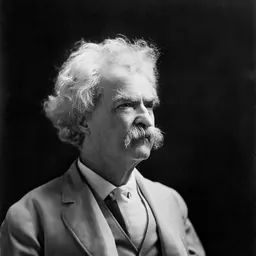


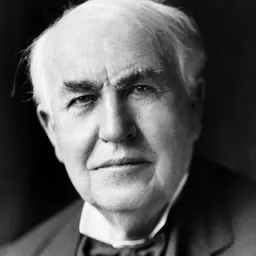




Related people
Same field, nearest in time
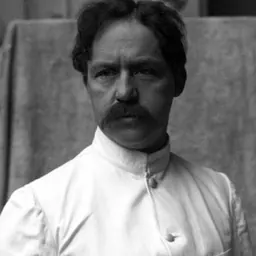


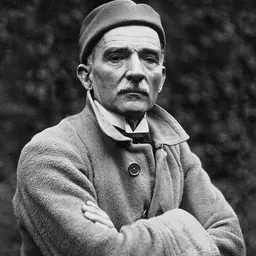

Contemporaries
People whose lives overlapped Walter Russell's





Frequently asked questions
Who was Walter Russell?
American artist (1871-1963)
When was Walter Russell born?
Walter Russell was born on 19 May 1871 in Boston.
When did Walter Russell die?
Walter Russell died on 19 May 1963 in Boston.
What was Walter Russell's occupation?
Walter Russell was a sculptor, philosopher, painter and writer.
What nationality was Walter Russell?
Walter Russell was American.
Sources & further reading
Cite this page
APA: Biography.guide. (2026). Walter Russell. https://biography.guide/walter-russell/
MLA: "Walter Russell." Biography.guide, https://biography.guide/walter-russell/.
Chicago: "Walter Russell." Biography.guide. https://biography.guide/walter-russell/.
Data last updated: 2026-09-22 · Spot an error? Report a correction.
Page generated 2026-09-27 05:21 UTC