
Charles Bingham Penrose
American gynecologist known for inventing the Penrose drain
About Charles Bingham Penrose
Lived 1862 – 1925 (aged 63). Charles Bingham Penrose was an American surgeon, known for Penrose drain.
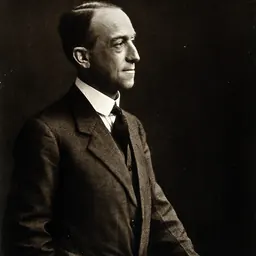
Charles Bingham Penrose (February 1, 1862 – February 28, 1925) was an American gynecologist, surgeon, zoologist and conservationist, known for inventing a type of surgical drainage tubing called the Penrose drain. He was a professor at the University of Pennsylvania, wrote several editions of a textbook on medical problems in women, and was named a Fellow of the American Association for the Advancement of Science.
A native of Philadelphia, Penrose was the son of a medical school professor, and his brothers included U.S. senator Boies Penrose, mining engineer R. A. F. "Dick" Penrose and geologist Spencer Penrose. The grandson of prominent politician Charles B. Penrose, he married into the wealthy Drexel family of the same city. Penrose held two doctorates, which he earned concurrently: a medical degree from the University of Pennsylvania and a Ph.D. in physics from Harvard College.
After completing residency training at Pennsylvania Hospital, Penrose founded Philadelphia's first hospital for women and became a professor at the University of Pennsylvania. He was interested in the idea of facilitating surgical site drainage in abdominal surgery patients, but he was concerned about the risks of the drains available in the late 19th century. This led him to create the Penrose drain, a soft tube that he fashioned out of a condom with its tip removed.
After he contracted tuberculosis in 1891, Penrose left Pennsylvania for Wyoming, hoping that the change in climate would restore his health. While he was in Wyoming, Penrose became involved in the range conflict known as the Johnson County War; he was arrested after the deaths of two alleged cattle rustlers, and only his friendship with the governor of Wyoming prevented him from being lynched. Returning to Philadelphia after the conflict, Penrose wrote a memoir (The Rustler Business) about his time in Wyoming. For the last two decades of his life, Penrose directed much of his attention to zoology and conservation issues. He established a zoological laboratory at the Philadelphia Zoo, the first such laboratory at a U.S. zoo.
Early life and family Penrose was born in Philadelphia on February 1, 1862. He was a descendant of Bartholomew Penrose, who had settled in the city in 1698, establishing a shipyard at the invitation of William Penn that stayed in the Penrose family for 150 years. Charles Penrose's father, Richard Allen Fullerton (R. A. F.) Penrose Sr., was a physician, an obstetrics professor at the University of Pennsylvania, and one of the founders of the Children's Hospital of Philadelphia. His six brothers included Boies Penrose, a Pennsylvania state legislator and U.S. senator who ran the powerful Republican political machine in Pennsylvania for 17 years; R. A. F. "Dick" Penrose, a mining engineer and president of the Geological Society of America; and Spencer Penrose, a geologist, philanthropist and builder of the Colorado hotel known as The Broadmoor.
Education Penrose completed a physics degree at Harvard with highest honors in 1881, graduating at age 19, two months after his mother died of tuberculosis. Penrose graduated from both programs in 1884 at age 22. He finished medical school one year behind Amos W. Barber; the two became friends there, and Barber later became the acting governor of Wyoming.
After completing the doctorates, Penrose turned his attention away from physics and toward the practice of medicine. Penrose was a resident at Pennsylvania Hospital in 1885 and 1886. While he was a resident, Penrose participated in research with Jacob Mendes Da Costa on the diuretic effects of injected cocaine. The resulting article, "Observations on the diuretic influence of cocaine", was published in a local medical journal called The College and Clinical Record.
Career Penrose remained in Philadelphia after his residency, having been hired as an attending outpatient surgeon at Pennsylvania Hospital. After contracting tuberculosis in 1891, Penrose left his Philadelphia medical practice. On the advice of Amos Barber, who was by then the acting governor of Wyoming, Penrose came to that state, and Barber had him put up at the Cheyenne Club, one of the wealthiest and most exclusive establishments on the frontier. Penrose placed himself on a regimen of physical activity; he dug with a pick and shovel in the morning and rode horses in the afternoon. By early the next year, he had gained By 1908, six editions of the book had been published, though a review in the Boston Medical and Surgical Journal said that "in every essential respect [the sixth edition] is the fifth edition over again."
Along with Herbert Fox and Ellen Corson-White, Penrose established the study of zoo-based pathology in North America. While working at the Penrose Research Laboratory, Corson-White developed "Zoo Cake", which became a popular nutritional product for zoo animals. In the foreword to Fox's Disease in Captive Wild Mammals and Birds (1923), he decried the fact that most animal diseases were poorly understood, especially relative to the progress that had been made in human medicine. Fox's book is dedicated to Penrose.
Penrose was elected to the American Philosophical Society in 1909. In 1911, Penrose was named a Fellow of the American Association for the Advancement of Science; he belonged to several sections of the organization. He served as the president of the Zoological Society of Philadelphia from 1909 until his death. A well-respected conservationist, he also spent many years as president of the Pennsylvania Fish and Game Commission.
Contributions as a surgeon Penrose drain In the late 19th century, surgeons were divided on whether drainage tubes should be used frequently or infrequently in abdominal surgery. Penrose was an advocate of the maxim "When in doubt, drain." He made a presentation on the topic before the American Medical Association in 1889. Most surgical drains at the time were made of gauze or of glass tubes.
Gynecean Hospital Penrose and his father participated in the founding of the Gynecean Hospital, which opened in January 1888 as the first hospital in Philadelphia that was exclusively for women. Penrose served as the hospital's chief surgeon, and his father was its president. The hospital was run out of a small home on Cherry Street until it moved to a home near the intersection of Hamilton Street and 18th Street on April 1. The hospital was permanently established at 247 N. 18th Street in 1891. Penrose and Joseph Price served as attending surgeons until late 1890, when Price resigned and was replaced by David Hayes Agnew.
In 1901, the hospital attracted criticism from The Times, a Philadelphia newspaper, in an article that examined $3 million in state funds that had been awarded to Philadelphia hospitals over a 30-year period. The hospital was criticized because it had received $175,000 since 1889, because it was impossible to tell whether the hospital ever treated poor patients, and because Penrose's brother was a senator.
Penrose remained associated with the Gynecean Hospital for life. By 1924, as chairman of the hospital's board of directors, Penrose recommended that the facility be abandoned because it was only filled to ten percent of its capacity. The following year, Gynecean Hospital merged with the Hospital of the University of Pennsylvania.
Johnson County War While he was at the Cheyenne Club recovering from tuberculosis, Penrose agreed to serve as the surgeon on an invasion led by a group of cattlemen, the Wyoming Stock Growers Association (WSGA). The men were responding to the perceived threats posed by settlers with smaller cattle operations. The conflict became known as the Johnson County War. Penrose wrote a letter to Wister during the conflict, and in doing so, he may have inspired the most well-known line in The Virginian ("You son-of-a--"). He had written in his letter that "during the last two months 'son of a bitch' has been a favorite expression in this country. Wyoming is in the son of a bitch stage of her civilization and could not get on any more without it than she could without a lariat and a branding iron."
When two alleged cattle rustlers, Nate Champion and Nick Ray, were ambushed and killed by a group of the cattlemen, Penrose was among the suspects arrested. He was taken to Douglas, Wyoming, where lynching was briefly considered. Governor Barber, who had also been a longtime friend of the cattlemen, intervened; he had Penrose brought back to the Cheyenne Club by a U.S. marshal on a writ of habeas corpus. Penrose was ultimately cleared of responsibility in the attack. The couple had a daughter named Sarah in 1896, and they had a son named Charles who was born in 1900 and died the next year. Their third child, Boies Penrose, became an author and travel historian. Katharine Drexel was known in Philadelphia as a member of the anti-suffragism movement. She died in 1918.
Death For the last several years of Penrose's life, he was in poor health. He spent the winter of 1924–25 attempting to recover from tuberculosis in Aiken, South Carolina. Penrose made what was supposed to be a brief trip back to Philadelphia to visit relatives, and he was accompanied by two nurses and a cousin named Sarah. He was found dead of a suspected heart attack in his drawing room on the train near Washington, D.C., on February 28, 1925. He was interred at Laurel Hill Cemetery in Philadelphia.
He left most of his million-dollar estate to his two children, and he left $100,000 to Mary Devinnie, a nurse who had cared for him late in his life.
Mount Penrose in the Flathead Range in Montana is named in his honor.
Selected publications
Don’t just read it —
keep it.
Full-length biographies made to live with: read them, listen on the way to work, watch them tonight.
- E-book
- Audio
- Video
Instant download · yours to keep · every purchase keeps this site free
Important facts
People in Charles Bingham Penrose's life
Named in this biography and alive at the same time



Related people
Same field, nearest in time


Contemporaries
People whose lives overlapped Charles Bingham Penrose's



Frequently asked questions
Who was Charles Bingham Penrose?
American gynecologist known for inventing the Penrose drain
When was Charles Bingham Penrose born?
Charles Bingham Penrose was born on 1 February 1862 in Philadelphia.
When did Charles Bingham Penrose die?
Charles Bingham Penrose died on 28 February 1925 in Washington, D.C..
What was Charles Bingham Penrose's occupation?
Charles Bingham Penrose was a surgeon.
What was Charles Bingham Penrose known for?
Charles Bingham Penrose was known for Penrose drain.
What nationality was Charles Bingham Penrose?
Charles Bingham Penrose was American.
Sources & further reading
· Wikipedia: Charles Bingham Penrose
· DBpedia: Charles Bingham Penrose
Cite this page
APA: Biography.guide. (2026). Charles Bingham Penrose. https://biography.guide/charles-bingham-penrose/
MLA: "Charles Bingham Penrose." Biography.guide, https://biography.guide/charles-bingham-penrose/.
Chicago: "Charles Bingham Penrose." Biography.guide. https://biography.guide/charles-bingham-penrose/.
Data last updated: 2026-09-26 · Spot an error? Report a correction.
Page generated 2026-09-27 05:13 UTC