
Nate Champion
American cattleman
About Nate Champion
Lived 1857 – 1892 (aged 34). Nate Champion was a cowboy.
Nathan D. Champion (29 September 1857 – April 9, 1892) — known as Nate Champion — was a key figure in the Johnson County War. Falsely accused by a wealthy Wyoming cattlemen's association of being a rustler, Champion was the first person targeted by a band of hit men hired by the wealthy cattle barons. In reality, Champion was simply a small rancher who stood up against the big cattlemen's practice of claiming all unbranded young cattle on the range. He is celebrated for his heroic stand in his besieged cabin and for a heartfelt letter written at the time describing the events. His parents were John and Naomi Champion, and he had seventeen brothers and sisters. His father served as sheriff of Williamson County while his Aunt Hattie Cluck drove her own cattle to market in Abilene, Kansas in 1871. With the money she and her husband George earned, they purchased the land that would become Cedar Park.
Like most footloose cowboys of that area, Nate Champion worked his way north to Wyoming where he worked for several ranches before building his own spread. He built and cultivated his homestead to the point that he owned 8 pack horses and over 200 head of cattle by the time of his death. The Wyoming Stock Growers Association began to aggressively appropriate land, control the flow and supply of water, and take ownership of every unbranded cattle on the range. They justified these excesses on what was public land by using the catch-all allegation of rustling, and vigorously sought to exclude the smaller ranchers from participation in the annual roundup. This culminated in several murders beginning in 1889, starting a range war that what would become the Johnson County War.
First assassination attempt Being one of the most outspoken of the homesteaders, Nate Champion became a prominent opponent of the cattle barons. He was associated with a rival association known as the Northern Wyoming Farmers and Stock Growers Association, who aimed to challenge the economic grip of the WSGA by organizing their own cattle round-ups. Champion also became the president of the NWFSGA in absentia, even after declining his nomination. Due to the cabin's limited size, only two men were able to enter while several others remained outside. Champion awoke when the intruders entered and, after noticing that they were armed, retrieved a pistol concealed beneath his pillow. An exchange of gunfire followed, during which Champion wounded two of the attackers, including Billy Lykins, who later died from his injuries. The remaining members of the group then withdrew from the area. An investigation was conducted to capture the men responsible, but this only led to the further murders of two other small ranchers.
Gunfight at the KC Ranch On April 1892, the WSGA hired killers from Texas; an expedition of 50 men was organized, which proceeded by train from Cheyenne to Casper, Wyoming, then toward Johnson County, intending to eliminate alleged rustlers and also, apparently, to replace the government in Johnson County. Major Frank Wolcott led the Regulators into Johnson County. To prevent an alarm, the telegraph lines out of Buffalo were cut. The expedition was accompanied by two newspaper reporters whose lurid accounts later appeared in the eastern newspapers. During the siege, Champion kept a poignant journal which contained a number of notes he wrote to friends while taking cover inside the cabin. "Boys, I feel pretty lonesome just now. I wish there was someone here with me so we could watch all sides at once." he wrote. The last journal entry read: "Well, they have just got through shelling the house like hail. I heard them splitting wood. I guess they are going to fire the house tonight. I think I will make a break when night comes, if alive. Shooting again. It's not night yet. The house is all fired. Goodbye, boys, if I never see you again." Two passers-by noticed the ruckus and rode to Buffalo, where Johnson County Sheriff William "Red" Angus raised a posse of 200 men and set out for the KC Ranch.
With the house on fire, Nate Champion signed his journal entry and put the journal in his pocket before he emerged, running from the back door with a Colt revolver in the left hand and a Winchester rifle in the right. He was gunned down by four men firing simultaneously, hit by 28 bullets. The invaders later pinned a note on Champion's bullet-riddled chest that read "Cattle Thieves Beware". They also carefully removed entries from the diary which named some of the attackers.
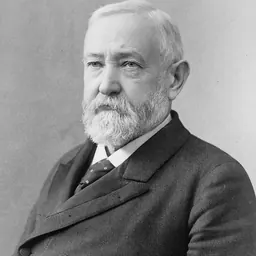
Aftermath of death The following day the posse led by the sheriff besieged the invading force at the "TA Ranch" on Crazy Woman Creek. After two days, one of the invaders escaped and was able to contact the acting Governor of Wyoming, Amos W. Barber. Frantic efforts to save the besieged invaders ensued, and telegraphs to Washington resulted in intervention by the President of the United States, Benjamin Harrison. The Sixth Cavalry from Fort McKinney was ordered to proceed to the "TA Ranch" and take custody of the invaders and save them from the posse. As part of the surrender, the invaders turned in all their arms and equipment to the Army. Major Wolcott, as unofficial leader of the group made a list of these arms and provided it to the government.
In the end the invaders went free due to cunning legal maneuvers by the defense attorneys. Many of the leaders of the invaders, such as W. C. Irvine, were themselves Republicans, and their opponents were mostly Democrats. A scandal was caused by the rescue of the Invaders at the order of President Harrison, and the failure of the courts to prosecute them. As a result of the scandal, Wyoming voted Democratic in the elections of 1894. The Johnson County War ended in 1893 with the shooting and killing of Nate Champion's brother, Dudley Champion, considered to be the last casualty of the range war. However, the homesteaders became the victors of the conflict as the WSGA finally ended their violence, and allowed the former to apply for membership and participate in the round-ups.
Dramatic representations Henry Brandon (1912–1990) played Champion in a 1955 episode of Jim Davis's syndicated western television series, Stories of the Century. Christopher Walken played a highly fictionalized Champion in Michael Cimino's 1980 film Heaven's Gate. Tom Berenger is Cain Hammett in Johnson County War. Cain is completely based on the life, actions and looks of Nate Champion.
Don’t just read it —
keep it.
Full-length biographies made to live with: read them, listen on the way to work, watch them tonight.
- E-book
- Audio
- Video
Instant download · yours to keep · every purchase keeps this site free
Important facts
People in Nate Champion's life
Named in this biography and alive at the same time



Related people
Same field, nearest in time

Contemporaries
People whose lives overlapped Nate Champion's




Frequently asked questions
Who was Nate Champion?
American cattleman (1857-1892)
When was Nate Champion born?
Nate Champion was born on 29 September 1857.
When did Nate Champion die?
Nate Champion died on 9 April 1892.
What was Nate Champion's occupation?
Nate Champion was a cowboy.
Sources & further reading
Cite this page
APA: Biography.guide. (2026). Nate Champion. https://biography.guide/nate-champion-cowboy/
MLA: "Nate Champion." Biography.guide, https://biography.guide/nate-champion-cowboy/.
Chicago: "Nate Champion." Biography.guide. https://biography.guide/nate-champion-cowboy/.
Data last updated: 2026-09-25 · Spot an error? Report a correction.
Page generated 2026-09-27 05:12 UTC