
About Johann Sedlatzek
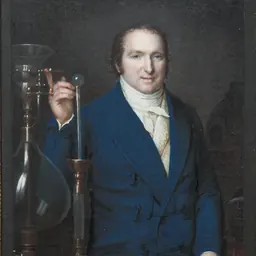
Lived 1789 – 1866 (aged 76). Johann Sedlatzek was a composer, flautist, music arranger, tailor and musician.
1879 lithograph depicting the premiere of the Ninth Symphony in Vienna. Beethoven stands in the center of the orchestra behind the conductor. Sedlatzek is the principal Flautist. Johann Jean Sedlatzek (also Johann John Sedlaczek; 6 December 1789 – 11 April 1866) was a Silesian flautist born in Głogówek (Oberglogau), Kingdom of Prussia, into a family of tailors, often referred to as "The Niccolò Paganini of Flute".
After beginning his career in the family trade as an apprentice to parents Johanna and Josephy, Sedlatzek taught himself to play flute and eventually toured throughout Europe as an admired master of the instrument, playing on a unique thirteen-key Viennese flute. He also gave several successful concert tours through Germany, Switzerland, Italy, France, and England as featured performer. (which canceled his second performance in Sicily), he also performed for the King of Prussia, Frederick William III of the Order of the Black Eagle, in Verona, for Pope Pius VII in Rome, in Genoa. His Paris tour of 1826 included performances with the Italian Soprano Giuditta Pasta, with whom he would perform again, along with other prominent musicians, after his move to London.
Johann Sedlatzek was a friend and collaborator to Ludwig van Beethoven and played several times with the universally known composer; most notably as the principal flautist in the world-premier of Beethoven's Symphony No. 9 in Vienna's Kärntnertortheater in 1824
The Silesian Coat of Arms: A Black Bird with a Cross at its center, a symbol of Johann Sedlatzek's birthplace.
The young tailor and budding flautist suited von Oppersdorff's requirements and soon was invited to study music formally with the musicians of the Royal Court of OberGlogau.
In March 1810, Sedlatzek left his family home to pursue his musical aspirations in Opava, the cultural heart of Silesia at the time, earning his living as Master Tailor while also working as a doorman at the local theater. He then traveled to Brno, Moravia and later to Vienna, Austria German author of "Faust" and other notable works, Johann Wolfgang von Goethe (1749-1832), mentions in his diaries hearing Johann Sedlaczek perform on more than one occasion in Austria during this period.
Sedlatzek's early years in Vienna culminated in the premier of Beethoven's 9th Symphony on 7 May 1824 at Karntnertortheater, where Sedlatzek served as principal flautist. Certain passages of Beethoven's score required the use of the particular Viennese flute which Sedlatzek was known to play with exceptional virtuosity.
Tours of Austria, Germany, Swtitzerland, and Italy
Between the years after his appointment as Principal Flautist at Karntentor Theater in 1817, and his performance with Beethoven in the premier of the 9th Symphony in 1824, Sedlatzek managed a busy schedule which included tours through Austria, Germany, Switzerland, and Italy, while also performing (by private subscription) in Vienna with his Harmonie Quintet. "Ludlamshohle" (translated as "Ludlam's Cave" or "Ludlam's Hell") was a secret-society of intellectuals, a select group of actors, singers, musicians, and scholars of Vienna, including Johann's contemporaries Karl Maria von Weber, Karl Gottfried, Friedrich Ziegler and some sources say Franz Schubert.
19th-Century Vienna, where Johann Sedlatzek spent much of his musical career.
The club was named after the Drama "Ludlam's Cave" by Danish poet Adam Oehlenschläger (14 November 1779 – 20 January 1850) and was also a reference to the dark, cave-like rooms in which the group typically met. Ludlamshohle was founded by the Austrian poet and dramatist, Ignaz Franz Castelli (6 March 1781 in – 5 February 1862), house poet of Kartnertortheater from 1811 to 1814.
While the society is consistently referred to as "secret", it was, in fact, well known to the public due to its large membership of prominent artists, even being written of in Vienna papers. Members claimed there was no devious or political intent to their meetings. Reports of attendees suggest the meetings were more akin to rowdy fraternity parties than dark rituals of sacred meaning or political intrigue. Nonetheless, the group's esoteric activities, strange symbolism, red and black color preference, and coded communications drew the suspicions of local authorities.
A police raid was conducted during a meeting of Ludlamshohle held on 19 April 1826, founded on a charge no more specific than "sedition" in which manuscripts, artwork and money were confiscated, while many members were arrested. This action was largely ridiculed by the public as no evidence of espionage was ever uncovered in the subsequent trials.
The group publicly dissolved after the raid, however, later writings indicate that certain members continued to meet secretly.
Sedlaczek himself was most likely never charged or under suspicion of any political subversion as this would have prevented his many travels. Austrians at that time were not allowed to travel outside of the country without special permission from the government. Travel for the sake of curiosity was not acceptable. "Need" had to be established. In the case of musicians, character and talent had to be proven. Johann traveled frequently, both during and after his involvement with "Ludlamshohle" indicating he was consistently in good standing with the Viennese authorities.
Farewell to Vienna and a tour of Paris
On 3 April 1825, Sedlatzek gave a farewell concert in Vienna at which he performed works from Beethoven and Rossini as well as his own compositions "Capriccio for Flute" and "Neue Variations for Flute", with the well-known Ignaz Schuppanzigh conducting. in Warmbrunn before embarking on a concert tour of Paris in 1826,
Sir! This is with hope that you favor your old friend, I dare to recommend to you the bearer of this letter, Monsieur Sedlatzek, a most distinguished Artist, and am begging you not to refuse him ... I take this time to testify my friendship and perpetual consideration. Sir! Your very humble servant, L v. B
To Monsieur Cherubini,
Sir! The bearer of this letter, Monsieur Sedlatzek, ardently desires to pay you his tribute. I am convinced of his esteem as an Artist worthy of my name, and hope for a favorable welcome from you. Accept him with the highest assurance and the same consideration with which I have been honored. Sir! Your very humble servant, L v. B and that tickets can be had at the Bar of the Thatched Roof Tavern; Willis's Rooms, and of Mr. Sedlatzek, No. 37, Castle Street East, Oxford Street."
A survey of English Newspapers from 1826 to 1842 shows Sedlatzek was very active in the London music scene at that time. His performances were reviewed frequently in London papers, such as The Musical World, The London Gazette, The Harmonicon, and the Court Journal, to name a few, with commentary ranging from reverent: "We are much indebted to J. Sedlatzek for his arrangement of the music of this great violinist (Josef Mayseder), executed with taste and skill." to rapturous: "These compositions are superb specimens of modern magnificence ... listened to by a very full audience with the united sensations of rapture and admiration."
A review of a concert held 8 July 1838 shows how performances by Johann Sedlatzek were generally received:
"Mr. Sedlatzek, The eminent flautist, gave a "Soirie Musicale" in the smaller room at the Anthenmeum. The room was quite filled by a very select and fashionable company and, the concert conducted by Mr. J. A. Pickering, was of the highest order. The first piece was remarkable for the beautiful manner in which the instruments harmonized. Mr. Sedlatzek has this advantage over every other flute player of the present day: his tone is the nearest approach to the human voice we ever heard. He has, moreover, a facility and neatness of execution which must stamp him as a performer of the highest order. Personally acquainted with several of the deceased great German Masters, his style has been drawn from the purest sources. And it follows that, apart from the merely mechanical operation of playing, he is a first-rate musician."
Sedlatzek spent sixteen active years in London Nicolas Mori, Felix Mendelssohn, double-bass master Domenico Dragonetti, and guitar virtuoso Trinidad Huerta. He would also meet again with the notorious Paganini in 1831 when London hosted a bevy of foreign performers for the season. In the midst of his busy performance schedule, Johann Sedlatzek earned an Honorary Degree in 1835 from Green College in London where he was an instructor. and, in the years following, fathered at least five The first of these births was announced in the August 9, 1828, edition of the "London Literary Gazette" :
At the request of our good friend M. Sedlatzek who plays the German flute better than he writes the English Language, we insert the following interesting announcement:
"Dear Sir! I am sorry not having the pleasure to find you at home. I was come to thank you for your kind report on my Conzert. [sic.] And in the same time to tell you that my wife is delivering with a baby Girl, and that the Prinzesses [sic.] Esterhazy will be the Good Mutters (God Mothers- ed.)- should you find convenient to mention in your next weeks Journal- Sedlatzek"
His children: Therese, Nina, Paul, Georg, (3 January 1875 – 14 October 1965), extended the line of musicians begun in the 19th century into the 20th, as he performed and conducted throughout Austria and Germany in the early 1900s, and then, after moving to America in 1927, served as professor of Music at University of Louisville, Kentucky, USA.
Johann returned to Vienna in 1842 after the death of his wife.
While all of Sedlatzek's children found careers as musicians in the following decades, his daughter, Marie, was most often referenced in the London journals in the latter half of the 19th century. The Musical World records that a farewell concert was given in the Netherlands, where she had been touring extensively as a featured performer in previous months, on 18 February 1854 in Amsterdam at the Salle du Parc., which was "highly successful."
"Sedlatzek sang ... and was recalled at the end of each movement to receive the applause of the audience. This young vocalist, although she has scarcely reached her 20th year, has attained great excellence."
After her farewell performance in Amsterdam, she met her father in England in March 1854 for the start of their London tour together.
"Fraulein Sedlatzek, Principal Vocalist and Herr Sedlatzek, Principal Flautist to His Highness the Prince Esterházy, beg to announce their arrival in London for the season. All communications with regard to lessons and engagements for concerts and private parties to be addressed to them at their residence, 42, Manchester Street, Manchester." (The Musical World Saturday March 11, 1854.)
Theatre Royal, Drury Lane where Johann's daughter, Marie Sedlatzek began her career in opera in 1854.
The Saturday March 18 edition of The Musical World included the item in their news section, saying: "M. Sedlatzek, the well-known flautist and composer has arrived in London with his daughter, who is reported to possess considerable talent as a vocalist. Fraulein Sedlatzek has been very favorably received in Vienna and Amsterdam."
Marie Sedlatzek soon became a performer of the Theatre Royal, Drury Lane where reviews, at first, were mixed. One reviewer in the May 1854 issue of The Musical World said, "Mdlle. Sedlatzek acted well as Marcellina, (in a production of Beethoven's "Fidelio" ) but had scarcely voice enough for the part." However, a review from a month earlier in the April 29 edition of the same journal said of Marie (in a production of Weber's Freitschutz, starring Madame Caradori):
"Sedlatzek was recalled at the end with great enthusiasm ... (advancing) a step in public favor by the manner in which she sung the charming music of Annsehen and by the pretty and lively earnestness of her acting. She is young and inexperienced, but there is purpose in all she does."
However mixed her initial reception may have been, Marie continued her career with the Royal Opera in London after her father returned to Vienna at the end of 1854. Marie eventually joined Theatre Royal, Dublin (Ireland), where she is frequently listed in the Annals of the Theatre Royal, Dublin as a performer there between 1855 and 1861.
Later years and last days
Aside from the tour of London in 1854 with his daughter Marie, and training his children in music.
Johann Sedlatzek gave his final performance in 1865 to celebrate more than 50 years as a musician (now Schubert Park) alongside his contemporaries Ludwig van Beethoven and Franz Schubert.
Schubert park-Zselíz-platánok. Formerly Wahring Friedhoff, The original burial place of Ludwig van Beethoven and Franz Schubert, where Johann Sedlatzek was buried in 1866.
Sedlatzek and the Viennese flute
Many of the reviews of Johann Sedlatzek's performances which appeared in London journals in the nineteenth century make special mention of the specific type of flute he played, showing a strong association between the musician and his instrument. Although the English writers consistently referred to his instrument as the "German" flute, it was actually Viennese.
The "Viennese" flute was the flute of Beethoven and Schubert's Vienna, playing important roles in some of their most famous compositions. Most notably constructed in the 1800s by the companies of Stephen Koch and Johann Zeigler of Vienna between 1807 and 1895, the Viennese flute was unusually long allowing additional keys for playing notes as low as the G below middle C, corresponding to the lowest note on the violin.
In spite of the potential scale of the instrument, the low G was rarely attempted as the design created a non-responsiveness in the lower register that made its lowest note extremely difficult to sufficiently intone. This technical flaw in the Viennese flute's design yielded a popular anecdote among flute enthusiasts involving Sedlatzek that has been often repeated:
"The low G very seldom came out successfully and when it did, Sedlatzek would stand the flute up in a corner and salute it with profound obeisance!"
The Viennese flute is not the only unique instrument Sedlatzek brought to British shores. During an 1831 concert in London, he introduced English audiences to the latest German musical innovation, the Accordion:
"At the close of the show, Mr. Sedlatzek performed on a new instrument called the accordion ... which, however, has little beside its novelty to recommend it."
Performance and composition
Much of the acclaim Sedlatzek received for his performances throughout his life was founded upon his speed and agility on the unusually long-scale Viennese flute, earning him the alias "the Paganini of Flute". The following commentary appeared in the "London Literary Gazette", 1827.
"Among the musical performers at present in London to whom we have listened with great pleasure ... we have to notice M. Sedlatzek of Vienna, whose execution on a newly invented German flute is of remarkable character and effect. The instrument is lengthened and has many additional keys, by means of which Mr. S. produces combinations hitherto unknown to (the Flute). His manner is rapid and his style is powerful."
However, Sedlatzek seemed not to have been dismissed as a mere technician,
Sedlatzek was also an admired composer and arranger. His most highly praised original composition was the "Souvenir du Simplon", (The London Gazette called it "delicious"). while his arrangement of "God Save the King" remained a crowd favorite throughout his career from the time of its first performance at an 1820 concert in Prague.
A view of Mount Rigi, the highest peak in the Swiss alps which border Austria, J. Sedlatzek's chosen home.
Manuscripts of Sedlatzek's works are currently archived in libraries around the world including the University of Melbourne at Victoria, Australia, the Moravian Library at Brno the Deutsche Nationalbibliothek, the United States Library of Congress, The British Library of St. Pancras, London, the University of California, Los Angeles, and the University of Glasgow, UK.
Among the works listed in the Melbourne Library catalog, as being either arranged or composed by Johann Sedlatzek, are: "Eleven airs from the operas of Rossini, Carafa, and Mercadante", "Souvenir a Paganini: variations on the Carnival of Venice", "Souvenir a Pasta et Rubini", and "Sehnsucht nach dem Rigi." (Longing for the Rigi- My Native Home ...)
German/Danish composer Friedrich Kuhlau (1786–1832) honored the influence of Sedlatzek with the dedication of his own "Premier Grand Trio Concert" for two flutes and piano, op. 119. The title page of the 1834 edition reads: "composed and dedicated to friend Jean Sedlatzek".
Sedlatzek and Sedlaczek
Research reveals several variations of the renowned musician's name. Johann's first name is given interchangeably in written literature as Johann, Johanna, Jean, John, and J. References to his last name alternate between the two spellings Sedlatzek and Sedlaczek. Sedlatzek (tz) is Johann's birthname originating in Silesia.
Many direct descendants of Johann Sedlatzek ultimately adopted the Polish spelling "Sedlaczek" as his son, Georg, eventually settled in Vienna, and Johann's grandson, Ludwig Sedlaczek, was born in Vienna, where the "cz" spelling was preferred.
Researching the life of Johann Sedlatzek requires searching under all of these variations.
Polish and German biographies Oppersdorff Graf Wappen. The coat of arms of Count Franz von Oppersdorff of Oberglogau, Silesia who discovered Johann Sedlatzek as a young Tailor's Apprentice and hired him to perform in the Opporsdorff Royal Ortchestra, Sedlatzek's first job as a musician
Further biographical information about Johann Sedlatzek can be found in biographies currently available only in Polish and German versions. Such as:
Przycznek do biografii muzyka śląskiego Johanna Sedlatzka. Muzyka, no. 1, 1977 by Maria Zduniak.
Der oberschleisische Flotist Johann Sedlatzek (1789–1866). Music des Ostens no. 4, 1967 by Walter Kwaznik.
A more recent biographical article, "Johann Sedlatzek, the Paganini of flute from Głogówka", was posted on the Polish news website "nto.pl" on the 200th anniversary of his joining "Theater an der Wein" as Principal Flautist, his first job as a professional musician, in 1812. The article was posted on the site 12 September 2012 and featured a 20th-century photograph from a ceremony held in Oberglogau (Glogowek) in 1930 in which citizens of the town at that time posed for a re-enactment photo. Entitled "Farewell to the Apprentice", the scene depicted Johann's departure from his hometown in 1810 to pursue a career in music. An impersonator of Johann Sedlatzek, traveling bag in hand, stands at the center of the picture beside the Mayor of Oberglogau with a crowd of locals surrounding them. A hand-painted sign seen directly above the actor portraying the young tailor, reads:
'"Das Oberglogauer sendwert wunscht 1. Wandergesellen. Gute Reise!"'
The performers were flautist Elzbieta Wolenska of the Wroclaw Academy of Music, and pianist Elzbieta Zawadzka who played at the Observatory in Glogowek from newly unearthed manuscripts discovered in London archives in 2012. The performance was to commemorate the release of the first ever sound recording of Sedlatzek originals ever produced.
The flautist Wolenska had initiated her search for Sedlatzek Manuscripts after being inspired by stories told to her by the Glogowek Regional Museum Director, Alexander Devosges-Cuber, about the young tailor's apprentice from Glogowek whose advanced flute technique earned him the patronage of the Count von Oppersdorf, eventually allowing Johann to become one of the most famous flautists of the 19th century, often referred to as "The Paganini of Flute". A three-year search of archives across Europe yielded little result until, in the spring of 2012, Wolenska uncovered 300 pages worth of manuscripts in the London National Library.
Upon returning to Glogowek with the manuscripts, Wolenska and Zawadzka began recording the lost music of Sedlatzek in July 2012, including the titles "Souvenir de Simplon", "La Marie", "Souvenir a Paganini", and "Amitie". The 80 minute CD entitled "Johann Sedlatzek: Souvenir" was released in Poland in the Autumn of 2012 on JBrecords. Maestro.net called the presentation "an historic event ... and a masterful performance."
Shortly after this world-premier performance of Sedlatzek's music at the Silisian Music Festival, the city of Glogowek, Joahnn's birth home, announced a public-works project on 31 October 2012 in conjunction with the Glogowek Regional Museum to restore the memory of Johann Sedlatzek as an important figure in the town's history.
Castle Oppersdorff, Glogowek, Poland, where Johann Sedlatzek began his musical career in the Royal Court Orchestra.
Notes and references
Don’t just read it —
keep it.
Full-length biographies made to live with: read them, listen on the way to work, watch them tonight.
- E-book
- Audio
- Video
Instant download · yours to keep · every purchase keeps this site free
Important facts
People in Johann Sedlatzek's life
Named in this biography and alive at the same time





Related people
Same field, nearest in time


Contemporaries
People whose lives overlapped Johann Sedlatzek's


Frequently asked questions
Who was Johann Sedlatzek?
German musician (1789-1866)
When was Johann Sedlatzek born?
Johann Sedlatzek was born on 6 December 1789 in Głogówek.
When did Johann Sedlatzek die?
Johann Sedlatzek died on 11 April 1866 in Vienna.
What was Johann Sedlatzek's occupation?
Johann Sedlatzek was a composer, flautist, music arranger, tailor and musician.
Sources & further reading
Cite this page
APA: Biography.guide. (2026). Johann Sedlatzek. https://biography.guide/johann-sedlatzek/
MLA: "Johann Sedlatzek." Biography.guide, https://biography.guide/johann-sedlatzek/.
Chicago: "Johann Sedlatzek." Biography.guide. https://biography.guide/johann-sedlatzek/.
Data last updated: 2026-09-20 · Spot an error? Report a correction.
Page generated 2026-09-27 05:05 UTC