
About Franz Schubert
Lived 1808 – 1878 (aged 69). Franz Schubert was a composer, violinist, concertmaster, conductor and musician.
(Xaver) Franz Schubert (22 July 1808, Dresden – 12 April 1878, Dresden) was a violinist and composer.
After training with concertmaster Antonio Rolla in Dresden, Schubert studied violin with Charles Philippe Lafont in Paris and began working under the name François Schubert. He played in the Staatskapelle in Dresden from 1823 to 1873.
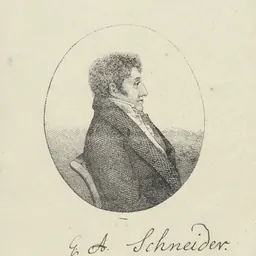
The son of church composer Franz Anton Schubert (the Elder, 1768–1824), Schubert was married to the singer and actress Maschinka Schubert (1815–1882) who was the daughter of horn player and composer Georg Abraham Schneider. Their daughter was the opera singer and composer Georgina Schubert (1840–1878).
Franz Schubert composed concert pieces, études, and chamber music, but is largely known for the bagatelle The Bee, a perpetuum mobile for violin and piano – a piece that is often misattributed to Franz Schubert due to the similarity of the two men's names.
Selected works
9 Études for violin solo, Op. 3 Divertissement sur des motifs de l'opéra Lestocq d'Auber in D major for violin and piano, Op. 4 (1836) Souvenir de Norma, Variations in G major for violin and piano, Op. 5 (1837) 2 Nocturnes for violin and piano, Op. 7 (1844) Amour secret in B major La Sérénade in B major Duo concertant sur des motifs de l'opéra Rienzi par Richard Wagner for violin and piano, Op. 8 (1845) Alpenrosen, Solo über Tyroler National-Lieder in E major for violin and piano (1853) La Napolitana, Solo sur des thèmes napolitains in A minor for violin and piano (or string quartet), Op. 12 (1853) Bagatelles, 12 Morceaux detachés for violin and piano, Op. 13 (published 1856–1862) Impromptu (1856) Cantabile (1856) Allegretto grazioso in A major (1856) Allegretto agitato in D minor (1857) Andantino in A major (1857) Romanza espressiva (1857) Le Papillon (1859) Le Désir in G major (1859) L'Abeille (The Bee; Die Biene) in E minor (1860) Tyrolienne in E major (1862) Chant plaintif (1862) Barcarola in G minor (1862) Rêverie, Morceau de salon in G major for violin and piano, Op. 14
Don’t just read it —
keep it.
Full-length biographies made to live with: read them, listen on the way to work, watch them tonight.
- E-book
- Audio
- Video
Instant download · yours to keep · every purchase keeps this site free
Important facts
People in Franz Schubert's life
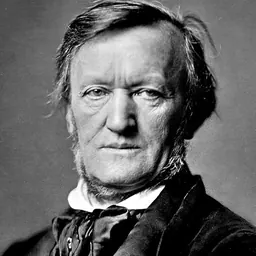
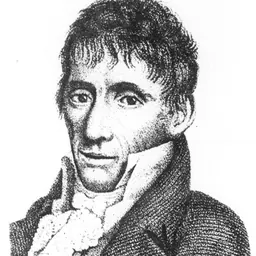
Named in this biography and alive at the same time

Related people
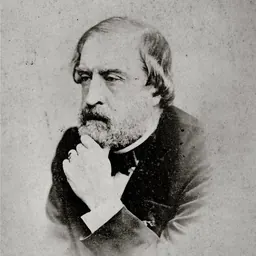
Same field, nearest in time


Contemporaries
People whose lives overlapped Franz Schubert's





Frequently asked questions
Who was Franz Schubert?
German violinist and composer (1808–1878)
When was Franz Schubert born?
Franz Schubert was born on 22 July 1808 in Dresden.
When did Franz Schubert die?
Franz Schubert died on 12 April 1878 in Dresden.
What was Franz Schubert's occupation?
Franz Schubert was a composer, violinist, concertmaster, conductor and musician.
What nationality was Franz Schubert?
Franz Schubert's recorded nationality: Kingdom of Saxony.
Sources & further reading
· DBpedia: Franz Schubert (violinist)
Cite this page
APA: Biography.guide. (2026). Franz Schubert. https://biography.guide/franz-schubert/
MLA: "Franz Schubert." Biography.guide, https://biography.guide/franz-schubert/.
Chicago: "Franz Schubert." Biography.guide. https://biography.guide/franz-schubert/.
Data last updated: 2026-09-20 · Spot an error? Report a correction.
Page generated 2026-09-27 05:18 UTC