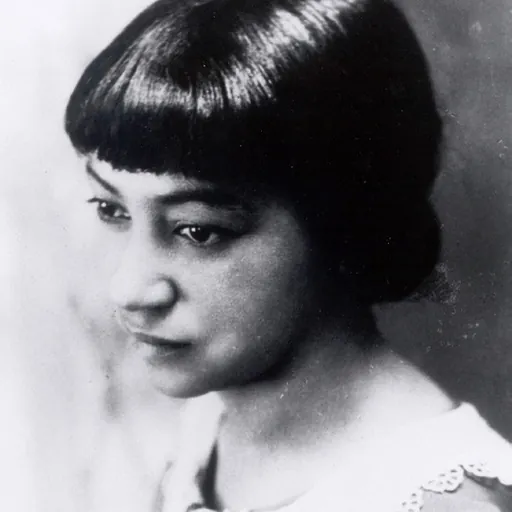
About Inez Beverly Prosser
Lived 1895 – 1934 (aged 38). Inez Beverly Prosser was an American psychologist.
Inez Beverly Prosser (December 30, 1895 - September 5, 1934) was a psychologist, teacher and school administrator. She is often regarded as the first African-American female to receive a Ph.D. in psychology. Her work was very influential in the hallmark Brown v. Board of Education Supreme Court ruling. After growing up in Texas, Prosser was educated at Prairie View Normal College, the University of Colorado and the University of Cincinnati. She was killed in a car accident a short time after earning her doctorate.
Early life Despite prior claims that have been made stating that Prosser was born to Samuel Andrew and Veola Hamilton Beverly in Yoakum, Texas on December 30, 1897, both the location and year of Inez's birth are not completely clear. Her mother was a homemaker and her father was a waiter. Prosser was the eldest daughter and the second of eleven children. Prosser received a degree in teacher training from Prairie View Normal College (now Prairie View A&M University), where she was also valedictorian. Upon receiving her master's degree, Prosser left Anderson High School in 1927 to accept a position as a faculty member at Tillotson College, a Black college in Austin. Tillotson had been coeducational, but in 1926, a year before Prosser arrived, it had become a women's college.
Warren states that, "Prosser was mentored closely by her Doctoral adviser and developed a close friendship with them."
Dissertation and other works Prosser arrived at the University of Cincinnati as a candidate for a PhD in Educational Psychology in 1931. She arrived at a time when there was a research program that "focused on African Americans in different school environments". It was a "companion study" to Mary Crowley's 1931 dissertation, "A Comparison of the Academic Achievement of Cincinnati Negroes in Segregated and Mixed Schools" Her dissertation sought to answer seven main questions. Prosser measured the following questions by giving students surveys on personality and character traits; the first question was what are the social and cultural backgrounds of the children in the two groups? Second, what are the occupational and activity interests of the two groups? Third, to what extent do black children participate in after school activities? Fourth, what racial attitudes are each group exhibiting? Fifth, what are the emotional responses of the two groups towards being discriminated against? Sixth, what is the effect of the school type on the children's personality? Lastly, to what degree is aggressiveness and submission fostered in the two groups (1933)?
In her dissertation, Prosser argues that racial injustices and feelings of isolation have damaging effects on the psyche of Black children. The effects are even more detrimental with the standards of living as it applies to socioeconomic status.
The significance of Prosser's search was that she concluded that race and racism play a role in the development of one's personality. Using a comparative research design instead of solely comparing academic achievement scores, she broadened our understanding of children's psychological and social experiences within different school settings on the lines of race: It was an unusually holistic attempt to understand child development for its time. During the 1930s, most education research centered on test scores and cognitive outcomes, rather than the development of positive personality traits and emotional resilience. For her research, Prosser designed a series of psychological tests to assess personality, as well as emotional responses. She administered standardized personality inventories and supplemented them with her own observations to measure how schools were affecting children's conceptions of themselves and social behavior. She used a careful matching design between pairs of students who attended segregated and integrated schools to account for factors related to socioeconomic status, family structure, and prior educational background.
Prosser's findings were surprising to many who had presumed that integration was always good for black students. Her works on the educational and identity development of Black students were not only influenced by her teaching and administrative experience, but by her only experiences at a "colored" school in Texas.
While Prosser is frequently referred to as the first African-American woman to earn a PhD in psychology, others believe that Ruth Winifred Howard (1900–1997) was the first. Those who argue that Howard, earning PhD at the University of Minnesota in 1934, is the first African-American woman to earn a PhD, hold the view that a psychologist is someone who earned the degree within a psychology department. Though the topic was highly debated, The Association of Afro-American Educators displayed continued support for segregated schools in decades to come. Like Prosser, they concur that if resources are properly allocated, the benefits of segregated schools are tremendous to the black child psyche. During the debates over school segregation in the 1920s, many of her arguments were cited. She was a critical voice for the African-American community at a time when women academics were scarce. Prosser's contributions to the improvement of education for all students can be felt in many policies still being used throughout the teaching community today.
Prosser also lives on through the education she provided to her younger siblings. Prosser acknowledged that she would pay for the higher education of her siblings, allowing five of them to earn college degrees with Prosser's help. Prosser was brought to San Antonio, Texas, which is where her parents resided, for a burial and funeral service on September 8, 1934. Prosser also had a memorial service held in her honor at Tougaloo College on October 14, 1934. Prosser headstone resides in Southern Memorial Park in San Antonio where her headstone reads, "How many hopes lie buried here."
Honors 1968 San Antonio, Texas at the HemisFair exposition she was cited for her contribution to Texas culture. Rockefeller Foundation General Education Board Fellowship Appeared on the cover of The Crisis in August 1933, official magazine of the National Association for the Advancement of Colored People.
Affiliations Alpha Kappa Alpha sorority African Methodist Episcopal Church
Selected works "The Non-Academic Development of Negro Children in Mixed and Segregated Schools"
Don’t just read it —
keep it.
Full-length biographies made to live with: read them, listen on the way to work, watch them tonight.
- E-book
- Audio
- Video
Instant download · yours to keep · every purchase keeps this site free
Important facts
People in Inez Beverly Prosser's life
Named in this biography and alive at the same time
Related people
Same field, nearest in time



Contemporaries
People whose lives overlapped Inez Beverly Prosser's

Frequently asked questions
Who was Inez Beverly Prosser?
American psychologist
When was Inez Beverly Prosser born?
Inez Beverly Prosser was born on 30 December 1895 in Yoakum.
When did Inez Beverly Prosser die?
Inez Beverly Prosser died on 5 September 1934 in Shreveport.
What was Inez Beverly Prosser's occupation?
Inez Beverly Prosser was a psychologist.
What nationality was Inez Beverly Prosser?
Inez Beverly Prosser was American.
Sources & further reading
· Wikipedia: Inez Beverly Prosser
· DBpedia: Inez Beverly Prosser
Cite this page
APA: Biography.guide. (2026). Inez Beverly Prosser. https://biography.guide/inez-beverly-prosser/
MLA: "Inez Beverly Prosser." Biography.guide, https://biography.guide/inez-beverly-prosser/.
Chicago: "Inez Beverly Prosser." Biography.guide. https://biography.guide/inez-beverly-prosser/.
Data last updated: 2026-09-22 · Spot an error? Report a correction.
Portrait: Wikimedia Commons · author & licence
Page generated 2026-09-27 05:03 UTC