
Ian Gibbons
American based British biochemist
About Ian Gibbons
Lived 1946 – 2013 (aged 67). Ian Gibbons was a British biochemist, chief technology officer and theranos.
Career Biotech research For 30 years, Ian Gibbons worked on diagnostic and therapeutic products at technology companies. In the 1980s, he worked at a biotechnology firm called Syva Company, where he produced groundbreaking research on immunoassays. During his career, Gibbons was named on almost 200 patents. Gibbons was the first experienced scientist hired by the company, He initially served as the company's lab director and as director of product development. In 2007, Gibbons was diagnosed with colon cancer. He underwent cancer treatments including chemotherapy and multiple surgeries, and was absent for some time from Theranos during his recovery. Holmes' name appears on 19 patents related to Theranos which were authored by Gibbons. He worked on blood chemistry with Gary Frenzel between 2005 and 2010, when Gibbons led the division. As chief scientist, Gibbons often gave the staff informal lectures on biochemistry and the science of blood testing.
Theranos' devices often became a source of frustration for Gibbons because they differed, sometimes significantly, from the benchmarks. His high standards became a source of disagreements with Theranos engineers and senior management. Senior management warned employees who questioned the accuracy of the technology. Holmes's practice of discouraging communication between departments also troubled Gibbons. Gibbons knew of Holmes's falsehoods to employees and outsiders about Theranos' technology and readiness, as well as false demonstrations to clients; and he no longer trusted Holmes. He continued, however, to struggle to make the flawed Theranos technology meet the company's expectations. After being demoted, Gibbons continued working with Paul Patel, his successor at Theranos. Gibbons attempted to fix the technology to match the grandiose claims made by Holmes and Theranos staff but his efforts were unsuccessful. When Gibbons attempted to alert Theranos executives the technology did not work, his colleagues bullied and humiliated Gibbons for trying to speak out. In 2006, Gibbons told Holmes the blood testing Theranos had developed was not yet fit for use by members of the public, and that their proprietary technology was not accurate.
In late 2010, Gibbons told his friend and trusted colleague Channing Robertson about his concerns about misrepresentations made by Theranos about the effectiveness of its technology. Robertson alerted Holmes of Gibbons' complaints and frustrations, and Gibbons was dismissed from the company. Several of Gibbons' colleagues lobbied on his behalf, and he was quickly rehired with reduced responsibilities as a technical consultant to the chemistry group he had formerly headed.
After Fuisz studied publicly available patent information about Theranos' technology, he filed his own patent for a physician-alert mechanism that could be embedded in a testing device, which he identified was not covered by any Theranos patents. Without owning this patent, Theranos would have needed a license from Fuisz's patent to cover physician/patient alerts – a desirable feature in a medical analyzer. When Theranos discovered Fuisz had filed his patent, it responded by filing a lawsuit for patent theft alleging Fuisz had misused Theranos' existing patent technology. He wanted to avoid being deposed because he was afraid his job depended on his testimony. Rochelle Gibbons assessed his state of mind towards the end of his time at Theranos: "It was hell for him to work there. It was complete hell. I think that he was very confused about why he was being treated so badly." She said Ian felt humiliated to be associated with the company's scientific failures. He felt pressured by Theranos to lie about the state of the company's research. Rochelle believed if he told the truth, he would lose his job, and have limited future job prospects due to his age. Ian felt he was in a no-win scenario; by not speaking out, he thought, he would be hurting the general populace, but if he agreed to speak the truth, he would hurt his colleagues.
Death and Theranos response
On May 15, 2013, Ian Gibbons was notified that he needed to appear at the Fuisz lawyers' offices on May 17 to give his deposition. A lawyer for Theranos, which had been actively discouraging him from testifying, emailed Gibbons a draft doctor's note that could be adapted to excuse him. On the evening of May 16, Gibbons ingested a combination of wine and acetaminophen. Holmes sent an internal company email to several colleagues informing them of Gibbons' death and that a memorial service would be held; no memorial service, however, was organized by Holmes or her company.
In media Beginning in 2015, The Wall Street Journal reporter John Carreyrou exposed the practices of Theranos and Elizabeth Holmes in a series of articles; this was followed by US federal government investigations that led to the company's collapse in 2018. Carreyrou devoted chapter 12 of his book, Bad Blood: Secrets and Lies in a Silicon Valley Startup to Ian Gibbons. Carreyrou described how he met with Rochelle Gibbons, who agreed to be a source for his book, in California, two years after Ian Gibbons' death. Carreyrou said the interview process was difficult for Gibbons; he said she was still grieving, that she blamed Theranos for his death, and that she "wished he had never worked there".
Ian Gibbons's career, his time at Theranos, and his death were featured in the second episode of the ABC News podcast The Dropout, which was hosted by Rebecca Jarvis. In the American biographical television drama miniseries created by The Dropout, based on the podcast, Gibbons was portrayed by actor Stephen Fry. In his research for the role, Fry asked show creator Elizabeth Meriwether if contacting Rochelle Gibbons would be acceptable. Gibbons spoke with Fry at length about her husband, and educated Fry about his character. Prior to being cast in the series, Fry had listened to the entirety of the podcast. Fry viewed the Theranos scandal including Gibbons's suicide as a tragedy of "epic Shakespearean greed".
Ian Gibbons' role in attempting to bring to light the inaccurate nature of Theranos testing machines was highlighted in a 2022 article on ethics in scientific research for the journal Science and Engineering Ethics. Stanford University management professor Robert E. McGinn emphasized the roles of Theranos scientists who unsuccessfully tried to respond admirably to the ethical challenges presented by the company's management. McGinn said Gibbons' "efforts to prevent unreasonable risks of harm were admirably ethically responsible". In a 2022 article for the journal Frontiers in Sociology, University of South Florida professors Lily M. Abadal and Garrett W. Potts called the management culture at Theranos a form of "chronic moral injury" (CH-MI). The professors concluded; "the recent management scandal at Theranos ... perpetuated CH-MI, ultimately leading to Gibbons's untimely death".
Don’t just read it —
keep it.
Full-length biographies made to live with: read them, listen on the way to work, watch them tonight.
- E-book
- Audio
- Video
Instant download · yours to keep · every purchase keeps this site free
Important facts
People in Ian Gibbons's life
Named in this biography and alive at the same time
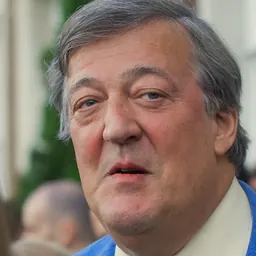


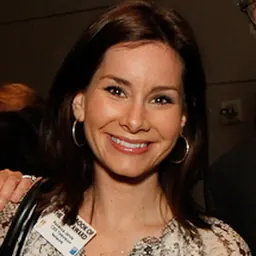
Related people
Same field, nearest in time
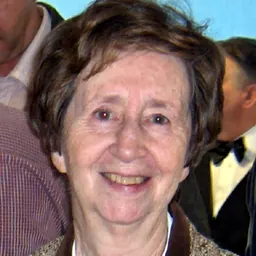
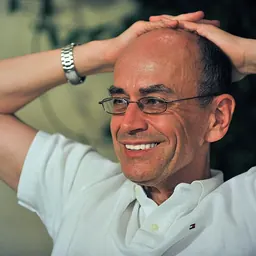


Contemporaries
People whose lives overlapped Ian Gibbons's

Frequently asked questions
Who was Ian Gibbons?
American based British biochemist
When was Ian Gibbons born?
Ian Gibbons was born on 6 March 1946 in England.
When did Ian Gibbons die?
Ian Gibbons died on 23 May 2013 in Portola Valley.
What was Ian Gibbons's occupation?
Ian Gibbons was a biochemist, chief technology officer and theranos.
What nationality was Ian Gibbons?
Ian Gibbons was British.
Sources & further reading
· DBpedia: Ian Gibbons (biochemist)
Cite this page
APA: Biography.guide. (2026). Ian Gibbons. https://biography.guide/ian-gibbons-biochemist/
MLA: "Ian Gibbons." Biography.guide, https://biography.guide/ian-gibbons-biochemist/.
Chicago: "Ian Gibbons." Biography.guide. https://biography.guide/ian-gibbons-biochemist/.
Data last updated: 2026-09-22 · Spot an error? Report a correction.
Page generated 2026-09-27 05:32 UTC