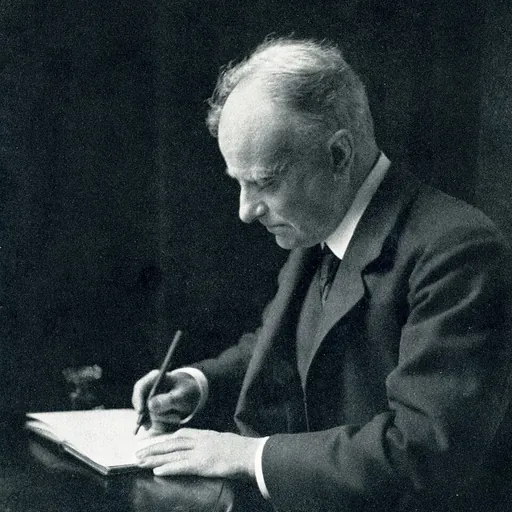
About Hugh Thomson
Lived 1860 – 1920 (aged 59). Hugh Thomson was a British illustrator and painter.
Hugh Thomson (1 June 18607 May 1920) was an Irish illustrator. He is best known for his pen-and-ink illustrations of works by authors such as Jane Austen, Charles Dickens, and J. M. Barrie. Thomson inaugurated the Cranford School of illustration with the publication of the 1891 Macmillan reissue of Mrs. Gaskell's Cranford.
Biography Thomson was born on 1 June 1860, in Coleraine, to tea merchant John Thomson (1822–1894) and shopkeeper Catherine (née Andrews) (d. 1871). He was the eldest of their three surviving children. Although he had no formal artistic training, as a young boy he would often fill his schoolbooks with drawings of horses, dogs, and ships. He attended Coleraine Model School, but left at the age of fourteen to work as a clerk at E. Gribbon & Sons, Linen Manufacturers. Years later, his artistic talents were discovered, and in 1877 he was hired by printing and publishing company Marcus Ward & Co. He first worked for the magazine with Randolph Caldecott on the 1885–86 issue, and later collaborated with Herbert Railton on the 1887–88 issue. His style at the time is said to be in the "straight tradition of Caldecott".
Thomson also gained praise and influenced many young artists through his book illustrations. He notably illustrated editions of William Shakespeare, Jane Austen, and Charles Dickens. His illustrations for Elizabeth Gaskell's Cranford (1891) inspired a slew of publishers to produce a series of gift books in a similar style ("crown octavo with three edges gilt, bound in dark green cloth, front and spine heavily stamped in gold"). Between 1886 and 1900, he illustrated a set of small classics for Macmillans and Kegan Paul. His illustrations were also featured in an 1891 exhibit with fellow illustrator Kate Greenaway at the Fine Art Society.
Methods
Thomson is best known for his pen-and-ink illustrations. He prepared most of his work in black and white until the early years of the 20th century, but would sometimes tint pieces for exhibits. The earliest known example of this was for the 1899 Birmingham and Midland Institute exhibition, where he colored the Cranford illustrations he had first drawn eight years earlier. Throughout his career Thomson occasionally dabbled with watercolours, but only used colour in his illustrations in response to his publishers' demand. The 'Cranford School' of illustration was not so much a 'school' with a common training, but more of a style which celebrated a sentimental, pre-industrial notion of ‘old England' . The style was named for Thomson's illustrations of the Macmillan reissue of Mrs. Gaskell's Cranford. Cranford was the first of a series of 24 volumes, of which Thomson illustrated 11. Felmingham includes the Cranford School within a broader movement that he called the Wig and Powder School which he states reflected an aspect of contemporary taste that . . . is sometimes called the 'Queen Ann revival'''. Felmingham included the popularity of such architectural features as high-pitched roof, Flemish gables, and white or green painted sash windows as an outward expression of the revival. Jenkins states that the term Wig and Powder School is loosely equivalent to the Cranford School and that the latter term was mostly used between 1890 and 1914.
The style was a nostalgic, affectionate and slightly whimsical approach to historical themes. and was distinguished by graphic nostalgia for a philistinism that was no more. The members of the school had all been fired by the literature, art, costume or atmosphere of England in the eighteenth century and became dealers in nostalgia on a very large scale. It was a style of illustration harking back to pre-industrial rural England, which specialized in the nostalgic recreation of a by-gone golden era before the ravages of industrialization. Cooke notes that the style involved the careful representation of Regency dress and interiors, pastoral settings and sharp characterization which was based on a close reading of the text. Chris Hammond (1860–1900), who signed her work Chris Hammond.
Thomson's illustration of Cranford
The following illustrations by Thomson for the 1891 Macmillan Cranford give some flavour of the book that inaugurated the Cranford School. The book has 111 illustrations in total.
Selected works
In total, Thomson illustrated sixty-five books and contributed a large number of illustrations to magazines and other periodicals.
Don’t just read it —
keep it.
Full-length biographies made to live with: read them, listen on the way to work, watch them tonight.
- E-book
- Audio
- Video
Instant download · yours to keep · every purchase keeps this site free
Important facts
People in Hugh Thomson's life
Named in this biography and alive at the same time
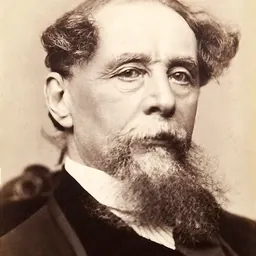


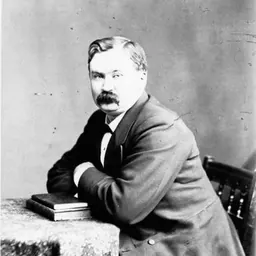
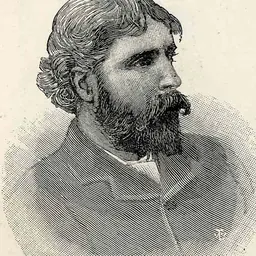
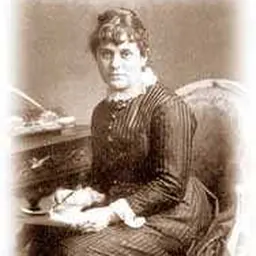
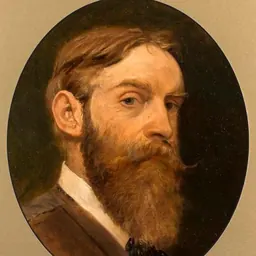

Related people
Same field, nearest in time
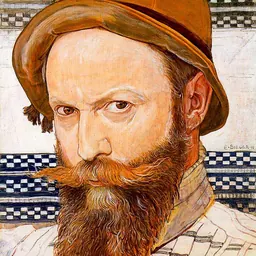


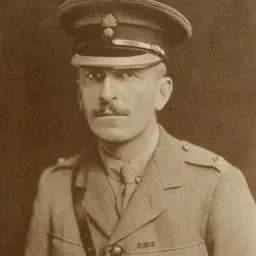
Contemporaries
People whose lives overlapped Hugh Thomson's

Frequently asked questions
Who was Hugh Thomson?
Irish illustrator (1860–1920)
When was Hugh Thomson born?
Hugh Thomson was born on 1 June 1860 in Coleraine.
When did Hugh Thomson die?
Hugh Thomson died on 7 May 1920 in London.
What was Hugh Thomson's occupation?
Hugh Thomson was an illustrator and painter.
What nationality was Hugh Thomson?
Hugh Thomson was British.
Sources & further reading
Cite this page
APA: Biography.guide. (2026). Hugh Thomson. https://biography.guide/hugh-thomson/
MLA: "Hugh Thomson." Biography.guide, https://biography.guide/hugh-thomson/.
Chicago: "Hugh Thomson." Biography.guide. https://biography.guide/hugh-thomson/.
Data last updated: 2026-09-20 · Spot an error? Report a correction.
Portrait: Wikimedia Commons · author & licence
Page generated 2026-09-27 04:57 UTC