
About Elizabeth Shippen Green
Lived 1871 – 1954 (aged 82). Elizabeth Shippen Green was an American illustrator, artist and painter.
New Woman As educational opportunities were made more available in the 19th century, women artists became part of professional enterprises, including founding their own art associations. Artwork made by women was considered to be inferior, and to help overcome that stereotype women became “increasingly vocal and confident” in promoting women's work, and thus became part of the emerging image of the educated, modern and freer “New Woman”. Artists "played crucial roles in representing the New Woman, both by drawing images of the icon and exemplifying this emerging type through their own lives.” In the late 19th century and early 20th century about 88% of the subscribers of 11,000 magazines and periodicals were women. As women entered the artist community, publishers hired women to create illustrations that depict the world through a woman's perspective. Other successful illustrators were Jennie Augusta Brownscombe, Jessie Willcox Smith, Rose O'Neill, and Violet Oakley.
Green was a member of Philadelphia's The Plastic Club, an organization established to promote "art for art's sake". Other members included Elenore Abbott, Jessie Willcox Smith, and Violet Oakley. Many of the women who founded the organization had been students of Howard Pyle. It was founded to provide a means to encourage one another professionally and create opportunities to sell their works of art.
Illustrator She was publishing before she was eighteen and began making pen and ink drawings and illustrations for St. Nicholas Magazine, Woman's Home Companion, and The Saturday Evening Post. In 1901 she signed an exclusive contract with the monthly Harper's Magazine. In 1905, Green won the Mary Smith Prize at the annual Pennsylvania Academy of the Fine Arts exhibition. In 1994, she was elected posthumously to the Society of Illustrators Hall of Fame.
Personal life Photograph of Violet Oakley and Jessie Willcox Smith facing the camera and Elizabeth Shippen Green and Henrietta Cozens, who are partially hidden, c. 1901, Violet Oakley papers, Archives of American Art, Smithsonian Institution. Green became close and lifelong friends with Oakley and Smith. They lived together first at the Red Rose Inn in Villanova north of Philadelphia (they were called "the Red Rose Girls" by Pyle), and later at Cogslea, their home in the Mount Airy neighborhood of Philadelphia.
In 1911, at the age of forty, Green married Huger Elliott, an architecture professor, after a five-year engagement, and moved away from Cogslea. Green died May 29, 1954.
Don’t just read it —
keep it.
Full-length biographies made to live with: read them, listen on the way to work, watch them tonight.
- E-book
- Audio
- Video
Instant download · yours to keep · every purchase keeps this site free
Important facts
People in Elizabeth Shippen Green's life
Named in this biography and alive at the same time

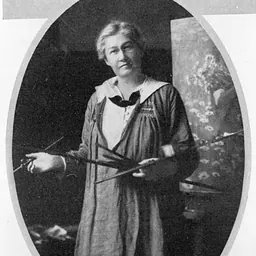


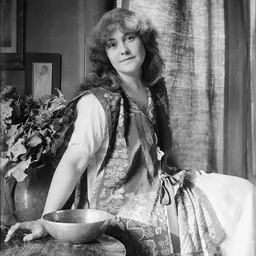

Related people
Same field, nearest in time

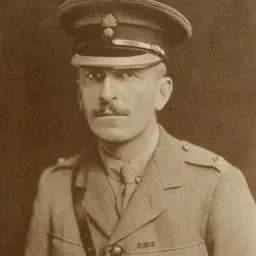




Contemporaries
People whose lives overlapped Elizabeth Shippen Green's


Frequently asked questions
Who was Elizabeth Shippen Green?
American artist (1871–1954)
When was Elizabeth Shippen Green born?
Elizabeth Shippen Green was born on 1 September 1871 in Philadelphia.
When did Elizabeth Shippen Green die?
Elizabeth Shippen Green died on 29 May 1954 in Philadelphia.
What was Elizabeth Shippen Green's occupation?
Elizabeth Shippen Green was an illustrator, artist and painter.
What nationality was Elizabeth Shippen Green?
Elizabeth Shippen Green was American.
Sources & further reading
· Wikipedia: Elizabeth Shippen Green
· DBpedia: Elizabeth Shippen Green
Cite this page
APA: Biography.guide. (2026). Elizabeth Shippen Green. https://biography.guide/elizabeth-shippen-green/
MLA: "Elizabeth Shippen Green." Biography.guide, https://biography.guide/elizabeth-shippen-green/.
Chicago: "Elizabeth Shippen Green." Biography.guide. https://biography.guide/elizabeth-shippen-green/.
Data last updated: 2026-09-20 · Spot an error? Report a correction.
Page generated 2026-09-27 05:34 UTC