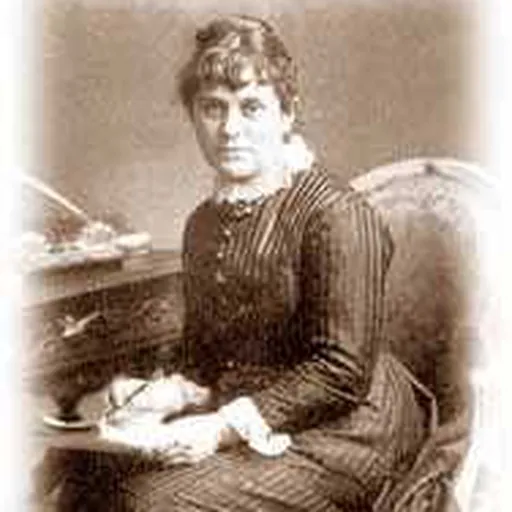
About Kate Greenaway
Lived 1846 – 1901 (aged 55). Kate Greenaway was a British painter, writer, illustrator, children's writer, artist and exlibrist.
Catherine Greenaway (17 March 18466 November 1901) was an English Victorian artist and writer, known for her children's book illustrations. She received her education in graphic design and art between 1858 and 1871 from the Finsbury School of Art, the South Kensington School of Art, the Heatherley School of Art, and the Slade School of Fine Art. She began her career designing for the burgeoning greetings card market, producing Christmas and Valentine's cards. In 1879 wood-block engraver and printer Edmund Evans printed Under the Window, an instant best-seller, which established her reputation. Her collaboration with Evans continued throughout the 1880s and 1890s.
The depictions of children in imaginary 18th-century costumes in a Queen Anne style were extremely popular in England and internationally, sparking the Kate Greenaway style. Within a few years of the publication of Under the Window Greenaway's work was imitated in England, Germany, and the United States.
Childhood
Kate Greenaway was born in Hoxton, London, the second of four children, to a working-class family. Her mother, Elizabeth, was a dress maker and her father, John, an engraver who gave up steady employment with Ebenezer Landells' engraving firm to strike out on his own. When Greenaway was very young, he accepted a commission to provide the engraved illustrations to a new edition of Charles Dickens's The Pickwick Papers, sending his young family away to relatives in the countryside to give himself solitude while producing the engravings. Kate's earliest memories are of Rolleston, Nottinghamshire, which affected her deeply. It was a place she returned to frequently in her childhood.
The publisher who commissioned John Greenaway's work went bankrupt, leaving the family without an income. The family lived in the flat above the shop, and young Kate, often left to her own devices to explore,
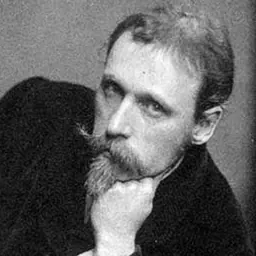
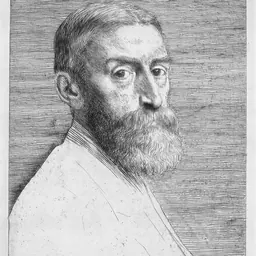
As a young child Greenaway's parents taught her at home; later she was sent to various dame schools; before going to the Royal Female School of Art. The two young women worked diligently in their studio to perfect their skills. At this point she was allowed to draw human figures, at first from plaster casts and then from models dressed in historical or ornamental costumes, skills she applied during the summers in Rolleston. However, she was unable to fully master human anatomy; frustrated that nude models were not permitted in the women's classes, she enrolled in night classes at Heatherley School of Fine Art where she met Edward Burne-Jones, Edward Poynter, and Walter Crane. Her reputation was built on the awards she had won while completing the National Art Courses, and buttressed with early exhibitions. She exhibited a set of fairy watercolours in 1868, which she sold to W. J. Loftie, publisher of People's Magazine. He set them to verse and printed them in his magazine. A year later Frederick Warne & Co purchased six illustrations for a toy book edition of "Diamonds and Toads", printed by Joseph Martin Kronheim, which took a year to complete. where she studied masters such as Jan van Eyck, whose Arnolfini Portrait she especially liked.
Freelance years The new, popular and lucrative card market coincided with the end of Greenaway's formal training. Card maker Marcus Ward & Co hired Greenaway in 1871 on a freelance basis. Her cards sold well, and early Valentines sold 25,000 copies in weeks.
Under the Window Her first book, Under the Window (1879), a collection of simple, perfectly idyllic verses about children, was a bestseller.
Later years and death
In the 1880s, the most popular designers of bookplates were Greenaway, along with Crane and Aubrey Beardsley. Their work exhibited intricate Art Nouveau elements with flowing vines and floral patterns.
Greenaway was elected to membership of the Royal Institute of Painters in Water Colours in 1889. She exhibited her work at the Palace of Fine Arts at the 1893 World's Columbian Exposition in Chicago, Illinois. She lived in an Arts and Crafts style house she commissioned from Richard Norman Shaw in Frognal, London, although she spent summers in Rolleston.
Greenaway died of breast cancer in 1901, at the age of 55. She is buried in Hampstead Cemetery, London.
Style Greenaway's paintings were reproduced by chromoxylography, by which the colours were printed from hand-engraved wood blocks by the firm of Edmund Evans. Through the 1880s and 1890s, her only rivals in popularity in children's book illustration were Walter Crane and Randolph Caldecott.
"Kate Greenaway" children, all of them girls and boys too young to be put in trousers, were dressed in her own versions of late 18th century and Regency fashions: smock-frocks and skeleton suits for boys, high-waisted pinafores and dresses with mobcaps and straw bonnets for girls. The influence of children's clothes in portraits by British painter John Hoppner (1758–1810) may have provided her some inspiration. Liberty of London adapted Kate Greenaway's drawings as designs for actual children's clothes. A full generation of mothers in the liberal-minded "artistic" British circles who called themselves The Souls and embraced the Arts and Crafts movement dressed their daughters in Kate Greenaway pantaloons and bonnets in the 1880s and 1890s. The style was often used by painter Maude Goodman in her depictions of children.
Legacy The Kate Greenaway Medal, established in her honour in 1955, was awarded annually by the Chartered Institute of Library and Information Professionals in the UK to an illustrator of children's books. In 2022, however, her name was controversially dropped as part of the terms of a sponsorship deal with Yoto to rebrand the Carnegie Medal for Writing and the Kate Greenaway Medal for Illustration under the single name “The Carnegie Medals”.
Books illustrated
Kingston, William, Infant Amusements, or How to Make a Nursery Happy, 1867. Aulnoy, Marie, Madame D'Aulnoy's Fairy Tales, 9 v., Gall and Inglis, 1871. Aunt Louisa's London Toy Books: Diamonds and Toads, Warne, 1871. Jeune, Margaret S., My School Days in Paris, London, Griffith and Farran, 1871. Knox, Kathleen, Fairy Gifts; or, A Wallet of Wonders, Griffith & Farran, 1874. Aunt Cae, The Children of the Parsonage, Griffith & Farran, 1874. Mulholland, Rosa, Puck and Blossom, Marcus Ward, 1874. Hill, Miranda, The Fairy Spinner, Marcus Ward, 1874. Jerrold, Alice, A Cruise in the Acorn, London, Marcus Ward, 1875. Clark, Mary Senior, Turnaside Cottage, London, Marcus Ward, 1875. Potter, Frederick Scarlett, Melcomb Manor: A Family Chronicle, London, Marcus Ward, 1875. Children’s Songs, London, Marcus Ward, c. 1875. Knox, Kathleen, Seven Birthdays; or, The Children of Fortune, Griffith & Farran, 1875. Quiver of Love, a Collection of Valentines (with Walter Crane), Marcus Ward, 1876. LaBlanche, Fanny, Starlight Stories Told to Bright Eyes and Listening Ears, Griffith & Farran, 1877. Russell, Rutherford, Tom Seven Years Old, London, Marcus Ward, 1877. Hunt, Mrs. Bonavia, Poor Nelly, London, Cassell, Petter, Gilpin, 1878. Campbell, Lady Colin, Topo: A Tale About English Children in Italy, Marcus Ward, 1878. Yonge, Charlotte Mary, Heartsease; or The Brother’s Wife, Macmillan, 1879. Yonge, Charlotte Mary, The Heir of Redclyffe, Macmillan, 1879. Pollock, Walter Herries, Amateur Theatricals, London, Macmillan, 1879. Toyland, Trot’s Journey and Other Poems and Stories, New York, R. Worthington, c. 1879 Weatherly, George, The “Little Folks” Painting Book, Cassell, Petter, Gilpin, 1879. Weatherly, George, The “Little Folks” Nature Painting Book, Cassell, Petter, Gilpin 1879. A Favorite Album of Fun and Fancy, London, Cassell, Petter, Gilpin, c. 1879. Haile, Ellen, Three Brown Boys and Other Happy Children, New York, Cassell & Co., c. 1879. Haile, Ellen, The Two Gray Girls and Their Opposite Neighbours, New York, Cassell & Co., c. 1879. Under the Window, London, George Routledge, 1879. Engraved and colour printed by Edmund Evans. Barker, Mrs. Sale, Kate Greenaway's Birthday Book, London, George Routledge, 1880. Engraved and colour printed by Edmund Evans. Freddie’s Letter: Stories For Little People, London, Routledge, 1880. The Old Farm Gate, London, George Routledge, c. 1880. Lang, Andrew, The Library, London, Macmillan and Company, 1881. Locker, Frederick, London Lyrics, London, Macmillan and Company, 1881. Mother Goose; or, The Old Nursery Rhymes, London, Routledge, 1881. Engraved and colour printed by Edmund Evans. Foster, Myles Burkett, A Day in a Child’s Life, London, Routledge, 1882. Engraved and colour printed by Edmund Evans. Ranking, Montgomerie and Tully, Thomas K., Flowers and Fancies; Valentines Ancient and Modern, Marcus Ward, 1882. Weatherly, F. E., The Illustrated Children’s Birthday Book (with others), London, W. Mack, 1882. Taylor, Ann and Jane, Little Ann and Other Poems, London, Routledge, 1883. Engraved and colour printed by Edmund Evans. Zimmern, Helen, Tales from the Edda, London, Sonnenschein, 1883. Language of Flowers, London, Routledge, 1884. Engraved and colour printed by Edmund Evans. A Painting Book By Kate Greenaway, London, George Routledge, 1884. Engraved and colour printed by Edmund Evans. Ellice, Robert, compiler, Songs for the Nursery: A Collection of Children’s Poems, Old and New, W. Mack, 1884. Kate Greenaway’s Christmas Carols, London: George Routledge, c. 1884. Kate Greenaway's Alphabet, London, Routledge, 1885. Engraved and colour printed by Edmund Evans. Kate Greenaway's Album, London, Routledge, c. 1885. Engraved and colour printed by Edmund Evans. (only eight copies were printed) Marigold Garden: Pictures and Rhymes, London, Routledge, 1885. Engraved and colour printed by Edmund Evans. Mavor, William, English Spelling Book, London, Routledge, 1885. Engraved and colour printed by Edmund Evans. Ruskin, John, editor, Dame Wiggins of Lee and Her Seven Wonderful Cats, London, George Allen, 1885. A Apple Pie: An Old-Fashioned Alphabet Book, London, Routledge, 1886. Engraved and colour printed by Edmund Evans. Harte, Bret, The Queen of the Pirate Isle, Chatto & Windus, 1886. Engraved and colour printed by Edmund Evans. Baby's Birthday Book, London, Marcus Ward, 1886. Allingham, William, Rhymes for the Young Folk, Cassell and Co., 1887. Engraved and colour printed by Edmund Evans. Queen Victoria's Jubilee Garland, London, George Routledge, 1887. Engraved and colour printed by Edmund Evans. Browning, Robert, The Pied Piper of Hamelin, London, Routledge, 1888. Engraved and colour printed by Edmund Evans. Around the House, New York, Worthington, 1888. Kate Greenaway's Book of Games, London, Routledge, 1889. Engraved and colour printed by Edmund Evans. Cresswell, Beatrice F., The Royal Progress of King Pepito, London, Society for Promoting Christian Knowledge, 1889. Engraved and colour printed by Edmund Evans. Arnim, Mary Annette, The April Baby's Book of Tunes, London and New York, Macmillan, 1900. The first use of colour-lithography on any of Kate’s Books. Spielmann, Mabel H., Littledom Castle and Other Tales (with others), London, George Routledge, 1903. Dobson, Austin, De Libris Prose and Verse (with others), London, Macmillan, 1908, 1911. Almanack, London, Routledge, 1883–1895. Engraved and colour printed by Edmund Evans.
Gallery
Don’t just read it —
keep it.
Full-length biographies made to live with: read them, listen on the way to work, watch them tonight.
- E-book
- Audio
- Video
Instant download · yours to keep · every purchase keeps this site free
Important facts
People in Kate Greenaway's life
Named in this biography and alive at the same time





Related people
Same field, nearest in time
Contemporaries
People whose lives overlapped Kate Greenaway's



Frequently asked questions
Who was Kate Greenaway?
British artist (1846-1901)
When was Kate Greenaway born?
Kate Greenaway was born on 17 March 1846 in London.
When did Kate Greenaway die?
Kate Greenaway died on 6 November 1901 in Frognal.
What was Kate Greenaway's occupation?
Kate Greenaway was a painter, writer, illustrator, children's writer, artist and exlibrist.
What nationality was Kate Greenaway?
Kate Greenaway was British.
Sources & further reading
Cite this page
APA: Biography.guide. (2026). Kate Greenaway. https://biography.guide/kate-greenaway/
MLA: "Kate Greenaway." Biography.guide, https://biography.guide/kate-greenaway/.
Chicago: "Kate Greenaway." Biography.guide. https://biography.guide/kate-greenaway/.
Data last updated: 2026-09-24 · Spot an error? Report a correction.
Portrait: Wikimedia Commons · author & licence
Page generated 2026-09-27 05:09 UTC