
About Randolph Caldecott
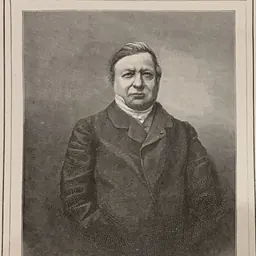
Lived 1846 – 1886 (aged 39). Randolph Caldecott was a British painter, illustrator, exlibrist, short story writer and artist.
Randolph Caldecott ( ; 22 March 1846 – 12 February 1886) was a prolific British artist and illustrator who illustrated novels and accounts of foreign travel, made humorous drawings depicting hunting and fashionable life, drew cartoons, made sketches of the Houses of Parliament inside and out, and exhibited sculptures and paintings in oil and watercolour in the Royal Academy. He is most famous for his illustrations of children's books, for transforming the style of book illustration, and for his continuing influence on illustrators of children's books. where his father, John Caldecott, was a tailor-turned-accountant, twice married with thirteen children. Caldecott was his father's third child with his first wife, Mary Dinah Brookes. In 1848, the family moved to Challoner House, Crook Street, Chester, and in 1860 to 23 Richmond Place, Boughton, a village just outside the city. After six years at Whitchurch, Caldecott obtained a position at the head office, in Manchester, of the Manchester & Salford Bank. He lodged variously in Aberdeen Street, Rusholme Grove, and at Bowdon. He enjoyed a steadily-rising income, and was popular with his fellow clerks, with one recalling that he came "like a ray of sunshine into our life, and brightened the drudgery of our toil with his cheerful humour". He drew a lot of caricatures of colleagues and customers and later admitted that he did not show much interest in banking. He studied at night school at the Manchester School of Art, joined the arts-appreciation Brasenose Club, sketched the streets of Manchester, and met with success in local papers including Will o' the Wisp and The Sphinx. three for Juliana Ewing (Jackanapes (1883), Daddy Darwin's Dovecot (1884), and Lob Lie-by-the-Fire (1885)) and another Blackburn book, Breton Folk: An Artistic Tour in Brittany (1881).
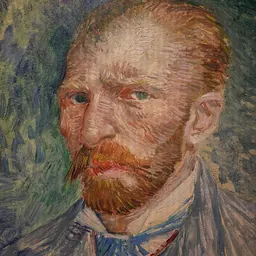
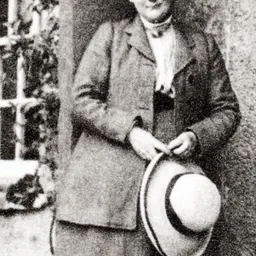
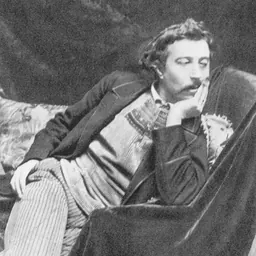
Breton Folk became a popular book and it was noted by the artists of the Pont-Aven School, who were working to free themselves from the conservatism of their academies. The artist most taken by Caldecott's illustrations was Paul Gauguin, who imitated them in his sketches of Breton girls and worked those sketches into his 1886 painting Four Breton Women. Vincent van Gogh did the same thing, producing Breton Women in 1888. Caldecott's influence is also clear in the works of Beatrix Potter.
In 1876, Caldecott had a picture exhibited in the Royal Academy for the first time; he went on to exhibit watercolours, oils and sculptures at the academy (he also dabbled in metal relief, terracotta and murals). He also exhibited at the Fine Art Society, the Grosvenor Gallery, and the Dudley Museum and Art Gallery. Initial print runs were limited to 6,000, but the demand was such that sales of Caldecott's Nursery Rhymes shot to 867,000 copies (of twelve books). Caldecott published his own books, and The Graphic published his works in four volumes. By 1884, Caldecott was both rich and internationally famous. It was there that he became engaged to Marian Brind, who lived at nearby Chelsfield. They were married on 18 March 1880 and lived at Wybournes for the next two years. There were no children of the marriage. In the autumn of 1882, the Caldecotts left Kent and bought a house, Broomfield, at Frensham in Surrey; they also rented No 24 Holland Street, Kensington.
Caldecott's health was generally poor and he suffered from gastritis and a heart condition resulting from a childhood case of rheumatic fever. This prompted many winter trips to the Mediterranean and other warm climates. In 1886, he and Marian traveled to Florida where, in an unusually cold February, Randolph became ill and, on February 12, 1886, died at St. Augustine at age 39. A headstone marks his grave in the Evergreen Cemetery in St. Augustine and his gravesite is designated a Literary Landmark.
Legacy Soon after his death, his many friends contributed to a memorial, which was designed by Sir Alfred Gilbert. It was placed in the crypt of St Paul's Cathedral, London. There is also a memorial to him in Chester Cathedral, placed by the boys of the King's School.
In 1938, at the suggestion of Publishers Weekly editor Frederic G. Melcher, the American Library Association instituted the Caldecott Medal. It is awarded annually, by the American Library Association and the Association for Library Service to Children, to the artist of the "most distinguished American picture book for children published during the preceding year".
Caldecott maintained the life-long habit of decorating his letters, papers and documents of all descriptions with marginal sketches to illustrate the content or provide amusement. A number of his letters have been reprinted with their illustrations in the 1976 book Yours Pictorially: Illustrated Letters of Randolph Caldecott.
The Randolph Caldecott Society of America, and the Randolph Caldecott Society UK, remain active.
There is now a memorial plaque at his birthplace on Chester's Bridge Street.
Appreciation Gleeson White wrote of Caldecott:
G. K. Chesterton wrote in a Caldecott picture book that he presented to a young friend: This is the sort of book we like (For you and I are very small), With pictures stuck in anyhow, And hardly any words at all.
You will not understand a word Of all the words, including mine; Never you trouble; you can see, And all directness is divine—
Stand up and keep your childishness: Read all the pedants’ screeds and strictures; But don’t believe in anything That can’t be told in coloured pictures.
For Maurice Sendak "Caldecott's work heralds the beginning of the modern picture book. He devised an ingenious juxtaposition of picture and word, a counterpoint that never happened before. Words are left out—but the picture says it. Pictures are left out—but the word says it." Sendak also appreciated the subtle darkness of Caldecott's work: "You can't say it's a tragedy, but something hurts. Like a shadow passing quickly over. It is this which gives a Caldecott book—however frothy the verses and pictures—its unexpected depth."
Illustrations
Paintings
Don’t just read it —
keep it.
Full-length biographies made to live with: read them, listen on the way to work, watch them tonight.
- E-book
- Audio
- Video
Instant download · yours to keep · every purchase keeps this site free
Important facts
People in Randolph Caldecott's life
Named in this biography and alive at the same time


Related people
Same field, nearest in time
Contemporaries
People whose lives overlapped Randolph Caldecott's




Frequently asked questions
Who was Randolph Caldecott?
British artist and illustrator (1846-1886)
When was Randolph Caldecott born?
Randolph Caldecott was born on 22 March 1846 in Chester.
When did Randolph Caldecott die?
Randolph Caldecott died on 12 February 1886 in St. Augustine.
What was Randolph Caldecott's occupation?
Randolph Caldecott was a painter, illustrator, exlibrist, short story writer and artist.
What nationality was Randolph Caldecott?
Randolph Caldecott was British.
Sources & further reading
· Wikipedia: Randolph Caldecott
Cite this page
APA: Biography.guide. (2026). Randolph Caldecott. https://biography.guide/randolph-caldecott/
MLA: "Randolph Caldecott." Biography.guide, https://biography.guide/randolph-caldecott/.
Chicago: "Randolph Caldecott." Biography.guide. https://biography.guide/randolph-caldecott/.
Data last updated: 2026-09-27 · Spot an error? Report a correction.
Page generated 2026-09-27 05:17 UTC