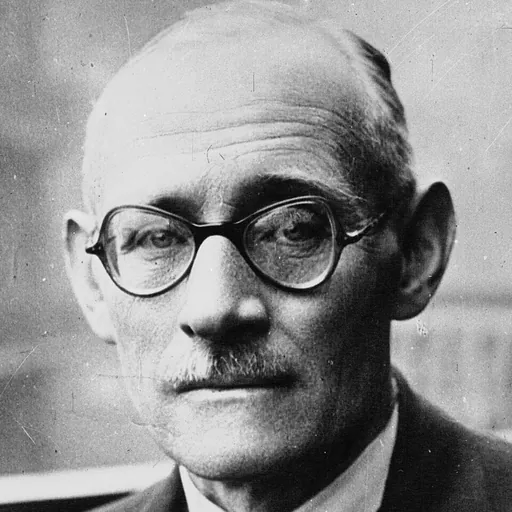
About Hugh Ruttledge
Lived 1884 – 1961 (aged 77). Hugh Ruttledge was a British mountaineer.
Hugh Ruttledge (24 October 1884 – 7 November 1961) was an English civil servant and mountaineer who was the leader of two expeditions to Mount Everest in 1933 and 1936.
Early life The son of Lt.-Colonel Edward Butler Ruttledge, of the Indian Medical Service, and of his wife Alice Dennison, Ruttledge was educated at schools in Dresden and Lausanne and then at Cheltenham College. In 1903 he matriculated as an exhibitioner at Pembroke College, Cambridge, and in 1906 he took a second-class Honours degree in the Classical Honours tripos.
India and mountaineering Ruttledge passed the Indian Civil Service examination in 1908 and spent a year at the University of London studying Indian law, history and languages, before going out to India towards the end of 1909.
Ruttledge was in Tibet on official business, but because the official whom he was expecting to see, the senior Garpon of Gartok, was detained elsewhere, Ruttledge and his wife decided to make the Kailas parikrama, whilst Wilson (who accompanied them on the trip) and a Sherpa called Satan (sic) explored the various approaches to the mountain. Ruttledge considered the north face of Kailas to be high and 'utterly unclimbable'.
He contemplated an ascent of the mountain via the north-east ridge but decided that he did not have sufficient time; on returning to Almora he wrote that he had enjoyed 'some of enjoyable trekking, performed entirely on foot to the scandal of right-thinking Indians and Tibetans'. Ruttledge and his wife also made the first known crossing of Traill's Pass between Nanda Devi and Nanda Kot. By the time of his retirement, Ruttledge and his wife had crossed twelve different high passes.
1933 Everest expedition
In 1933 permission was granted to the British by the authorities in Tibet for a further attempt on the mountain. The Mount Everest Committee's task of finding a leader for this, the fourth British expedition, was made difficult by the incapacity of Charles Granville Bruce (the leader of previous British expeditions to the mountain), and the unwillingness of Major Geoffrey Bruce and Brigadier E. F. Norton to assume the role. As Ruttledge wrote, 'it was necessary to find someone with experience of Himalayan peoples as well as with mountaineering knowledge, and eventually the lot fell upon me'.
The personnel for this attempt, which used the then-standard route of choice of the British via the North Col, was made up of a combination of military types and Oxbridge graduates, and included none of those who had been on the 1924 attempt. The full British complement was Frank Smythe, Eric Shipton, Jack Longland, Eugene Birnie, Percy Wyn-Harris, Edward Shebbeare, Lawrence Wager, George Wood-Johnson, Hugh Boustead, Colin Crawford, Tom Brocklebank, E. Thompson and William Maclean, with Raymond Greene as senior doctor and William 'Smidge' Smyth-Windham as chief radio operator.
The highest point attained on this attempt was 8,570 m (28,116 f), but the route was found to be too difficult and the vital camp V that should have been reached on a rare day with fair weather – 20 May – was, as a result of disagreements between team members, never established. Following the success of this many other companies looked at sponsoring further attempts.
1936 Everest expedition
With the near-universal support for his leadership on the 1933 trip, Ruttledge was selected to lead a second expedition (the sixth British expedition), which was the largest to date to attempt Everest. Alongside veterans of the 1933 expedition – Frank Smythe, Eric Shipton and Percy Wyn-Harris – team members were Charles Warren, Edmund Wigram, Edwin Kempson, Peter Oliver, James Gavin, John Morris and Gordon Noel Humphreys. William Smyth-Windham was again chief radio operator. Although the North Col was reached, a combination of high winds, storms and waist-deep snow made progress above 7,000 m difficult and, with the monsoon arriving early, Ruttledge called off the expedition.
Tenzing Norgay wrote of Ruttledge and the 1936 expedition:
Later life In 1932 Ruttledge planned a life as a farmer and to this end bought the island of Gometra in the Inner Hebrides, just off the west coast of Mull. Upon returning from the 1936 expedition to Everest he decided that a life at sea would be preferable, and he bought several boats – a converted Watson lifeboat and later a larger sailing cutter – to pursue this idea. In 1950 he moved ashore, buying a house on the edge of Dartmoor.
Ruttledge died in Stoke, Plymouth, on 7 November 1961.
Don’t just read it —
keep it.
Full-length biographies made to live with: read them, listen on the way to work, watch them tonight.
- E-book
- Audio
- Video
Instant download · yours to keep · every purchase keeps this site free
Important facts
People in Hugh Ruttledge's life
Named in this biography and alive at the same time


Related people
Same field, nearest in time
Contemporaries
People whose lives overlapped Hugh Ruttledge's

Frequently asked questions
Who was Hugh Ruttledge?
British colonial administrator (1884–1961)
When was Hugh Ruttledge born?
Hugh Ruttledge was born on 24 October 1884.
When did Hugh Ruttledge die?
Hugh Ruttledge died on 7 November 1961 in Plymouth.
What was Hugh Ruttledge's occupation?
Hugh Ruttledge was a mountaineer.
What nationality was Hugh Ruttledge?
Hugh Ruttledge was British.
Sources & further reading
Cite this page
APA: Biography.guide. (2026). Hugh Ruttledge. https://biography.guide/hugh-ruttledge/
MLA: "Hugh Ruttledge." Biography.guide, https://biography.guide/hugh-ruttledge/.
Chicago: "Hugh Ruttledge." Biography.guide. https://biography.guide/hugh-ruttledge/.
Data last updated: 2026-09-22 · Spot an error? Report a correction.
Portrait: Wikimedia Commons · author & licence
Page generated 2026-09-27 05:03 UTC