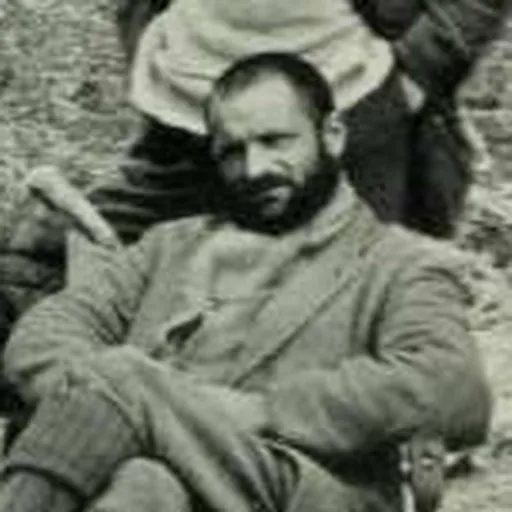
About Henry Morshead
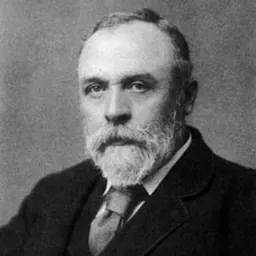
Lived 1882 – 1931 (aged 48). Henry Morshead was a British mountaineer, explorer and soldier, known for Mount Everest and Yarlung Tsangpo Grand Canyon.
Henry Treise Morshead (23 November 1882 – 17 May 1931) was an English surveyor, explorer and mountaineer. He is remembered for several achievements – with Frederick Bailey he explored the Tsangpo Gorge and finally confirmed that the Yarlung Tsangpo flows into the Brahmaputra River after cascading through Himalaya; also he was a member of the 1921 and 1922 British Mount Everest expeditions and in 1922 he climbed to a height of over . His death was due to murder and the circumstances remain mysterious.
Early and personal life
Born in 1882 and brought up at Hurlditch Court, near Tavistock near the Devon–Cornwall border, Henry Morshead was the eldest son of Reginald Morshead, a banker, and Ella Mary Morshead, née Sperling. He was educated at Winchester College where he did reasonably well and at a second attempt passed the exams to enter the Royal Military Academy, Woolwich, to become an officer in the Royal Engineers in 1901. At the Chatham Royal School of Military Engineering he had such a distinguished record that in 1904 he was posted to the Indian Army in the Royal Engineers' Military Works Services at Agra.
In 1906 he joined the Survey of India where, as was often the case, he retained his military status and rank. Apart from his service in the Great War he remained with the Survey until his death. Two of their sons were killed in World War II.
Exploration of the Tsangpo Gorge
North of Himalaya, the Yarlung Tsangpo River flows east through the Tibetan Plateau and then turns south into a series of massive gorges in Himalayan mountains. Until the 1880s it was unknown by which route it eventually reached the sea or even whether it debouched to the Pacific or Indian ocean. By 1911 the connection with the Brahmaputra River had become widely accepted but another mystery remained: the river dropped from to in a distance of perhaps which is extremely steep for a river of this size. It seemed there must be a massive waterfall and, indeed, Kinthup had reported one high.
After the war Morshead, back in his substantive rank of major, returned to the Survey of India to lead survey work in Waziristan.
April 1929 brought promotion to Director of the Survey of India's Burma Circle where Morshead lived in Maymyo, Burma. At the time Burma was a province of British India. He studied the Burmese language and made lengthy tours of inspection of surveying in that country. Until this time his family had always lived with him but his eldest son became old enough for school and so returned to England, initially with the nanny.
Morshead's murder
In February 1931 Morshead stayed in Burma while the rest of the family returned to England for reasons of schooling. It was a time of unrest. A rebellion had started in Burma, against British rule, and Thakin rebels were in the vicinity of Maymyo. A colleague of Morshead had been shot at by a disaffected Survey employee who had been convicted of attempted murder. On 17 May 1931 Morshead set off riding by himself and later that day his riderless pony was discovered back in Maymyo. After extensive searching his body was found next day in the jungle nearby. He had been shot in the chest at point blank range. Two people were arrested, an ex-Gurkha who had been out shooting at the time, and the man whose gun he had been using. There was no apparent motive and no charges were ever brought because both men seemed to have alibis.
In 1982 Morshead's son Ian published a biography of his father. Regarding his father's death he was suspicious because, although the first newspaper reports said his father had been murdered, later reports spoke of his being killed by a tiger, or by rebels. In 1980 Ian Morshead visited Burma and spoke to some of the people involved at the time. When his father's family were back in England, Henry's sister Ruth had been living with him in Burma. Henry disapproved of a local leader of the community, Syed Ali, who had been seen out horse riding with Ruth. Morshead had possibly had an argument with him. A week later on Henry's fatal pony trek it is likely he had borrowed Syed Ali's pony because when the pony returned unescorted to Maymyo it was to Syed Ali's house it went, passing right by Henry's house. Ian Morshead speculated, but finally doubted his own speculation, that Syed Ali had arranged for Henry to be killed and this had been carried out by the Gurkha.
Don’t just read it —
keep it.
Full-length biographies made to live with: read them, listen on the way to work, watch them tonight.
- E-book
- Audio
- Video
Instant download · yours to keep · every purchase keeps this site free
Important facts
People in Henry Morshead's life
Named in this biography and alive at the same time


Related people
Same field, nearest in time
Contemporaries
People whose lives overlapped Henry Morshead's




Frequently asked questions
Who was Henry Morshead?
English surveyor, explorer and mountaineer
When was Henry Morshead born?
Henry Morshead was born on 23 November 1882 in Devon.
When did Henry Morshead die?
Henry Morshead died on 17 May 1931 in Pyin Oo Lwin.
What was Henry Morshead's occupation?
Henry Morshead was a mountaineer, explorer and soldier.
What was Henry Morshead known for?
Henry Morshead was known for Mount Everest and Yarlung Tsangpo Grand Canyon.
What nationality was Henry Morshead?
Henry Morshead was British.
Sources & further reading
Cite this page
APA: Biography.guide. (2026). Henry Morshead. https://biography.guide/henry-morshead/
MLA: "Henry Morshead." Biography.guide, https://biography.guide/henry-morshead/.
Chicago: "Henry Morshead." Biography.guide. https://biography.guide/henry-morshead/.
Data last updated: 2026-09-22 · Spot an error? Report a correction.
Portrait: Wikimedia Commons · author & licence
Page generated 2026-09-27 04:59 UTC