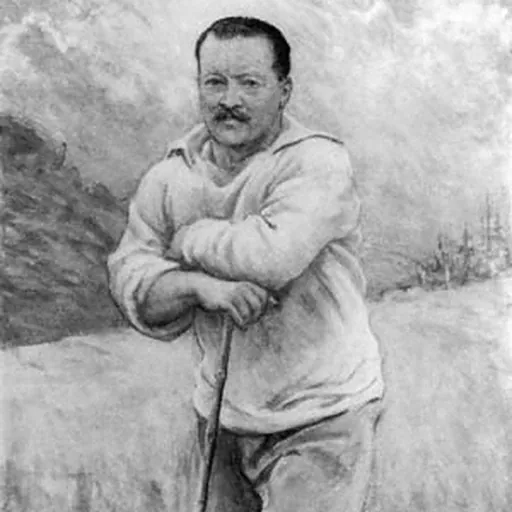
About Charles Granville Bruce
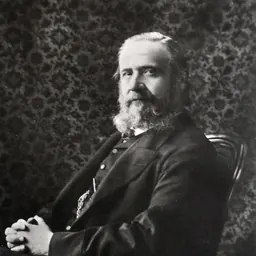
Lived 1866 – 1939 (aged 73). Charles Granville Bruce was a British explorer, mountaineer and podpolkovnik.
Brigadier-General Charles Granville Bruce, (7 April 1866 – 12 July 1939) was a senior British Indian Army officer and a veteran Himalayan mountaineer and leader of the second and third British expeditions to Mount Everest in 1922 and 1924. In recognition of the former he was awarded a special prize at the conclusion of the first ever Winter Olympics.
Background and early life Charles Granville Bruce was the youngest of the fourteen children of Henry Bruce, 1st Baron Aberdare (1815–1895) and Norah Napier (1827–1897). His mother was the youngest daughter of General Sir William Francis Patrick Napier.
Bruce was educated at Harrow and Repton. His early life alternated between Queen's Gate, London, the family home in Aberdare, Wales, and a Scottish estate.
After leaving school, Bruce entered military college. He had physical strength, was an enthusiastic boxer and 300-yard runner, and in the 1880s represented England against France in an international running meeting.
In 1894 he married Finetta Madelina Julia Campbell, daughter of Sir Edward Campbell, 2nd Baronet. As a young lieutenant he was posted to Abbottabad, a British hill station in the Panjab, where he developed a passion for the locality, wrestling and climbing. Bruce had an akhara (wrestling pit) dug near his residence, where he practised on most days. Both the British and the Rajahs wagered thousands of rupees on professional wrestling matches and took pride in having the strongest sides. In the 1910s, Bruce was patron of the wrestler Rahim Sulaniwala, who went on to become a renowned champion.
Bruce took a special interest in his Gurkha soldiers and became fluent in Nepali. He introduced hill racing to his Gurkha regiment and in 1891 took his champion runner Pabir Thapa to Zermatt, in Switzerland, to learn ice-climbing. On the way there, the two stayed at Aberdare, where Thapa enjoyed "running down" poachers. Despite his poor English, he was very popular with the locals. He disappeared for the last three days of his visit and was found living it up with some coal miners in Tonypandy. Bruce went on to train the Gurkhas in mountain-warfare. In 1897 he equipped his troops on the Northern Frontier with shorts, and is widely credited with their introduction to the British Army.
Bruce's climbing experience was impressive. He spent ten climbing seasons in the European Alps and took part in three of the earliest climbing expeditions to the Himalaya. In 1892, with a troop of Gurkha soldiers he accompanied Martin Conway in his exploration of the Baltoro region of the Karakorum, visiting Muztagh Tower, Broad Peak and K2. In 1893 he was with Francis Younghusband on a mission to the Hindu Kush to bestow recognition on Nizam-uk-Mulk as Mehtar. He and Younghusband were probably the first to discuss mounting an expedition to climb Everest. In Himalayan Wanderer, Bruce says that it was Younghusband's idea. Younghusband says that it was Bruce's. In 1895, Bruce joined Albert F. Mummery and Collie in their attempt on Nanga Parbat, but he had to leave early because his army leave was up. In 1906–1907, he and Longstaff took another troop of Gurkhas to the Nanda Devi group, visiting Dunagiri and Kanchenjunga, and climbing Trisul.
In 1915, Bruce went to Gallipoli, in command of the 1st Battalion the 6th Gurkha Rifles. After two months in the front line he was severely wounded and was transferred back to India, where he commanded the Bannu Brigade on the North West Frontier from 1916 to 1919.
Between 1923 and 1925 Bruce was president of the Alpine Club. Because of his experience in the Himalaya he was appointed leader of the 1922 British Mount Everest Expedition, the first attempt to summit Everest. He was skilful in bridging the cultural divide between Sahib and Sherpa, and had long advocated training Indians in mountain techniques, with a view to forming a body of porters and guides like those in the European Alps. He called his men porters rather than coolies. He was particularly liked by the local peoples, and for the 1922 expedition collected a cohort of local men, and enthused them with an esprit de corps. He later christened an elite group of high altitude porters the "Tigers". He was universally admired by the expedition team; George Mallory in particular, liked and trusted him. Bruce was wary of oxygen apparatus, nevertheless, George Finch and Geoffrey Bruce (Charles's cousin ) used oxygen to set a new altitude record of 27,300 feet on Everest, via the North Col.
Bruce was appointed leader of the next effort to summit Everest, the 1924 British Mount Everest expedition. Several stories of him survive the trip. On the trek to Tibet, two of his muleteers got drunk and bit a local Tibetan woman. As punishment he fined them, and made them carry the "treasury" (double the normal load carried) on a three-day march. Arthur Hinks, the rather mean-spirited secretary of the expedition committee seated in London, was exasperated by the official correspondence reaching London from the Himalayas.
Bruce contracted malaria while tiger shooting in India before the expedition, and had to be stretchered out of Tibet. Edward Felix Norton took on leadership, and would set a new height record of on the mountain, less than below the summit. Two days later Mallory and Andrew Irvine disappeared on their summit attempt, and it is still argued that they may have succeeded in completing Bruce's goal of having an expedition member reach the summit.
Bruce did not return to Everest. Between 1931 and 1936 he was Honorary Colonel of the 5th Royal Gurkha Rifles of the Indian Army. He died of a stroke in 1939.
In 1923 he was elected President of the Alpine Club, in 1925 he was awarded the Royal Geographical Society Founder's Medal, for his "lifelong geographical work in the exploration of the Himalaya, culminating in his leadership of the Mount Everest Expeditions of 1922 and 1924". He had been appointed a Member of the Royal Victorian Order in 1903, and was made a Companion of the Order of the Bath in 1918. He received the honorary degree of Doctor of Science from the Universities of Oxford and of Wales, the Doctor of Civil Law of the University of Edinburgh and the University of St Andrews.
Expeditions
1892: Karakoram, with William Martin Conway 1895: Nanga Parbat, with Albert F. Mummery 1907: Trisul, with Tom George Longstaff 1922: 1922 British Mount Everest expedition, with Edward Lisle Strutt 1924: 1924 British Mount Everest expedition
Works by Bruce Twenty Years in the Himalaya. London: Edward Arnold, 1910 Kulu and Lahoul. An account of my latest climbing journeys in the Himalaya. London: Edward Arnold, 1914 The Assault on Mount Everest 1922. London: Longmans, Green & Co, 1922 Himalayan Wanderer. London: Alexander Maclehose & Co, 1934
Don’t just read it —
keep it.
Full-length biographies made to live with: read them, listen on the way to work, watch them tonight.
- E-book
- Audio
- Video
Instant download · yours to keep · every purchase keeps this site free
Important facts
People in Charles Granville Bruce's life
Named in this biography and alive at the same time


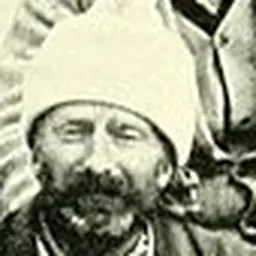
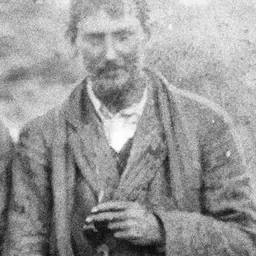
Related people
Same field, nearest in time


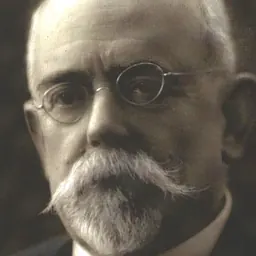

Contemporaries
People whose lives overlapped Charles Granville Bruce's

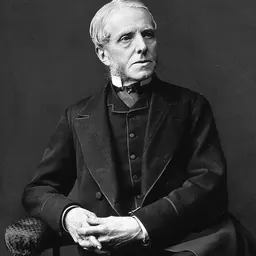

Frequently asked questions
Who was Charles Granville Bruce?
British mountain climber
When was Charles Granville Bruce born?
Charles Granville Bruce was born on 7 April 1866 in London.
When did Charles Granville Bruce die?
Charles Granville Bruce died on 12 July 1939 in London.
What was Charles Granville Bruce's occupation?
Charles Granville Bruce was an explorer, mountaineer and podpolkovnik.
What nationality was Charles Granville Bruce?
Charles Granville Bruce was British.
Sources & further reading
· Wikipedia: Charles Granville Bruce
· DBpedia: Charles Granville Bruce
Cite this page
APA: Biography.guide. (2026). Charles Granville Bruce. https://biography.guide/charles-granville-bruce/
MLA: "Charles Granville Bruce." Biography.guide, https://biography.guide/charles-granville-bruce/.
Chicago: "Charles Granville Bruce." Biography.guide. https://biography.guide/charles-granville-bruce/.
Data last updated: 2026-09-21 · Spot an error? Report a correction.
Portrait: Wikimedia Commons · author & licence
Page generated 2026-09-27 05:00 UTC