
About Henry Livingston, Jr.
Lived 1748 – 1828 (aged 79). Henry Livingston, Jr. was an American writer, judge, poet and businessperson.
Henry Livingston Jr. (October 13, 1748 – February 29, 1828) was an American poet, and has been proposed as being the uncredited author of the 1823 poem A Visit from St. Nicholas, more popularly known (after its first line) as The Night Before Christmas. Credit for the poem was taken in 1837 by Clement Clarke Moore, a Bible scholar in New York City, nine years after Livingston's death. It was not until a further twenty years had passed that the Livingston family knew of Moore's claim, and it was not until 1900 that they went public with their own claim. Since then, the question has been repeatedly raised and argued by experts on both sides.
Early life Livingston was born on October 13, 1748, in Poughkeepsie, New York, to Dr. Henry Gilbert Livingston Sr. (1714–1799) and Susannah Storm Conklin (1724–1793). His siblings included Gilbert Livingston, Reverend John Henry Livingston, Cornelia Livingston Van Kleeck, Catherine Elizabeth Livingston Mifflin, Joanna Livingston Schenck, Susan Livingston Duyckinck, Alida Livingston Woolsey, Robert Henry Livingston, Beekman Livingston, Catherine H. Livingston and Helena Livingston Platt.
His maternal grandparents were Capt. John Conklin and Annetje (née Storm) Conklin.
Following his marriage to Sarah Welles in 1774, Livingston engaged in farming.
Revolutionary War During the Revolutionary War, Livingston held a commission as Major under Richard Montgomery on the 1775 expedition to Canada. He was commissioned on August 2, and kept a journal of his entire experience, beginning August 25 until arriving home on December 22.
Henry Livingston Jr. is often confused with another Henry Livingston, whose service during the Revolution overlapped with Henry Livingston Jr's for a short while in 1775. The other Henry's full title was Colonel Henry Beekman Livingston (1750-1831), and while Henry Livingston Jr. was serving as Major in the 3rd Regiment in the campaign against the British in Quebec, Henry Beekman Livingston was serving as Captain in the 4th Regiment, and was involved in the very same battle. All the available evidence, from personal letters, etc., indicates Henry Livingston Jr. retired from service as Major in December of 1775.
Career Over the next ten years, Livingston began writing poetry and making drawings for his friends and family, some of which ended up in the pages of New York Magazine and the Poughkeepsie Journal. Although he signed his drawings, his poetry was usually anonymous or signed simply "R".
Authorship of A Visit from St. Nicholas
The famous Christmas poem first appeared in the Troy Sentinel on December 23, 1823. Many sources indicate that the poem was sent to the newspaper by a friend of Clement Clarke Moore, and the person giving the poem to the newspaper, without Moore's knowledge, certainly believed the poem had been written by Moore. However, several of Livingston's children remembered their father reading that very same poem to them fifteen years earlier.
As early as 1837, Charles Fenno Hoffman, a friend of Moore's, put Moore's name on the poem. For decades, Moore refused to deny or confirm authorship of the poem, but he did take credit for it years later, in 1844, in his book Poems, an anthology of his works.
By 1879, five separate lines of Henry's descendants had to correspond among themselves, trying to compare their family stories in the hope that someone had some proof that could be brought forward, but there was no documentation beyond family stories. In 1899, even without proof, Sidney's grandson published the first public claim of Henry's authorship in his own newspaper on Long Island. The claim drew little attention. Livingston himself never claimed authorship, nor has any record ever been found of any printing of the poem with Livingston’s name attached to it.
In 2000 on independent grounds, Donald Wayne Foster, Professor of English at Vassar College, argued in his book Author Unknown, that Livingston is a more likely candidate for authorship than Moore. In response to Foster's claim, Stephen Nissenbaum, professor of history at the University of Massachusetts, wrote in 2001 that based on his research, Moore was the author. In his article, "There Arose Such a Clatter Who Really Wrote 'The Night before Christmas'? (And Why Does It Matter?)", Nissenbaum confirmed Moore's authorship, "I believe he did, and I think I have marshaled an array of good evidence to prove [it]".
Foster's claim has also been countered by document dealer and historian Seth Kaller, who once owned one of Moore's original manuscripts of the poem. Kaller has offered a point-by-point rebuttal of both Foster's linguistic analysis and external findings, buttressed by the work of autograph expert James Lowe and Dr. Joe Nickell, author of Pen, Ink and Evidence.
MacDonald P. Jackson, Emeritus Professor of English at the University of Auckland, New Zealand, and a Fellow of the Royal Society of New Zealand, has spent his entire academic career analyzing authorship attribution. In his 2016 book Who Wrote "the Night Before Christmas"?: Analyzing the Clement Clarke Moore Vs. Henry Livingston Question, he evaluates the opposing arguments as the first analyst to employ the author-attribution techniques of modern computational stylistics. Jackson employs a range of tests to analyze the poetry of both men and introduces a new test, statistical analysis of phonemes; he concludes that Livingston is the true author of the classic work. His conclusion: "Every test, so far applied, associates 'The Night Before Christmas' much more closely with Livingston's verse than with Moore's."
Personal life In 1774, Livingston married Sarah Welles, the daughter of the Reverend Noah Welles, the minister of the Stamford, Connecticut, Congregational Church. Their daughter was born shortly before Livingston joined the army on a six months' enlistment. Before Sarah's death in 1783, they were the parents of: Jane McLean Patterson (1769–1838), at 24, was 21 years younger than her husband. She was the daughter of Matthew Paterson (1732–1817) and Sarah (née Thorpe) Patterson (1739–1831). Their first baby arrived nine months after the wedding. After that, the couple bore seven more children. It was for this second family that Henry Livingston is believed to have written the poem known as "A Visit from St. Nicholas". Their children included:
Don’t just read it —
keep it.
Full-length biographies made to live with: read them, listen on the way to work, watch them tonight.
- E-book
- Audio
- Video
Instant download · yours to keep · every purchase keeps this site free
Important facts
Family & relationships
People in Henry Livingston, Jr.'s life
Named in this biography and alive at the same time




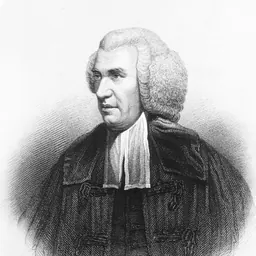
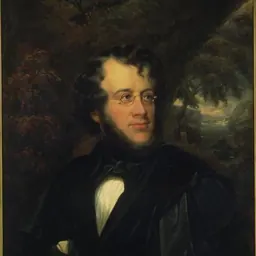

Related people
Same field, nearest in time
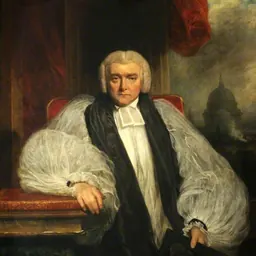


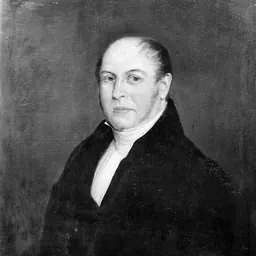
Contemporaries
People whose lives overlapped Henry Livingston, Jr.'s




Frequently asked questions
Who was Henry Livingston, Jr.?
American farmer, revolutionary officer, justice of the peace, and poet
When was Henry Livingston, Jr. born?
Henry Livingston, Jr. was born on 13 October 1748 in Poughkeepsie.
When did Henry Livingston, Jr. die?
Henry Livingston, Jr. died on 29 February 1828 in Poughkeepsie.
What was Henry Livingston, Jr.'s occupation?
Henry Livingston, Jr. was a writer, judge, poet and businessperson.
What nationality was Henry Livingston, Jr.?
Henry Livingston, Jr. was American.
Sources & further reading
· Wikipedia: Henry Livingston, Jr.
· DBpedia: Henry Livingston Jr.
Cite this page
APA: Biography.guide. (2026). Henry Livingston, Jr.. https://biography.guide/henry-livingston-jr/
MLA: "Henry Livingston, Jr.." Biography.guide, https://biography.guide/henry-livingston-jr/.
Chicago: "Henry Livingston, Jr.." Biography.guide. https://biography.guide/henry-livingston-jr/.
Data last updated: 2026-09-20 · Spot an error? Report a correction.
Page generated 2026-09-27 05:30 UTC