
Richard Montgomery
Irish-born soldier in the British Army, later in the American Continental Army
About Richard Montgomery
Lived 1738 – 1775 (aged 37). Richard Montgomery was an Irish and American military officer.
Richard Montgomery (2 December 1738 – 31 December 1775) was an Irish-born American army officer. First serving in the British Army, he later became a major general in the Continental Army during the American Revolutionary War. On 31 December 1775, Montgomery was killed while leading an unsuccessful invasion of Quebec.
Montgomery was born and raised in Ireland to an Ulster-Scots family. In 1754, he enrolled at Trinity College Dublin, and two years later joined the British army and served in the French and Indian War. He steadily rose through the ranks, serving in North America and the West Indies. After the war he was stationed at Fort Detroit during Pontiac's War, following which he returned to Britain for health reasons. In 1773, Montgomery returned to the Thirteen Colonies, married Janet Livingston, and began farming.
When the Revolutionary War broke out, Montgomery joined the Patriot cause, and was elected to the New York Provincial Congress in May 1775. In June 1775, he was commissioned as a Brigadier general in the Continental Army. After Philip Schuyler became too ill to lead the invasion of Quebec, Montgomery took over. He captured Fort St. Jean and Montreal in November 1775, and then advanced to Quebec City, where he joined another force under the command of Benedict Arnold. On 31 December, he led an attack on the city, but was killed during the battle. The British found his body and gave him an honorable burial. His remains were moved to New York City in 1818.
Early life Montgomery was born at Feltrim, near the County Dublin town of Swords, on 2 December 1738. He was born into an Ulster Scots gentry family, the County Donegal branch of the Clan Montgomery. His father, Thomas Montgomery, was a British Army officer and a Member of Parliament (MP) for the pocket borough of Lifford in east Donegal, which returned two MPs to the Irish Parliament. Thomas' brother Alexander Montgomery (1720–1800) and cousin, another Alexander Montgomery (1686–1729), were both colonels and MPs for County Donegal.
Richard Montgomery spent most of his childhood at Abbeville House in Kinsealy, near Swords, in County Dublin, where he learned to hunt, ride, shoot, and fence.
Despite his great love of knowledge, Montgomery did not receive a degree. He was urged by his father and his oldest brother Alexander to join the military, which he did on 21 September 1756. His father purchased an ensign's commission for Montgomery, who joined the 17th Regiment of Foot. On 5 May, Montgomery and the 17th Foot sailed from Cork for Halifax, Nova Scotia, arriving in July. The British had planned an attempt on Louisbourg but the operation was called off, and they sailed instead for winter quarters in New York. The French garrison consisted of only 800 men, while the British force had 13,142 troops supported by 23 ships of the line and 13 frigates. On 8 June 1758, the attack on the fort began. Montgomery landed on the beach under heavy fire and ordered his troops to advance with fixed bayonets. The outer French defenses withdrew back toward the city. Montgomery's unit and the rest of the British force chased the French back to a point just outside the Fort's guns. Montgomery had his men dig entrenchments and build breastworks, also ordering his men stay alert to the possibility of a French attack. General Amherst was impressed by Montgomery's action during the siege, and promoted him to lieutenant. In August, Montgomery and the 17th foot sailed to Boston, marched to join with Abercromby's forces in Albany and then moved to Lake George. On 9 November, Abercromby was recalled; Amherst replaced him as commander-in-chief. Montgomery and the 17th met stiff resistance at first. On 15 May 1760, Monckton named Montgomery as regimental adjutant, a position awarded by the commanding officer to the most promising lieutenant in the regiment. In August, the 17th Foot joined with the Lake Champlain Division, and set out from Crown Point to participate in a three-pronged attack on Montreal. The 17th Foot captured the Île aux Noix and Fort Chambly before meeting with the two other divisions outside Montreal. The marquis de Vaudreuil-Cavagnial, the governor of Canada, seeing that the city could not be defended, surrendered the city without a fight. With the fall of Montreal, all of Canada fell into British hands. On 12 February, the entire island surrendered.
Spain entered the war in 1761 as an ally of France. On 6 June, the assaulting British forces arrived seven miles off the shore of Havana. The 17th Foot, including Montgomery's company, was to capture Moro Fort, the key to the Spanish defense of the city.
Pontiac's War
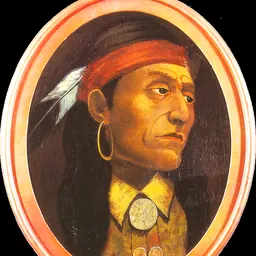
Angered by the French surrender and unhappy with British policies that affected them, an Ottawa chief, Pontiac, organized 18 Native American tribes that attacked British military and civilian settlements beginning in April 1763. The tribes captured eight British forts and forced the evacuation of two more. General Amherst ordered the 17th to Albany in June 1763 to assist in combating the outbreak of hostilities.
The 17th was first assigned to garrison duty at Fort Stanwix, where Montgomery remained until 1764. In 1764, Montgomery applied to Colonel Campbell and General Thomas Gage for leave to return to England; his service in the Caribbean had taken a toll on his health. Gage granted the leave, directing Colonel Campbell to approve the leave as soon as possible. Campbell, whose subordinate officers had been depleted in the Caribbean campaign, would grant the leave only after the upcoming expedition.
The British in 1764 organized two expeditions to combat the uprising. Montgomery and the 17th were on one of these expeditions, commanded by John Bradstreet, that went to Fort Niagara in July, where they were stationed for one month, while Sir William Johnson organized and held a major conference with Natives from around the Great Lakes. The conference drew more than 2,000 natives; Bradstreet's forces stayed there as a deterrent to rumored Native attacks. For several weeks, Montgomery stayed at the fort, helping to improve its defenses, and also gaining an understanding of how to interact with the Natives.
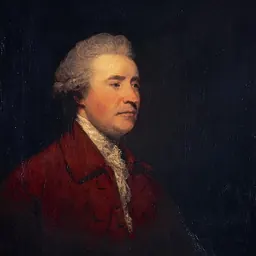
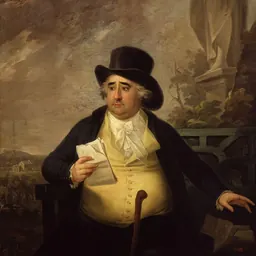
Recovery In Britain, Montgomery recovered his health. He associated with Whig Members of Parliament, who generally supported the colonists in their demands for more political freedom. Montgomery became friends with several prominent Whigs such as Isaac Barré, Edmund Burke, and Charles James Fox. In 1768, with the 17th Foot back in England, he began a recruitment drive; before it began, his company was only 17 men. He also became engaged; however, his fiancée proved to be untrue, and the engagement was broken.
After being passed over for promotion in 1771, likely because of his political affiliations, he sold his commission for about £1,500 and left the military in 1772. He then bought scientific instruments (microscopes, a barometer and hygrometer), surveying tools, and draftsmen's tools, and sailed for America in July of that year. He had decided never to marry or take up arms again and to become a gentleman farmer.
Settling in New York He bought a farm at King's Bridge, 13 miles north of New York City. While adjusting to his surroundings, Montgomery renewed his acquaintance with Janet Livingston, who later recounted that "politeness led him to make me a visit." After receiving permission from her father, Robert Livingston, he and Janet were married on 24 July 1773. Montgomery's marriage with Janet also led him to become a slave owner, as the Livingstons were a prominent slaveowning family in the region.
After their marriage, Montgomery leased his farm to a tenant. His wife's grandfather, Judge Beekman, gave them a cottage on the Post Road north of the Beekman Arms in Rhinebeck in which to reside. Montgomery bought some surrounding land and set to work fencing, ploughing fields, building a grain mill, and laying the foundation for a larger home called "Grasmere", though it was yet to be completed at the time of his death and the tiny cottage was his only residence in Rhinebeck. Three months after their marriage, Janet told him of a dream she had in which Montgomery was killed in a duel by his brother. Montgomery replied by saying "I have always told you that my happiness is not lasting ... Let us enjoy it as long as we may and leave the rest to God." He came to believe that the British government was being oppressive and was acting like a tyrannical parent-state. Although Montgomery had only lived in New York for two years and had not sought political involvement, he was well known and respected in the area and he felt obliged to attend. He was reluctant to go, but nonetheless went to New York City, 80 miles south of Rhinebeck.
The first session began on 22 May. Gradually, the faction of the Congress that remained loyal to the King lost its influence, with some not participating on a regular basis. and was also involved in organizing the provincial militia and securing its supplies. One would be a major general, the other a brigadier general. The assembly favored Philip Schuyler as the major general. Montgomery expressed concern over this, as he did not believe that Schuyler had enough combat experience for such an appointment. Montgomery wrote that "Phil Schuyler was mentioned to me ... His consequence in the province makes him a fit subject for an important trust – but has he strong nerves? I could wish to have that point well ascertained with respect to any man so employed." Montgomery was ranked second in command of all the brigadier generals. In view of this appointment, he said, "The Congress having done me the honor of electing me brigadier-general in their service, is an event which must put an end, for awhile, perhaps for ever, to the quiet scheme of life I had prescribed for myself; for, though entirely unexpected and undesired by me, the will of an oppressed people, compelled to choose between liberty and slavery, must be obeyed."
Plan On 25 June, George Washington passed through New York City on his way to Boston. Washington assigned Montgomery as deputy commander under Schuyler. A few days later, Schuyler received orders from the Continental Congress to invade Canada. Montgomery stayed in Albany for several more weeks making the final arrangements for the invasion. His wife followed him as far north as Saratoga, where he told her "You shall never have cause to blush for your Montgomery." While they organized, Washington decided to expand the invasion, ordering Benedict Arnold to lead another invasion force that would invade Quebec from Maine. It was to join with Schuyler's army outside Quebec City, where they would launch a joint attack on to the city. While Schuyler was away, Montgomery received intelligence that the British were building two gunboats on Lake Champlain, which, when complete, would give the British military access to the lake. Without asking permission from Schuyler, he moved 1,200 men north on the schooner Liberty and the sloop Enterprise.
Schuyler returned to Fort Ticonderoga on 30 August, ordered an additional 800 men to reinforce Montgomery, and then, despite being ill, set out to join Montgomery. He caught up with Montgomery on 4 September on Isle La Motte, where he assumed command and ordered the advance to continue to Île aux Noix, a small island in the Richelieu River. The party held its ground, forcing the ambushing Natives to fall back to the fort. Montgomery, fearing that the British force was larger than he had anticipated, called off operations for the rest of the day and withdrew his force to a spot beyond the range of the British guns.
Schuyler's health declined, In the swampy area around the fort, it was so dark that two parties of Americans ran into each other; each feared the other to be the British, and both fled. Montgomery, believing his force could no longer take the fort, retreated back to Île aux Noix. Montgomery, furious at the flight of the New England troops, asked Schuyler to appoint a court-martial board.
Siege of St. Johns
Outside of Fort Saint-Jean (Quebec), Montgomery continued to receive reinforcements. He granted leaves to commanders who he felt were not fit for their position. He said "I hope we shall have none left but fighting men on whom I can rely."
Montgomery and his troops spent the first night near the landing area, under light fire from the British guns. Montgomery sent Bedel with a force to entrench themselves about a mile north of the fort. Montgomery then put other troops around the fort and began a siege.
The Americans continued to receive armaments from Ticonderoga, with guns arriving on 21 September and also on 5 October. However, the artillery were positioned too far away to do much damage to the fort. Montgomery ordered that a new battery be built where the Royal Savage could be threatened. On 14 October, the battery was completed and then used to sink the British ship.
In mid-October, James Livingston, an American expatriate living near Chambly (and a relative of Montgomery's wife Janet), suggested to Montgomery that he might have better success attacking Fort Chambly, which, about 10 miles downstream, was weaker than St. Jean. Montgomery approved of the idea and ordered 350 men to take Chambly. On the night of 16 October, two American guns were slipped past Fort St. Jean and moved towards Chambly. Montgomery sent the colors of the 7th Royal Fusiliers, who had been defending the fort, to Schuyler, the first standards of a British regiment captured in the war. this time without opposition. While the Americans were constructing the batteries, the British heavily bombarded the American workers, but this resulted in few casualties. General Guy Carleton, commanding the British forces at Montreal, realized that the situation at Fort St. Jean was becoming desperate. He personally led a relief force at the end of October, but American forces successfully prevented it from crossing the Saint Lawrence River south of Montreal.
On 1 November, the new batteries erected north of the fort were complete. On 2 November, the British agreed to surrender with full military honors. They marched out of the fort on 3 November, and were sent into the colonies, where they were interned. The British had suffered 20 killed and 23 wounded, while the Americans had only five killed and six wounded throughout the siege. The march was difficult as there was snow, water, and ice on the ground and a winter storm struck several days after their departure. When Montgomery and the main army reached the outskirts of the city, Montgomery sent a messenger in demanding the surrender of the city or they would suffer bombardment. While negotiations for the city's surrender took place, Carleton fled down the St. Lawrence River in a small flotilla of ships. The city surrendered on 13 November, and Montgomery and his army marched into the city without a shot being fired.
On 19 November, the British flotilla was captured, but Carleton narrowly escaped and made his way to Quebec City. Montgomery's kind treatment toward the captured British prisoners caused several officers to express their concern. Montgomery saw this as a challenge to his authority and this, along with the lack of discipline in the army, caused Montgomery to threaten resignation. Letters from Washington in which Washington also expressed his troubles with the discipline of troops convinced Montgomery to continue his command.
On 28 November, Montgomery and 300 men went aboard some of the captured ships and began to sail to Quebec City. On 2 December, Montgomery joined Benedict Arnold's force at Pointe aux Trembles, 18 miles upriver from Quebec. On his arrival, Arnold turned over command of his forces to Montgomery. On 3 December, Montgomery gave Arnold's men, who had marched through the Maine wilderness to Quebec City and suffered much hardship along the way, much-needed supplies, including clothing and other winter supplies taken from the captured British ships. The next day, the army moved toward the city; when they arrived, Montgomery ordered the city to be surrounded. On 7 December, Montgomery sent an ultimatum to Carleton, demanding the surrender of the city. Carleton burned the letter. Several days later, Montgomery sent a letter into the city appealing the merchants telling them that they had come to liberate the civilians of Quebec. However, Carleton discovered the plan and quickly had the messenger arrested. Montgomery, wanting his message to reach the inhabitants of the city, then sent the proclamation over the wall with bows and arrows.
Attack and death
Unknown to Montgomery, he was promoted to major general on 9 December for his victories at St. Johns and Montreal. After Montgomery was unable to convince Carleton to surrender, he placed several mortars a few hundred yards outside the walls of the city. The shelling of the city began on 9 December, but after several days it had failed to make a serious impact on the walls, the garrison, or the civilian population. With the shelling having little effect, Montgomery ordered the emplacement of another battery closer towards the city walls, on the Plains of Abraham, despite the fact it offered little natural cover from returning fire. On 15 December, the new batteries were ready and Montgomery sent a party of men under the flag of truce to ask for the city's surrender. However, they were turned away. Montgomery then resumed firing on the city, but the effect was little better. When the new batteries were hit by more effective fire from the British, Montgomery ordered their evacuation. Montgomery was to assault the Lower Town district (Saint-Roch), the part of the city near the river shore, while Arnold was to attack and take the Cape Diamond Bastion, a strong part of the city walls on the highest point of the rocky promontory. Montgomery believed that they should attack during a stormy night, therefore the British would not be able to see them. As Montgomery waited for a storm, he was forced to revise his plans, because a deserter communicated the original plan to the defenders. In the new plan, Montgomery would attack the Lower Town from the south and Arnold would attack the Lower Town from the north. After breaking through the walls, Montgomery and Arnold would meet up in the city and then attack and take the Upper Town, causing resistance to collapse. To increase their chance of surprise, Montgomery planned two feints. Montgomery issued the order to attack and the Americans began to move towards their designated positions. At 4:00 a.m., Montgomery saw the rocket flares and began to move his men around the city towards the lower town. Although the rockets were to signal the attack, they also alerted the British of the impending attack, and the city's defenders rushed to their posts. Montgomery personally led the march to the Lower Town, as they descended the steep slippery cliffs outside the city walls. At 6:00 a.m., Montgomery's force reached a palisade at the edge of the Lower Town, which they had to saw through. After they sawed through a second palisade, Montgomery led the advance party through the opening. Seeing a two-story blockhouse down the street, Montgomery led the troops toward it, encouraging the men by drawing his sword and shouting, "Come on, my good soldiers, your General calls upon you to come on." When the Americans were about away, the British forces in the blockhouse (30 Canadian militia and some seamen), opened fire with cannon, musket, and grapeshot. Montgomery was killed with grapeshot through the head and both thighs. Arnold was wounded in the leg, and a large number of his troops were captured, including Daniel Morgan.
Funeral On 1 January 1776, the British started collecting bodies of the deceased and soon found the body of a high-ranking officer of the American colonial army. After being brought to General Carleton, an American prisoner confirmed that the body was that of Richard Montgomery.
Once Montgomery's death was announced, Benedict Arnold assumed command of the American colonial forces. As Montgomery was a well-respected man on both sides of the battlefield, Carleton ordered that he be buried with dignity, but not with too much fanfare.
Mourning Schuyler and Washington were devastated upon hearing of Montgomery's death. Schuyler believed that without Montgomery, victory in Canada was not possible. He wrote to Congress and Washington that "My amiable friend, the gallant Montgomery, is no more; the brave Arnold is wounded; and we have met a severe check, in an unsuccessful attempt on Quebec, May Heaven be graciously pleased that the misfortune may terminate here." They feared the news would lower the morale of the troops and civilians. A state memorial service was also scheduled and carried out on 19 February 1776. Throughout the thirteen colonies, Montgomery was viewed as a hero, and Patriots tried to use his death to promote their cause in the war. Montgomery's name was used very often in literature; among the authors who used his name was Thomas Paine. The poet Ann Eliza Bleecker wrote an "Elegy on the death of Gen. Montgomery" in his memory.
Montgomery was also mourned in Britain.
Aftermath Janet would outlive Montgomery by 53 years. Janet always referred to him as "my general" or "my soldier" and guarded his reputation. After his death, Janet moved to the house near Rhinebeck on which Montgomery had begun work before the war. Janet remained interested in politics for the rest of the war and was always a harsh critic of Loyalists. After the war, former Continental Army general Horatio Gates proposed marriage to her, but she declined. In 1789, Janet stopped in New York City on her way to visit some of Montgomery's relatives in Ireland. She attended Washington's inaugural ball that followed his swearing as president, and also visited Washington and his family several times more. In June 1818, Montgomery's remains set off for New York City. On 4 July they arrived in Albany and took a boat down the Hudson to New York City. Janet stood out on her porch and watched the boat bring Montgomery's remains down the river, fainting at the sight. When his remains arrived in New York City, 5,000 people attended the procession. Janet was pleased with the ceremony and wrote, "What more could I wish than the high honor that has been conferred on the ashes of my poor soldier."
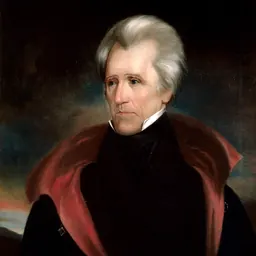
Years later, when Andrew Jackson was corresponding with Edward Livingston he wrote "Present me in the most respectful terms to your aged sister [Janet]. Says to her, if I ever should be within one hundred miles of her dwelling I will visit and have the high honor of shaking by the hand the revered relict of the patriotic Genrl. Montgomery, who will ever live in the hearts of his countrymen."
Places
Fort Montgomery, a massive masonry fortification mounting 125 guns on Lake Champlain, was named for the General.
Montgomery has several places named after him. Counties named for him are to be found in North Carolina, Missouri, Mississippi, Iowa, Arkansas, Illinois, Indiana, Kansas, Maryland, Ohio, Pennsylvania, New York, Georgia, Virginia, and Kentucky. Cities and towns named for him most notably include Montgomery, Alabama, that state's capital and third largest city, as well as Montgomery Township, New Jersey, Montgomery, New York, Montgomery, Ohio, Montgomery, Minnesota, and Montgomery, Vermont.
Richard Montgomery High School in Rockville, Maryland, bears his name, itself located in the county named after him, Montgomery County. Montgomery Place, a mansion in Barrytown, New York, was constructed in 1803 and named in his honor by his widow. General Montgomery had planned it before his departure from Grassmere in 1775, and construction was originally planned to start in 1776.
Montgomery Street in Savannah, Georgia and Montgomery Street in Trenton, New Jersey are both named for him.
Other Memorials
He is the namesake of the SS Richard Montgomery, a WWII Liberty ship which sank in the estuary of the River Thames in August, 1944. Much of her cargo of munitions is still on board the wreck.
Don’t just read it —
keep it.
Full-length biographies made to live with: read them, listen on the way to work, watch them tonight.
- E-book
- Audio
- Video
Instant download · yours to keep · every purchase keeps this site free
Important facts
People in Richard Montgomery's life
Named in this biography and alive at the same time




Related people
Same field, nearest in time


Contemporaries
People whose lives overlapped Richard Montgomery's




Frequently asked questions
Who was Richard Montgomery?
Irish-born soldier in the British Army, later in the American Continental Army (1738–1775)
When was Richard Montgomery born?
Richard Montgomery was born on 2 December 1738 in Feltrim.
When did Richard Montgomery die?
Richard Montgomery died on 31 December 1775 in Quebec City.
What was Richard Montgomery's occupation?
Richard Montgomery was a military officer.
What nationality was Richard Montgomery?
Richard Montgomery was Irish and American.
Sources & further reading
· Wikipedia: Richard Montgomery
Cite this page
APA: Biography.guide. (2026). Richard Montgomery. https://biography.guide/richard-montgomery/
MLA: "Richard Montgomery." Biography.guide, https://biography.guide/richard-montgomery/.
Chicago: "Richard Montgomery." Biography.guide. https://biography.guide/richard-montgomery/.
Data last updated: 2026-09-20 · Spot an error? Report a correction.
Page generated 2026-09-27 05:26 UTC