
About Henry Bellamann
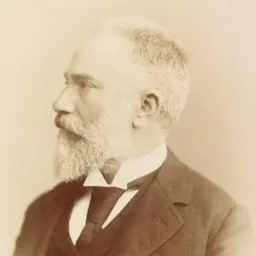
Lived 1882 – 1945 (aged 63). Henry Bellamann was an American novelist, music educator, music journalist and writer.
Heinrich Hauer Bellamann (April 28, 1882 – June 16, 1945) was an American author, whose bestselling 1940 novel Kings Row exposed the hypocrisy of small-town life in the midwest, addressing many social taboos. Research suggested that Bellamann was working off resentment of his upbringing in Fulton, Missouri, where he had been ostracised for his German extraction and rumoured illegitimacy. The 1942 film version gave Ronald Reagan a starring role, regarded as his most memorable performance.
Bellamann was also a poet and a music professor at Vassar College.
Early life and education Bellamann was born in Fulton, Missouri in 1882 to parents George Henrik and Caroline (Krahenbuhl) Bellamann. After graduation from Fulton High School in 1899, he attended Westminster College in Fulton for a year then moved to Colorado in 1901 to study piano at the University of Denver. Following graduation in 1904, Bellamann began teaching music at a variety of girls' schools in the American South, including the Chicora College for Women. Bellamann met his future wife, Katherine McKee Jones, while both were teaching at a girls' academy in Tuscaloosa, Alabama. The couple married on September 3, 1907.
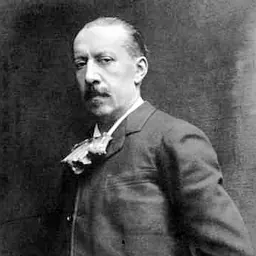
From 1908 to 1913 while on school summer breaks, the Bellamanns traveled to Europe so Henry could study organ and piano with Charles-Marie Widor and Isidor Philipp. From 1907 to 1932, when he began to pursue writing full-time, Bellamann held administrative and teaching positions at several educational institutions, including acting director of the Juilliard Musical Foundation, dean of the Curtis Institute of Music, and professor of music at Vassar College.
Writing career With the encouragement of his wife, Bellamann increasingly turned his attention to a writing career. A Music Teacher's Notebook, his first of three books of poetry, was published in 1920. It was followed by Cups of Illusion in 1923 and The Upward Pass in 1928. Although his poetry is today little-known, Bellamann was recognized by David Perkins in his 1976 History of Modern Poetry, in which he ranks Bellamann with the serious minor poets who "adopted the mode" of the Imagists. Bellamann also served as editor for the music magazine Overtones and wrote a weekly literary column, in which he highlighted the works of DuBose Heyward and Pulitzer Prize-winning author Julia Peterkin Such themes were still somewhat taboo in early 20th-century American literature, but not unheard of.
In one location, however, the novel and its subsequent movie adaptation proved to be most controversial: Bellamann's hometown of Fulton, Missouri. It was not long before the citizenry of Fulton began to look around and realize Bellamann's fictional town was in fact a reinterpretation of their small city. "Aberdeen College" is seen as a stand-in for Bellamann's time spent at Westminster College, and the best-seller's asylum coincides with Fulton State Hospital. Prominent citizens as the real-life town doctor are portrayed in Kings Row in a less-than-flattering manner. As one local newspaper editor wrote, Bellamann "clearly intended to besmirch Fulton".
The root of this controversy seems to have lain with Bellamann. While researching the introduction for a re-issue of Kings Row in 1981, Jay Miles Karr, an English professor at Westminster College, found in Bellamann's private papers notes for what was referred to as "the Fulton novel." According to Karr, living in Fulton had inflicted a "psychic wound" on the young Bellamann, one he exorcised decades later with his pen. He often was made to feel alienated there because of his German heritage. Furthermore, the family reputation was assaulted by town gossip that George Bellamann might not have been Henry's true biological father.
Don’t just read it —
keep it.
Full-length biographies made to live with: read them, listen on the way to work, watch them tonight.
- E-book
- Audio
- Video
Instant download · yours to keep · every purchase keeps this site free
Important facts
People in Henry Bellamann's life
Named in this biography and alive at the same time


Related people
Same field, nearest in time




Contemporaries
People whose lives overlapped Henry Bellamann's


Frequently asked questions
Who was Henry Bellamann?
American writer (1882–1945)
When was Henry Bellamann born?
Henry Bellamann was born on 28 April 1882 in Fulton.
When did Henry Bellamann die?
Henry Bellamann died on 16 June 1945 in New York City.
What was Henry Bellamann's occupation?
Henry Bellamann was a novelist, music educator, music journalist and writer.
What nationality was Henry Bellamann?
Henry Bellamann was American.
Sources & further reading
Cite this page
APA: Biography.guide. (2026). Henry Bellamann. https://biography.guide/henry-bellamann/
MLA: "Henry Bellamann." Biography.guide, https://biography.guide/henry-bellamann/.
Chicago: "Henry Bellamann." Biography.guide. https://biography.guide/henry-bellamann/.
Data last updated: 2026-09-20 · Spot an error? Report a correction.
Page generated 2026-09-27 05:17 UTC