
About Ferdynand Goetel
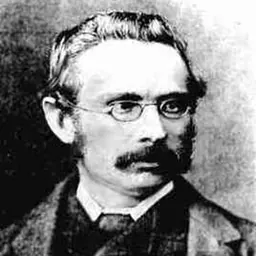
Lived 1890 – 1960 (aged 70). Ferdynand Goetel was a Polish and Russian novelist, writer, playwright, opinion journalist and screenwriter.
Ferdynand Goetel (15 May 1890 – 24 November 1960) was a Polish novelist, playwright, essayist, screen writer, and political activist. He was a member of the prestigious Polish Academy of Literature from 1935, president of the Polish PEN Club from 1926–33, and president of the Union of Polish Writers in the interwar Poland. He achieved prominence in Polish literary circles between the wars and was awarded the "Golden Laurel" by the Polish Academy of Literature for his contributions to Polish literature. He was forced to leave Poland after World War II due to his involvement in the German investigation of the Katyn massacre and died in exile in London.
Early years Goetel was born at Sucha Beskidzka near Kraków. He attended schools in Kraków and Lvov but was not considered a model pupil. He later admitted in his memoirs that he was "considered wayward, rebellious, and even insolent," getting into trouble for secretly smoking cigars, gambling, and distributing photographs of women. He was expelled from several schools. He was sent to a military school before attending the imperial secondary school (Szkoła realna), from which he graduated.Realschule The Russian authorities sent him to an internment camp at Tashkent in Turkestan, where he was put to work on road and bridge construction. In December 1919, as the situation in Russia deteriorated and his newly married wife Jadwiga was pregnant, he decided to escape to Poland. The journey took the couple fourteen months, via Persia, Afghanistan, India, and England, before they arrived back in the newly independent Republic of Poland in January 1921. and also served as president of the Trade Union of Polish Writers. In 1936, he was accepted as a member of the Polish Academy of Literature.
Wartime years and exile Goetel joined the Polish resistance movement Armia Krajowa (AK, or Home Army) in World War II, and was temporarily imprisoned in Pawiak by the SS. He has sometimes been described as the "last victim of Katyn". He was blacklisted in post-war Poland (1945–1989) and driven out of the country in 1945 with an arrest warrant issued by the secret police. This was because the Germans had arranged for him to participate in the investigation of the Katyn massacre on behalf of the AK, and because in his postwar writings he demanded justice for the victims of Katyn. Goetel was proposed as a witness for the Katyn delegation by lawyer Ludwig Fischer, the German governor of Warsaw. However, the Polish delegation ultimately refused to assist Nazi propaganda efforts further and secretly informed the Polish government-in-exile about their findings.
The first arrest warrants against Goetel were issued in July 1945. For the next several months, he stayed in hiding at the Carmelite convent in Kraków. Then, in December 1945, he escaped to Italy on a false passport. He joined the Polish Army of General Anders and, at the conclusion of World War II, went to London. He lived there until his death in 1960. In exile, he primarily wrote memoirs and fiction based on his own life experiences.
Works Kar Chat (1922) Przez płonący Wschód (Warsaw 1922) Pątnik Karapeta... (1923) Ludzkość (Warsaw 1925) Z dnia na dzień (Warsaw 1926) Egipt (Lwów 1927) Humoreski (1927) Wyspa na chmurnej północy (Warsaw 1928) Samuel Zborowski (1929) Serce lodów (1930) The Ten from Pawiak Prison (screenplay, 1931) Podróż do Indii (Warsaw 1933) Dzień wielkiej przygody (screenplay, 1935) Pod znakiem faszyzmu (1938) Cyklon (Warsaw 1939) Czasy wojny (memoirs, London 1955) Nie warto być małym (1959) Anakonda (after his death, 1964) Patrząc wstecz (memoir, after his death, London 1966)
Don’t just read it —
keep it.
Full-length biographies made to live with: read them, listen on the way to work, watch them tonight.
- E-book
- Audio
- Video
Instant download · yours to keep · every purchase keeps this site free
Important facts
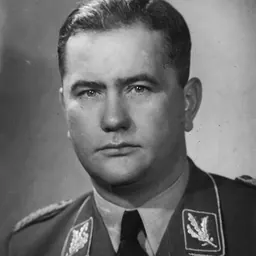
People in Ferdynand Goetel's life
Named in this biography and alive at the same time
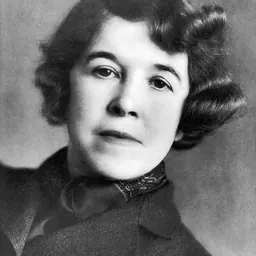
Related people
Same field, nearest in time





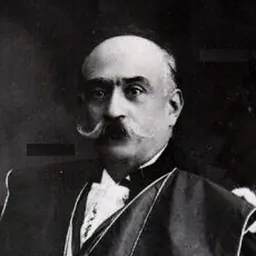
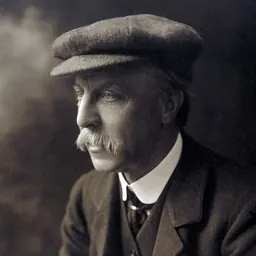
Contemporaries
People whose lives overlapped Ferdynand Goetel's


Frequently asked questions
Who was Ferdynand Goetel?
writer (1890-1960)
When was Ferdynand Goetel born?
Ferdynand Goetel was born on 15 May 1890 in Sucha Beskidzka.
When did Ferdynand Goetel die?
Ferdynand Goetel died on 24 November 1960 in London.
What was Ferdynand Goetel's occupation?
Ferdynand Goetel was a novelist, writer, playwright, opinion journalist and screenwriter.
What nationality was Ferdynand Goetel?
Ferdynand Goetel was Polish and Russian.
Sources & further reading
Cite this page
APA: Biography.guide. (2026). Ferdynand Goetel. https://biography.guide/ferdynand-goetel/
MLA: "Ferdynand Goetel." Biography.guide, https://biography.guide/ferdynand-goetel/.
Chicago: "Ferdynand Goetel." Biography.guide. https://biography.guide/ferdynand-goetel/.
Data last updated: 2026-09-25 · Spot an error? Report a correction.
Page generated 2026-09-27 05:11 UTC