
About Heinz Bretnütz
Lived 1914 – 1941 (aged 27). Heinz Bretnütz was a soldier.
Heinz "Pietzsch" Bretnütz (24 January 1914 – 27 June 1941) was a German Luftwaffe ace and recipient of the Knight's Cross of the Iron Cross during World War II. The Knight's Cross of the Iron Cross, and its variants were the highest awards in the military and paramilitary forces of Nazi Germany during World War II.
Early life and career Bretnütz was born on 24 January 1914 in Mannheim in the Grand Duchy of Baden within the Weimar Republic. He was the first of three children of Paul Gustav Bretnütz, a civil engineer, and his wife Elisabeth née Böttger who gave him the name Heinz Robert Wilhelm Bretnütz. Bretnütz had a younger brother Dieter, born in 1916 who died in 1918, his father died in 1925. In 1929, Bretnütz graduated from the Realgymnasium, a secondary school built on the mid-level Realschule.
In 1932, he joined the military service of the Reichswehr, the German armed forces during the Weimar Republic. In 1935, Bretnütz transferred to the newly formed Luftwaffe and received flight and fighter pilot training at Döberitz. Here, Bretnütz befriended Horst Lehmann. On 2 February 1937, Lehmann introduced Bretnütz to Martha Urban, the two were engaged the same year. On 1 July 1937, he was promoted to Leutnant (second lieutenant). Following the creation of I. Gruppe (1st group) of Jagdgeschwader 334 (JG 334—334th Fighter Wing) at Mannheim-Sandhofen Airfield in 1937, Bretnütz was posted to 1. Staffel (1st squadron) of JG 334 under command of Oberleutnant Werner Mölders.
Bretnütz volunteered for service in the Condor Legion during the Spanish Civil War. From late 1938 until March 1938, Bretnütz served with 2. Staffel of Jagdgruppe 88 (J/88—88th Fighter Group) under the command of Oberleutnant Joachim Schlichting. In Spain, he claimed two aerial victories, a Polikarpov I-15 fighter on 6 November 1938, and a Tupolev SB-2 bomber on 28 December. For his service in the Spanish Civil War, Bretnütz was later awarded the Spanish Cross in Gold with Swords on 14 April 1939. Following his return to Germany, Bretnütz was promoted to Oberleutnant (first lieutenant), the promotion backdated to 20 April 1938.
Bretnütz was then transferred to II. Gruppe of Jagdgeschwader 53 (JG 53—53rd Fighter Wing) where he was assigned to 6. Staffel. During his service in Spain on 1 November 1938, II. Gruppe of JG 334 had been renamed to II. Gruppe of Jagdgeschwader 133 which then became the II. Gruppe of JG 53 on 1 May 1939. Bretnütz and Martha Urban married on 24 June. On 19 August, Bretnütz was appointed Staffelkapitän (squadron leader) of 6. Staffel of JG 53. He replaced Hauptmann Günther Freiherr von Maltzahn who was placed in command on II. Gruppe.
World War II World War II in Europe began on Friday, 1 September 1939, when German forces invaded Poland. At the time, JG 53 was tasked with patrolling Germany's western border between Trier and Saarbrücken in what would be dubbed the "Phoney War" period of World War II. On 25 September 1939, Bretnütz led 6. Staffel on a mission which intercepted French Curtiss P-36 Hawk fighters, escorting a reconnaissance aircraft, near Bad Bergzabern. In this encounter, 6. Staffel pilots claimed three P-36 fighters shot down, including one by Bretnütz, for the loss of one pilot killed in action and two Messerschmitt Bf 109 fighters returning with significant combat damage. On 27 September, Bretnütz was awarded the Iron Cross 2nd Class . On 31 March 1940, Bretnütz claimed two Morane-Saulnier M.S.406 fighters near Saargemünd during an afternoon aerial encounter and a Vickers Wellington bomber that evening. He was then promoted to Hauptmann (captain), the promotion backdated to 19 August 1939.
During the Battle of Britain, he was one of the most successful Luftwaffe fighter pilots. On 16 August, Bretnütz claimed two Hawker Hurricane fighters shot down. One of the Hurricanes was probably flown by Flight Lieutenant James Brindley Nicolson who was shot that day and Pilot Officer Martyn King.
On 9 October 1940, Bretnütz was appointed Gruppenkommandeur (group commander) of II. Gruppe of JG 53, again succeeding Maltzahn who was appointed Geschwaderkommodore (wing commander) of JG 53. In consequence, command of 6. Staffel was passed to Oberleutnant Otto Böhner. On 20 October, Bretnütz made a forced landing in his Bf 109 E-7 (Werknummer 4112—factory number) near Saint-Inglevert following damage sustained during aerial combat. That day, he had claimed a Hawker Hurricane fighter shot dow, his twentieth aerial victory of World War II. On 22 October, Bretnütz was awarded the Knight's Cross of the Iron Cross , making him the third recipient of this award within JG 53, after Mölders and Hauptmann Hans-Karl Mayer, and the twenty-fifth within the Jagdwaffe (fighter force). Two days later, he traveled to the headquarters of Hermann Göring, the Commander-in-Chief of the Oberkommando der Luftwaffe (Air Force High Command), for the presentation of the Knight's Cross. Bretnütz was then granted home-leave which he spent with his wife in Mannheim.
The Gruppe was withdrawn from the Channel Front on 20 December 1940 and transferred to Köln-Butzweilerhof Airfield for a period of rest and replenishment. On 2 March 1941, the Gruppe received a full complement of factory new Bf&109 F-1 and F-2 aircraft. Following conversion training, the Gruppe redeployed to the English Channel on 12 March where they were based at an airfield near Arques.
Operation Barbarossa and death The bulk of the Geschwaders air elements were moved via Jever, in northern Germany, to Mannheim-Sandhofen Airfield on 8 June 1941. There the aircraft were given a maintenance overhaul prior to moving east. The II. Gruppe was transferred to Neusiedel in East Prussia, present-day Malomožaiskojė in Kaliningrad Oblast in Russia, between 12 and 14 June.
On 22 June 1941, the first day of the invasion, Bretnütz claimed a Soviet Tupolev SB-2 twin-engine bomber shot down. In this aerial battle, his Bf 109 F-2 (Werknummer 6674) was hit by the bombers return fire, damaging the aircraft and injuring him. Bretnütz managed to make an emergency landing between Eržvilkas and Nemakščiai. While his aircraft was later recovered, Bretnütz succumbed to his injuries on 27 June 1941. Bretnütz had landed behind enemy lines and was recovered and hidden by the local population. After advancing German troops had occupied the territory, he was taken to a field hospital at Jurbarkas where his leg was amputated. Due to complications and tetanus infection, he died on 27 June 1941. He was initially buried at the German war cemetery in Insterburg, present-day Chernyakhovsk. His mother and wife later travelled to Insterburg and had his body cremated, taking his remains to Mannheim where he was reinterred on the family grave. Bretnütz was succeeded by Hauptmann Walter Spies as commander of II. Gruppe of JG 53.
Summary of career Aerial victory claims According to Obermaier, Bretnütz was credited with 37 aerial victories, two in the Spanish Civil War, and 34 on the Western Front, and one on the Eastern Front of World War II. Additionally, he Bretnütz he destroyed 12 barrage balloons over England. In total, Bretnütz flew 244 combat missions. Mathews and Foreman, authors of Luftwaffe Aces — Biographies and Victory Claims, researched the German Federal Archives and found documentation for 32 aerial victory claims, plus one further unconfirmed claim. This number of confirmed claims includes two claims during the Spanish Civil War and 30 over the Western Allies.
Chronicle of aerial victories Claim Date Time Type Location Claim Date Time Type Location Spanish Civil War – 2. Staffel of Jagdgruppe 88 –Spanish Civil War — November – December 1938 1 6 November 1938 Curtiss 2 28 December 1938 SB-2 World War II – 6. Staffel of Jagdgeschwader 53 –"Phoney War" — 1 September 1939 – 9 May 1940 1? 20 September 1939 09:55 barrage balloon 4 31 March 1940 15:57 M.S.406 southwest of Saargemünd 2 25 September 1939 12:20 P-36 south of Bienwald 5 31 March 1940 20:00 Wellington 3 31 March 1940 15:55 M.S.406 southwest of Saargemünd – 6. Staffel of Jagdgeschwader 53 –Battle of France — 10 May – 25 June 1940 6 12 May 1940 12:00 Potez 63 Luxembourg 8 25 May 1940 20:02 M.S.406 7 21 May 1940 11:14 Potez 63 east of Montmédy 9 7 June 1940 07:05 MB.151 east of Compiègne – 6. Staffel of Jagdgeschwader 53 –At the Channel and over England — 26 June – 9 October 1940 10 8 August 1940 17:15 Spitfire south of Swanage 14 16 August 1940 14:37 Hurricane 11 15 August 1940 18:45 Spitfire southwest of Portland 15 5 September 1940 16:05 Spitfire Hawkinge 12 15 August 1940 19:02 Spitfire southwest of Portland 16 6 September 1940 10:16? Hurricane south of London 13 16 August 1940 14:36 Hurricane 17 5 October 1940 12:40 Hurricane Maidstone – Stab II. Gruppe of Jagdgeschwader 53 –At the Channel and over England — 9 October 1940 – 8 June 1941 18 11 October 1940 08:55 Spitfire 25 30 November 1940 15:23 Hurricane Ashford 19 12 October 1940 17:33 Spitfire 26 30 November 1940 15:25 Hurricane Ashford 20 20 October 1940 16:25 Hurricane 27 19 March 1941 17:20 Spitfire north of Dungeness 21 8 November 1940 14:58? Hurricane northeast of Brighton 28 9 April 1941 19:10? Spitfire east of Southend 22 8 November 1940 17:37 Spitfire Thames Estuary 29 3 May 1941 17:03 Spitfire Dungeness 23 11 November 1940 13:15 Hurricane 30 4 May 1941 12:53? Lysander north of Deal 24 15 November 1940 14:10 Lysander 31 17 May 1941 19:18 Hurricane south of Harwich – Stab II. Gruppe of Jagdgeschwader 53 –Operation Barbarossa — 22 June 1941 32? 22 June 1941 SB-2 Grodno/Riga area
Awards Spanish Medalla de la Campaña (4 May 1939) Spanish Cruz de Guerra (4 May 1939) Spanish Cross in Gold with Swords (6 June 1939) Iron Cross (1939) 2nd Class (27 September 1939) 1st Class (8 May 1940) Knight's Cross of the Iron Cross on 21 October 1940 as Hauptmann and Gruppenkommandeur of II./Jagdgeschwader 53 Front Flying Clasp of the Luftwaffe in Gold for fighter pilots (1941)
Date of Rank 1 December 1934: Unteroffizier (Sergeant) 1935: Fahnenjunker (Officer Cadet) 1 July 1937: Leutnant (Second Lieutenant) 20 April 1938: Oberleutnant (First Lieutenant) 19 August 1939: Hauptmann (Captain)
Don’t just read it —
keep it.
Full-length biographies made to live with: read them, listen on the way to work, watch them tonight.
- E-book
- Audio
- Video
Instant download · yours to keep · every purchase keeps this site free
Important facts
People in Heinz Bretnütz's life
Named in this biography and alive at the same time
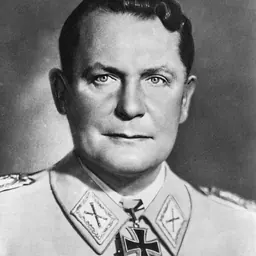
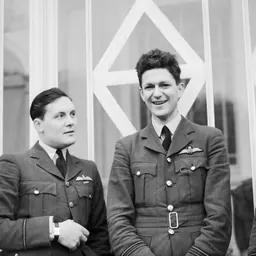
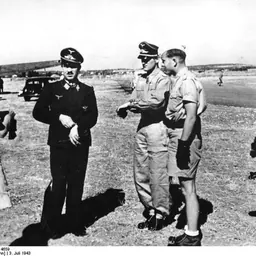




Related people
Same field, nearest in time


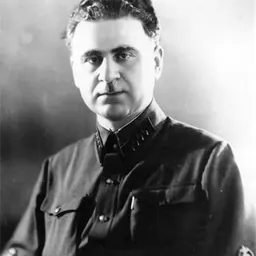


Contemporaries
People whose lives overlapped Heinz Bretnütz's


Frequently asked questions
Who was Heinz Bretnütz?
German fighter ace and Knight's Cross recipient
When was Heinz Bretnütz born?
Heinz Bretnütz was born on 24 January 1914 in Mannheim.
When did Heinz Bretnütz die?
Heinz Bretnütz died on 27 June 1941.
What was Heinz Bretnütz's occupation?
Heinz Bretnütz was a soldier.
What nationality was Heinz Bretnütz?
Heinz Bretnütz's recorded nationality: German Reich.
Sources & further reading
Cite this page
APA: Biography.guide. (2026). Heinz Bretnütz. https://biography.guide/heinz-bretnutz/
MLA: "Heinz Bretnütz." Biography.guide, https://biography.guide/heinz-bretnutz/.
Chicago: "Heinz Bretnütz." Biography.guide. https://biography.guide/heinz-bretnutz/.
Data last updated: 2026-09-20 · Spot an error? Report a correction.
Page generated 2026-09-27 05:29 UTC