
About Geoffrey Page
Lived 1920 – 2000 (aged 80). Geoffrey Page was a British soldier and british Aircraft Corporation.
Wing Commander Alan Geoffrey Page, (16 May 1920 – 3 August 2000), known as Geoffrey Page, was an officer in the Royal Air Force who served during the Second World War. He participated in the Battle of Britain, and was shot down. He was badly burned when his aircraft was destroyed, but survived. He underwent many surgeries on his way to recovery, and was a founding member of the Guinea Pig Club. He eventually passed a medical exam and returned to active service, becoming one of Britain's most successful fighter pilots.
Early life Page was born on 16 May 1920 in Boxmoor, England. His parents divorced while he was very young. He had developed an interest in aviation by age 5, which intensified as he grew into a young man. Page was educated at Dean Close School, Cheltenham. For his college studies, his desire was to go to the RAF college at Cranwell and make a career of the RAF. His father strongly opposed a career in the air force, and pressed him to pursue a career in engineering instead. His father's brother, the engineer and aircraft manufacturer, Sir Frederick Handley Page, aided in discouraging him, telling him that pilots were plentiful but engineers were not. Thinking of it later in life, Page suspected they discouraged him because they had suffered the loss of their brother, who had been a fighter pilot in the Great War.
Complying with his father's wishes, he went to London to pursue engineering at the Imperial College. While there, he joined the University Air Squadron, which flew training aircraft out of Northolt. The two pilots traveled to RAF North Weald in southern England to join 56 Squadron. The squadron had been in France and suffered losses there. When Page arrived the squadron was away training at RAF Digby. He checked out on the Hurricane and was made operational by the time the squadron returned. The squadron ended the campaign by covering the Dunkirk evacuation.
Initially disappointed to be transferred from a squadron flying Spitfires to one flying Hurricanes, his misgivings were soon dispelled. Describing his first flight, Page offered "The Hurricane rose gracefully and easily into the air, and I had the immediate sensation that here was a lady with very few vices." He found the cockpit layout similar, and it was easier to see over the nose of the aircraft, making taxiing and takeoffs less troublesome. In addition, the Merlin engine in the Hurricane was cooled more reliably while on the ground, which meant he no longer had to worry about overheating the glycol when taxiing and preparing to take off. Retracting the wheels was far easier, as in the Hurricane the function was motorised, whereas in the Spitfire the pilot had to work a hand screw. The Hurricane did not have the speed of the Spitfire, but handled very well, was more rugged and could tolerate more battle damage. Page found himself happy to fly either aircraft. He looked upon the Hurricane as akin to a bulldog, whereas the Spitfire he viewed more as a greyhound.
Late summer found the squadron heavily involved in the Battle of Britain. The short notice scrambles and constant flying made for an exhausting existence. It was a life lived day to day, marked by occasional victories, the loss of comrades and evening trips to the local public house. On 13 July Page claimed an "He 113" shot down (probably a Bf 109, as the He 113 never saw action) and on 20 July claimed a third share in a reconnaissance Junkers Ju 88 of 4(F)/122, the crew becoming POWs. On 25 July his squadron was called to the aid of a group of MTBs engaged with German E-boats off Dover. Two destroyers were sent to help as well. Meanwhile, the Luftwaffe sent a flight of Ju 87s with fighter escorts. Page's squadron arrived over the ships almost the same time as the German dive bombers. Following them down he was credited with the destruction of a Ju 87.
On 12 August 1940 Page and his squadron were scrambled to intercept a group of German aircraft. Page was flying Hurricane serial P2970. Sighting a large formation of Dornier Do 17 bombers, the squadron's commander closed to attack the formation. Page followed him in, firing upon the formation as his leader pulled away. As he pressed his attack his aircraft was hit several times, and was set afire when the header tank was ruptured. High-octane fuel ignited and spewed into the cockpit, covering Page while he attempted to release from his harness and bail out. His uncovered hands and face were badly burnt. As he descended in his parachute he was sickened by the smell of his own burnt flesh. Landing in the channel he managed to get free of his parachute and stay afloat until he was picked up by the boat of a small merchant ship. It marked the end of his initial flying career.
Hospitalisation and rehabilitation
After being picked up from the icy sea in near-mortal agony, he was taken to the burns unit at Queen Victoria Hospital in East Grinstead. Both of his hands were burnt down to the bone, and his head was badly swollen. Page had also sustained bullet wounds to both legs. In convalescence scar tissue formed over his hands and contracted, making his hands largely useless. He was referred to Archibald McIndoe, who was confident he could help, though it would take a bit of work. It meant a series of surgeries and recoveries, and an ongoing battle with the pain of recovery. Page formed friendships with the patients of the burn unit. Most of them were fliers from the Royal Air Force. They were young men facing physical disfigurement, loss of dexterity, and a great deal of pain. A fellowship formed among the burn patients. In time they formed a drinking club of sorts. Page was a founding member. They called their association the Guinea Pig Club. The name of the club was chosen to reflect the experimental nature of the plastic surgery techniques being developed for the reconstructive work carried out on burn patients at East Grinstead. Mclndoe himself was elected life president and Page was the first chairman. Page recorded the minutes of the first meeting. Wrote Page: "The objects of the club are to promote good fellowship among, and to maintain contact with, approved frequenters of Queen Victoria Cottage Hospital."
Return to Fighter Command Page was assigned to No. 132 Squadron RAF at RAF Martlesham Heath as a supernumerary flight lieutenant. At the time the squadron's main duty was flying convoy patrols. Though he had returned to fly Spitfires, he was disappointed in not being able to engage in air combat. A call was made for volunteers to fly in North Africa, and Page took this opportunity to get back into combat flying. Once there the heat of the African sun proved too hard on his grafts, and after 3 months he requested a return to the UK. Page was posted to the Air Fighting Development Unit (AFDU) at Wittering. On their second attempt on 18 July MacLachlan's aircraft was hit as they crossed the coast and he had to make a crash landing. He subsequently died of the injuries he sustained in the crash. Page returned to East Grinstead to remove further scar tissue from one of his hands, and spent several weeks recuperating there.
Late in 1943 Page joined No. 122 Squadron RAF as a flight commander. He was there only briefly when in January 1944 the commanding officer of 132 Squadron was killed while returning from a sortie over France. Page was ordered to take over command. and twice awarded the Distinguished Flying Cross. Later he was made an Officer of the Order of Orange Nassau by Wilhelmina, Queen of The Netherlands for his part in the Battle of Arnhem. The citation for his DSO read, in part: "Apart from his individual exploits, Wing Commander Page has infused the entire wing with his fighting spirit. Under his command 60 enemy aircraft have been destroyed."
Life after the war
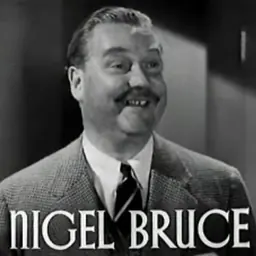
In 1946 Page married Pauline Bruce, daughter of actor Nigel Bruce. The ceremony was held in California, with C. Aubrey Smith acting as best man.
Page was made commanding officer of No. 64 Squadron RAF, flying the de Havilland Hornet fighter. In 1947 he was appointed personal assistant to Sir Guy Garrod, the senior RAF officer at the United Nations Military Staff Committee in New York. In 1948 he resigned his commission with the RAF and took a job with Vickers-Armstrongs as a sales executive. Later he worked as an aviation consultant internationally, with his home base in Switzerland.
In retirement, as well as remaining the driving force of the Guinea Pig Club, Page founded the Battle of Britain Trust. This raised more than £1 million, with which the Battle of Britain memorial was erected overlooking the Straits of Dover, to commemorate those who kept Nazi Germany at bay. He was created an Officer of the Order of the British Empire in 1995 for his efforts.
In 1981 Page published his autobiography, titled Tale of a Guinea Pig. The book carried the dedication "To Archie McIndoe, whose surgeon's fingers gave me back my pilot's hands." In 1999 a revised edition was released, titled Shot Down in Flames.
Geoffrey Page died on 3 August 2000, survived by his wife Pauline, his daughter and two sons.
Awards Distinguished Flying Cross 30 July 1943 Distinguished Flying Cross 22 August 1944 Distinguished Service Order 29 December 1944 Officer of the Order of Orange Nassau (Netherlands) 23 January 1948 Officer of the Order of the British Empire 17 June 1995
Don’t just read it —
keep it.
Full-length biographies made to live with: read them, listen on the way to work, watch them tonight.
- E-book
- Audio
- Video
Instant download · yours to keep · every purchase keeps this site free
Important facts
People in Geoffrey Page's life
Named in this biography and alive at the same time


Related people
Same field, nearest in time



Contemporaries
People whose lives overlapped Geoffrey Page's





Frequently asked questions
Who was Geoffrey Page?
British military aviator
When was Geoffrey Page born?
Geoffrey Page was born on 16 May 1920 in Boxmoor.
When did Geoffrey Page die?
Geoffrey Page died on 3 August 2000 in Wokingham.
What was Geoffrey Page's occupation?
Geoffrey Page was a soldier and british Aircraft Corporation.
What nationality was Geoffrey Page?
Geoffrey Page was British.
Sources & further reading
Cite this page
APA: Biography.guide. (2026). Geoffrey Page. https://biography.guide/geoffrey-page/
MLA: "Geoffrey Page." Biography.guide, https://biography.guide/geoffrey-page/.
Chicago: "Geoffrey Page." Biography.guide. https://biography.guide/geoffrey-page/.
Data last updated: 2026-09-20 · Spot an error? Report a correction.
Page generated 2026-09-27 05:26 UTC