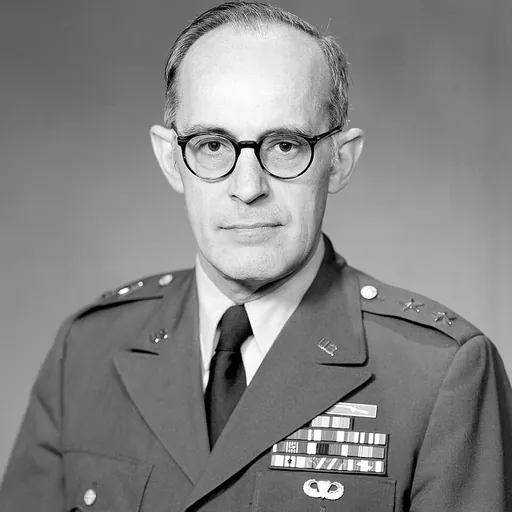
William Eldridge Odom
United States Army general
About William Eldridge Odom
Lived 1932 – 2008 (aged 75). William Eldridge Odom was an American soldier, georgetown University, hudson Institute and yale University.
William Eldridge Odom (June 23, 1932 – May 30, 2008) was a United States Army lieutenant general who served as Director of the National Security Agency under President Ronald Reagan, which culminated a 31-year career in military intelligence, mainly specializing in matters relating to the Soviet Union. After his retirement from the military, he became a think tank policy expert and a university professor and became known for his outspoken criticism of the Iraq War and warrantless wiretapping of American citizens. He died of an apparent heart attack at his vacation home in Lincoln, Vermont.
Military career 1954 Graduated from the United States Military Academy and was commissioned a second lieutenant. 1954–1960, Served in both the United States and West Germany. 1962, Earned a master's degree from Columbia University, and married Anne Weld Curtis. 1964–1966, Served as part of the U.S. Military Liaison Mission to the Group, Soviet Forces Germany at Potsdam, East Germany. 1966–1969, Taught at West Point as an assistant professor of government. 1970, Completed a PhD at Columbia. 1970–1971, At this point a lieutenant colonel, served in Vietnam, being on the Staff of Plans, Policy, and Programs, and working on the Vietnamization phase of the war. 1971–1972, Odom was a visiting scholar at the Research Institute on Communist Affairs at Columbia. 1972–1974, U.S. assistant military attaché at the United States embassy in Moscow. 1974, Published The Soviet Volunteers: Modernization and Bureaucracy in a Public Mass Organization, (Princeton, N.J.: Princeton University Press, 360 pp.) 1974–1975, Associate of the Research Institute on International Change at Columbia 1974–1977, Associate professor, Department of Social Science at West Point. 1975–1976, Associate member of the Columbia University Seminar on Communism 1975–1977, Senior research associate, Research Institute on International Change at Columbia 1981, promoted to Major General 1977–1981, Military assistant to Zbigniew Brzezinski, the assistant to the president for national security affairs. 1981–1985, Assistant chief of staff for intelligence, United States Army. 1984, promoted to lieutenant general. 1985–1988, Director of the National Security Agency, Fort Meade, Maryland
Post-military 1989, Director of national security studies, Hudson Institute, Indianapolis, Indiana 1989, Adjunct professor, political science, Yale University, New Haven, Connecticut. Extensive publications; see bibliography below
Biography Army Chief of Staff Gen. John A. Wickham Jr. and Mrs. Ann Odom each pin a third star on the shoulders of Lt. Gen. William E. Odom during his promotion ceremony at the Pentagon, June 21, 1984.
Early in his military career, he observed Soviet military activities while serving as a military liaison in Potsdam, East Germany. Later, he taught courses in Russian history at West Point, New York, and while serving at the United States embassy in Moscow in the early 1970s, he visited all of the republics of the Union of Soviet Socialist Republics.
Upon returning to the United States, he resumed his career at West Point where he taught courses in Soviet politics. Odom regularly stressed the importance of education for military officers.
In 2003, he revealed how the question of the 1967 USS Liberty incident’s deliberateness “just wasn’t a disputed issue” within the NSA. Along with NSA Deputy Director for Operations Oliver Kirby, U.S. Air Force Major General John E. Morrison (Kirby’s successor), and Admiral Bobby Ray Inman, he said he was unaware of any agency official at any time who dissented from the “deliberate” conclusion.
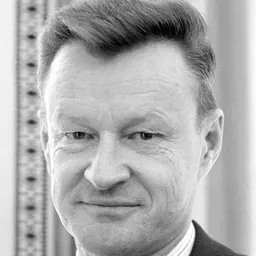
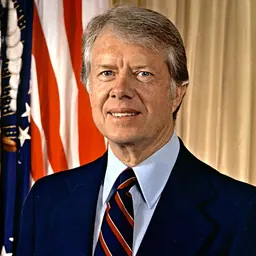
In 1977, he was appointed as the military assistant to Zbigniew Brzezinski, the hawkish assistant for national security affairs to President Jimmy Carter. Among the primary issues he focused on were American-Soviet relations, including the SALT nuclear weapons talks, the Soviet invasion of Afghanistan, the Iran hostage crisis, presidential directives on the situation in the Persian Gulf, terrorism and hijackings, and the executive order on telecommunications policy.
From 2 November 1981 to 12 May 1985, Odom served as the Army's Assistant Chief of Staff for Intelligence. From 1985 to 1988, he served as the director of the National Security Agency, the United States' largest intelligence agency, under president Ronald Reagan.
Odom was a Senior Fellow at the Hudson Institute, where he specialized in military issues, intelligence, and international relations. He was also an adjunct professor at Yale University and Georgetown University, where he taught seminar courses in U.S. National Security Policy and Russian Politics. He earned a national reputation as an expert on the Soviet military.
Since 2005, he had argued that U.S. interests would be best served by an immediate withdrawal from Iraq, having called the 2003 U.S. invasion the worst strategic blunder in the history of U.S. foreign policy. He had also been critical of the NSA's warrantless wiretapping of international calls, having said "it wouldn't have happened on my watch". Odom was also openly critical of the neoconservative influence in the decision to go to war: "It's pretty hard to imagine us going into Iraq without the strong lobbying efforts from the AIPAC and the [neoconservatives], who think they know what's good for Israel more than Israel knows."
Odom was a member of the Military Intelligence Hall of Fame and the American Philosophical Society. He was also a member of the advisory council of the Victims of Communism Memorial Foundation.
Decorations
Don’t just read it —
keep it.
Full-length biographies made to live with: read them, listen on the way to work, watch them tonight.
- E-book
- Audio
- Video
Instant download · yours to keep · every purchase keeps this site free
Important facts
People in William Eldridge Odom's life
Named in this biography and alive at the same time


Related people
Same field, nearest in time






Contemporaries
People whose lives overlapped William Eldridge Odom's

Frequently asked questions
Who was William Eldridge Odom?
United States Army general (1932-2008)
When was William Eldridge Odom born?
William Eldridge Odom was born on 23 June 1932 in Cookeville.
When did William Eldridge Odom die?
William Eldridge Odom died on 30 May 2008 in Lincoln.
What was William Eldridge Odom's occupation?
William Eldridge Odom was a soldier, georgetown University, hudson Institute and yale University.
What nationality was William Eldridge Odom?
William Eldridge Odom was American.
Sources & further reading
· Wikipedia: William Eldridge Odom
· DBpedia: William Eldridge Odom
Cite this page
APA: Biography.guide. (2026). William Eldridge Odom. https://biography.guide/william-eldridge-odom/
MLA: "William Eldridge Odom." Biography.guide, https://biography.guide/william-eldridge-odom/.
Chicago: "William Eldridge Odom." Biography.guide. https://biography.guide/william-eldridge-odom/.
Data last updated: 2026-09-21 · Spot an error? Report a correction.
Portrait: Wikimedia Commons · author & licence
Page generated 2026-09-27 05:01 UTC