
About Clovis E. Byers
Lived 1899 – 1973 (aged 74). Clovis E. Byers was an American soldier.
Lieutenant General Clovis Ethelbert Byers (5 November 1899 – 13 December 1973) was an American military officer in the United States Army. He is best known for his role as Chief of Staff of the Eighth Army in the South West Pacific Area during World War II and in the occupation of Japan. He was wounded while leading American troops from the front at the Battle of Buna-Gona, and also played an important part in the fighting at Lone Tree Hill, Biak, and the Philippines campaign (1944–45).
After the war, he commanded the famous 82nd "All American" Airborne Division before going on to command X Corps in the Korean War and, as such, was in overall command at the Battle of Heartbreak Ridge and the Battle of Bloody Ridge.
Education and early life
Byers was born in Columbus, Ohio, on 5 November 1899. He entered the United States Military Academy (USMA) at West Point, New York, in 1916. He attended Ohio State University in Columbus from 1917 to 1918 before graduating from West Point from 15 June 1920. He was commissioned as a second lieutenant in the cavalry on 2 July 1920.
Byers attended the United States Army Cavalry School at Fort Riley, Kansas, from 1920 to 1921. He was posted to the 4th Cavalry at Fort Brown and later Fort McIntosh, Texas, where he commanded Troop D until it was inactivated in 1923. He attended the Signal School at Fort Monmouth from 1923 to 1924 and then became regimental communications officer of 3rd Cavalry at Fort Myer. In 1925 he was promoted to first lieutenant. Byers, along with a number of other staff members from the 77th Infantry Division, followed Eichelberger when the latter became commander of I Corps in June 1942.
The I Corps headquarters staff moved to Brisbane by air in August 1942, travelling on the same aircraft as former United States Secretary of War Patrick J. Hurley and the Prime Minister of New Zealand, Peter Fraser. The headquarters soon moved to Rockhampton, Queensland, where it supervised the training of American troops in Queensland.
Byers was promoted to temporary brigadier general on 31 October 1942.
In accordance with MacArthur's orders, Eichelberger relieved the 32nd Infantry Division's commander, Major General Edwin F. Harding, replacing him with the division's artillery commander, Brigadier General Albert W. Waldron, on 2 December 1942. In an attack on 5 December, Waldron was shot in the shoulder by a Japanese sniper, and Byers succeeded him as commander of the troops in the field. Byers in turn was wounded on 16 December. He became the third American general to be shot at Buna, Brigadier General Hanford MacNider having been shot earlier in the fighting, none of whom was more than 75 metres from Japanese lines at the time. General Eichelberger assumed command, as he was now the only American general officer present. Waldron and Byers were awarded the Distinguished Service Cross. Byers' citation read:
For his role in the fighting in Papua, Byers also received the Silver Star and Purple Heart. In turn, Byers recommended Eichelberger for the Medal of Honor but the nomination was disapproved by MacArthur. Byers returned to the front on 17 January 1943, as Chief of Staff of Advance New Guinea Force, now commanded by Eichelberger. The two remained until 26 January, when they returned to Australia.
Byers was awarded an Oak Leaf Cluster to his Silver Star in the Battle of Biak. His citation read:
He was also awarded an Oak Leaf Cluster to his Bronze Star Medal. This citation read:
Lieutenant General Walter Krueger, commander of the Sixth Army offered to make Byers an assistant division commander. When Byers refused the offer, Krueger took this as a personal affront.
In August 1944, Eighth Army headquarters arrived in the New Guinea and Eichelberger became commander of the new army. Once again, Byers followed him as his chief of staff. For his services as Chief of Staff of I Corps, Byers was awarded the Legion of Merit:
Philippines campaign Byers remained chief of staff through the Eighth Army's operations on Leyte and Luzon, for which Byers was awarded a second oak leaf cluster to his Bronze Star Medal:
The Eighth Army proceeded to complete the reconquest of the Philippines with the Visayas and Mindanao campaigns. For his part, Byers was awarded the Army Distinguished Service Medal. According to his citation, Byers:
He was also awarded the Air Medal:
Byers was promoted to the temporary rank of major general on June 4, 1945, with his date of rank backdated to December 1, 1944. He died on 13 December 1973, and is buried with his wife Marie in Arlington National Cemetery. His papers are in the Hoover Institution.
Don’t just read it —
keep it.
Full-length biographies made to live with: read them, listen on the way to work, watch them tonight.
- E-book
- Audio
- Video
Instant download · yours to keep · every purchase keeps this site free
Important facts
People in Clovis E. Byers's life
Named in this biography and alive at the same time


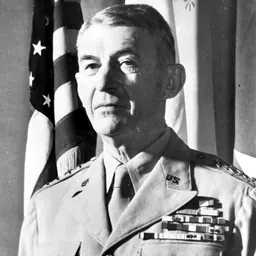
Related people
Same field, nearest in time
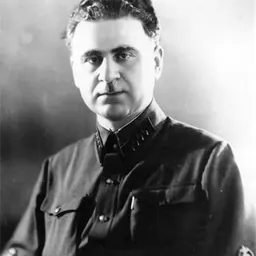
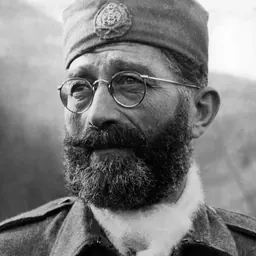




Contemporaries
People whose lives overlapped Clovis E. Byers's

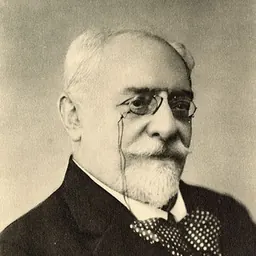



Frequently asked questions
Who was Clovis E. Byers?
United States Army general in World War II (1899–1973)
When was Clovis E. Byers born?
Clovis E. Byers was born on 5 November 1899 in Columbus.
When did Clovis E. Byers die?
Clovis E. Byers died on 13 December 1973.
What was Clovis E. Byers's occupation?
Clovis E. Byers was a soldier.
What nationality was Clovis E. Byers?
Clovis E. Byers was American.
Sources & further reading
Cite this page
APA: Biography.guide. (2026). Clovis E. Byers. https://biography.guide/clovis-e-byers/
MLA: "Clovis E. Byers." Biography.guide, https://biography.guide/clovis-e-byers/.
Chicago: "Clovis E. Byers." Biography.guide. https://biography.guide/clovis-e-byers/.
Data last updated: 2026-09-20 · Spot an error? Report a correction.
Page generated 2026-09-27 05:32 UTC