
About Hanford MacNider
Lived 1889 – 1968 (aged 78). Hanford MacNider was an American diplomat and military officer.
Hanford MacNider (2 October 1889 – 18 February 1968) was a senior officer of the United States Army who fought in both world wars. He also served as a diplomat, the Assistant Secretary of War of the United States from 1925 to 1928 and the National Commander of the American Legion from 1921 to 1922. He was also the United States Ambassador to Canada.
Early life Hanford MacNider was born in Mason City, Iowa as the son of Charles H. MacNider, a prominent banker, and May Hanford. He attended Milton Academy (a boarding school in Massachusetts) and subsequently Harvard University, where he graduated in 1911 before returning to Iowa.
MacNider joined the National Guard and served during the Pancho Villa Expedition during the Mexican Revolution. During World War I, he served as a captain in the 2nd Division within American Expeditionary Forces in France. The story goes that military charges were laid against him when one of his men disagreed with a colonel. He then supposedly went AWOL to get to the front. When authorities finally caught up to him, he had already risen through the ranks to Lieutenant Colonel and won 14 medals, so charges were dropped. For extraordinary heroism in the battle, MacNider was decorated with two Distinguished Service Cross, three Silver Stars, Italian War Merit Cross, French Légion d'honneur, and French Croix de Guerre with Palm.
The American Legion MacNider was Commander of the American Legion Department of Iowa, from 1920 to 1921, before being elevated to the office of National Commander, serving from 1921 to 1922.
Political career
President Calvin Coolidge appointed MacNider Assistant Secretary of War in 1925 where Major Dwight Eisenhower was his executive assistant. He married Margaret McAuley in 1925. He was considered a possible Republican candidate in the 1928 United States presidential election, but after the death of his father, MacNider returned to Iowa to handle the family's business affairs which thrived despite the Depression.
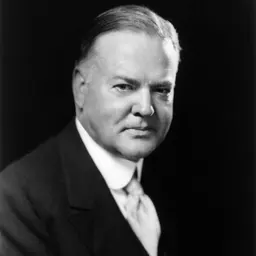
President Herbert Hoover appointed him as Envoy Extraordinary and Minister Plenipotentiary (Canada) in 1930. His command of the 158th RCT in the Philippines was excellent and it was there that some of the toughest fighting of the war occurred.
A regimental story states that men of the 3rd battalion became intoxicated from a cache of Japanese sake. Upon finding them, MacNider drank a bottle of sake and criticized the troops. MacNider was recognized by the men of the 158th for his leadership during combat, contributing to his long-standing reputation within the regiment.
MacNider was eventually promoted to brigadier general in the United States Army, and then major general until his retirement in 1951. After retirement, he was promoted to lieutenant general by an act of Congress on 7 August 1956. He is one of only four individuals to be promoted to lieutenant general after retirement from the army.
Death On 18 February 1968, while on vacation in Sarasota, Florida, he died at a hospital of pulmonary edema. It has been said that he was interred in Mason City's Elmwood Saint Joseph Cemetery; the cemetery office has no record of his burial, and it is believed that he was cremated and his ashes scattered in an unknown location.
Second Distinguished Service Cross citation The official U.S. Army citation for his second Distinguished Service Cross reads:
General Orders: War Department, General Orders No. 44 (1919) Action Date: 12 September 918 Name: Hanford MacNider Service: Army Rank: Captain Regiment: 9th Infantry Regiment Division: 2d Division, American Expeditionary Forces Citation: The President of the United States of America, authorized by Act of Congress, 9 July1918, takes pleasure in presenting a Bronze Oak Leaf Cluster in lieu of a Second Award of the Distinguished Service Cross to Captain (Infantry) Hanford MacNider, United States Army, for extraordinary heroism in action while serving with 9th Infantry Regiment, 2d Division, A.E.F., near Remeriauville, France, 12 September 1918. On duty as regimental adjutant, while carrying instructions to the assaulting lines, Captain MacNider found the line unable to advance and being disorganized by a heavy machine-gun fire. Running forward in the face of the fire, this officer captured a German machine-gun, drove off the crew, reorganized the line on that flank, and thereby enabled the advance to continue.
Ribbon bar Here is the ribbon bar of Lieutenant General (Ret.) Hanford MacNider:
Don’t just read it —
keep it.
Full-length biographies made to live with: read them, listen on the way to work, watch them tonight.
- E-book
- Audio
- Video
Instant download · yours to keep · every purchase keeps this site free
Important facts
People in Hanford MacNider's life
Named in this biography and alive at the same time


Related people
Same field, nearest in time

Contemporaries
People whose lives overlapped Hanford MacNider's




Frequently asked questions
Who was Hanford MacNider?
United States Army general (1889-1968)
When was Hanford MacNider born?
Hanford MacNider was born on 2 October 1889 in Mason City.
When did Hanford MacNider die?
Hanford MacNider died on 18 February 1968 in Sarasota.
What was Hanford MacNider's occupation?
Hanford MacNider was a diplomat and military officer.
What nationality was Hanford MacNider?
Hanford MacNider was American.
Sources & further reading
Cite this page
APA: Biography.guide. (2026). Hanford MacNider. https://biography.guide/hanford-macnider/
MLA: "Hanford MacNider." Biography.guide, https://biography.guide/hanford-macnider/.
Chicago: "Hanford MacNider." Biography.guide. https://biography.guide/hanford-macnider/.
Data last updated: 2026-09-20 · Spot an error? Report a correction.
Page generated 2026-09-27 05:31 UTC