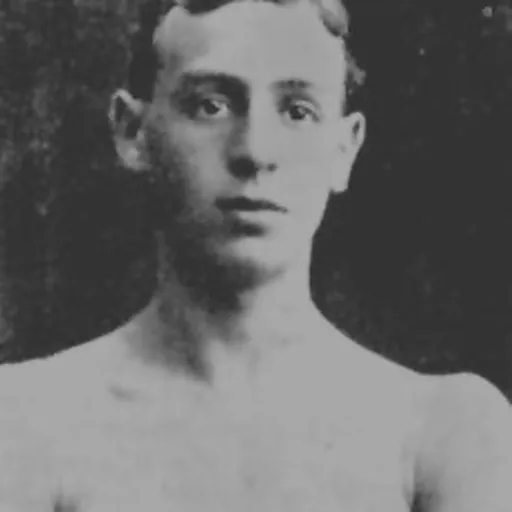
About Harry Harris
Lived 1880 – 1959 (aged 78). Harry Harris was an American boxer.
Harry Harris ("The Human Hairpin"; November 18, 1880 – June 5, 1959) was an American boxer. He was the World Bantamweight champion from 1901 to 1902, but boxed top-rated opponents throughout his career. Charley Rose ranked Harris as the #10 All-Time Bantamweight.
Early life and career Harris was born on November 18, 1880, a few minutes apart from his twin brother, Sammy, on Chicago's South Side. Growing up in a formidable Chicago neighborhood, he began boxing as a kid, pounding the bag with his brother after school at a local gym. With an artistic bent, he began taking drawing classes in Chicago.
Beginning prize fighting in 1896 at the age of 16, he abandoned his aspirations to become a professional artist, and dropped out of high school to find time to train.
On April 2, and April 16, 1898, Harris defeated Morris Rauch in six rounds in Chicago. Rauch was recognized as a fringe featherweight contender. In 1903 and 1904, he would meet champions Abe Attell and Harry Forbes. Rauch had met Forbes three times earlier in 1897. Harris had drawn with Rauch in December 1897, and would draw with him again in May 1900 in a six-round bout in Chicago.
On November 22, 1898, he defeated Charles Roden in a ninth-round technical knockout at the Lenox Athletic Club in New York City. The New Jersey boxer had a five-inch height disadvantage in his matchup with Harris. With a few accomplished boxers in his resume, Roden had met the great Terry McGovern in December of the previous year.
Win over former feather champ Billy Murphy, 1899 On May 19, 1899, Harris knocked out the 1890 World Featherweight Champion, "Torpedo" Billy Murphy in the fourth round at the Star Theater in Chicago, Illinois. Murphy was an Australian born featherweight of considerable fame, and achievement. Harris appeared to have an advantage from the start, and Hart clinched frequently to avoid his blows. Hart was an accomplished boxer in his own right, another hero of the Chicago Jewish Ghetto crowd, and faced many of the same opponents as Harris including the champion Torpedo Billy Murphy.
Draw with champion Jimmy Barry On September 1, 1899, Harris, at 112 pounds, fought a draw with the great bantamweight Jimmy Barry at the Star Theater in Chicago, Illinois. The fifth and sixth rounds were close, with Barry having the advantage in the fourth, landing some telling rights, and having a slight edge in the first two rounds as well. Barry was considered one of the world's top bantamweights, and held the World Bantamweight Championship during his years as a boxer. The Chicago Inter-Ocean noted that Harris forced the fighting in the third and fourth rounds, perhaps appearing to score more points in the eyes of some, and clearly won the second using his left on Barry repeatedly, evading Barry's counter punches. The InterOcean, gave the fourth to Harris as well, and felt he should have won the bout on points. At the end of the fourth, Barry made a drive, and appeared to take the round. Another source wrote that the draw was justified, but the bout was clearly close in many respects. Barry had come out of a retirement to fight Harris, and announced he would return to retirement after the bout.
Bouts with Steve Flanagan, February 1899 In a notable bout, he lost his first recorded Chicago match boxing at 108 pounds, against Steve Flannigan on February 7, 1899, in a six-round point's decision at Tattersal's, an important venue in Chicago. In their February bout, Philadelphian Flanagan was considered to have had the better of the match in the last two rounds by a notable margin. Even the Chicago InterOcean gave the bout to Flanagan, but noted that Harris made his best showing in the fourth round though it was slightly in Flanagan's favor. In the first round, Harris was able to use his reach advantage to deliver his left jab effectively, but the round was still close. Flanagan was considered by many sources to have taken or competed for the 105 pound bantamweight championship of the World in February 1898 against Danny Dougherty or September 1898 against Casper Leon. He was a tough, scrappy boxer, but not a power hitter.
Loss to Clarence Forbes, November 1900 On November 27, 1900, Harris lost one of his last six round Chicago-based fights against fellow Chicago boxer Clarence Forbes, at Tattersal's. According to the Fort Wayne Daily News, it was a close decision. It was likely one of only two decisions ever given against Harris in Chicago, and the crowd met it with mixed reactions. In the fourth round, Harris unintentionally flung Forbes to the floor, possibly during a clinch, but it had happened to Forbes earlier in the bout, and the fight continued without a problem.
On October 30, 1900, he defeated "Kid" McFadden at the Star Athletic Club in Chicago, Illinois, in a six-round points decision. On April 30, 1901, McFadden would contend with Danny Dougherty for one version of the World Bantamweight Title, winning in a ten-round disqualification in his hometown of San Francisco. McFadden would later box champion Harry Forbes in 1903.
World Bantamweight Champ, 1901
On March 8, 1901, Harris took the World Bantamweight Championship against British boxer Pedlar Palmer at the National Sporting Club in London in a fifteen-round points decision.
One month later, on April 15, 1901, Harris defeated noted British boxer Harry Ware in London in a fifteen-round points decision. Daugherty sparred with and was mentored by the great Terry McGovern during much of his career. The bout encouraged Harris to quit the ring for good and return to the theater business.
New York stock broker By 1918, Harris was working as a broker and in 1919 purchased a seat on the New York Stock Exchange, as a member of Robinson, Duff, and Company. He made a good living working with the Stock market exchange. During his days working in theater, Harris had struck up an acquaintance with J. Robinson Duff, formerly a heavyweight boxer who had turned to Wall Street to make a living. Duff encouraged Harris to learn the ropes of trading stocks. Long after his boxing retirement, he continued to gently spar with and mentor young boxers to maintain his conditioning. One of the young boxer's Harris sparred with was future heavyweight champion Gene Tunney. He is survived by the Steiner family, including his two grandsons Corky and Rick Steiner, as well as his great-grandchildren, Meredith, Ricky and Joey Steiner and Ace and Duke Steiner.
Harris, who was Jewish, was inducted into the International Jewish Sports Hall of Fame in 2001.
Professional boxing record All information in this section is derived from BoxRec, unless otherwise stated.
Official record
All newspaper decisions are officially regarded as “no decision” bouts and are not counted in the win/loss/draw column.
Unofficial record
Record with the inclusion of newspaper decisions in the win/loss/draw column.
Don’t just read it —
keep it.
Full-length biographies made to live with: read them, listen on the way to work, watch them tonight.
- E-book
- Audio
- Video
Instant download · yours to keep · every purchase keeps this site free
Important facts
People in Harry Harris's life
Named in this biography and alive at the same time


Related people
Same field, nearest in time
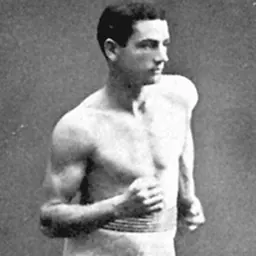
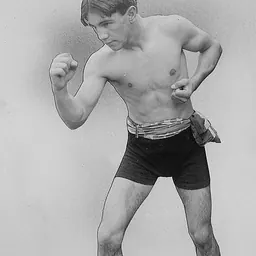
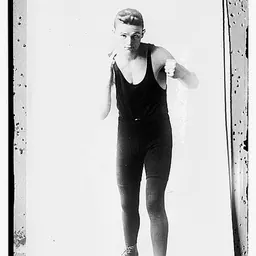

Contemporaries
People whose lives overlapped Harry Harris's



Frequently asked questions
Who was Harry Harris?
American boxer (1880-1959)
When was Harry Harris born?
Harry Harris was born on 18 November 1880 in Chicago.
When did Harry Harris die?
Harry Harris died on 5 June 1959 in New York City.
What was Harry Harris's occupation?
Harry Harris was a boxer.
What nationality was Harry Harris?
Harry Harris was American.
Sources & further reading
· DBpedia: Harry Harris (boxer)
Cite this page
APA: Biography.guide. (2026). Harry Harris. https://biography.guide/harry-harris-boxer/
MLA: "Harry Harris." Biography.guide, https://biography.guide/harry-harris-boxer/.
Chicago: "Harry Harris." Biography.guide. https://biography.guide/harry-harris-boxer/.
Data last updated: 2026-09-22 · Spot an error? Report a correction.
Portrait: Wikimedia Commons · author & licence
Page generated 2026-09-27 05:02 UTC