
About Gene Tunney
Lived 1897 – 1978 (aged 81). Gene Tunney was an American boxer.
James Joseph "Gene" Tunney (May 25, 1897 – November 7, 1978) was an American professional boxer who competed from 1915 to 1928. He held the world heavyweight title from 1926 to 1928, and the American light heavyweight title twice between 1922 and 1923.
A highly technical boxer, Tunney had a five-fight light heavyweight rivalry with Harry Greb in which he won three, lost once, and drew once, though many ringside reporters believed Greb should have won the decision in their second meeting. Tunney also knocked out Georges Carpentier and defeated Jack Dempsey twice; first in 1926 and again in 1927. Tunney's successful title defense against Dempsey remains one of the most famous bouts in boxing history and is known as The Long Count Fight. He retired undefeated as a heavyweight after his victory over Tom Heeney in 1928, after which Tunney was named the inaugural Fighter of the Year by The Ring magazine.
Early life James Joseph Tunney was born on May 25, 1897, in New York City to Irish immigrant parents from Kiltimagh, County Mayo. His mother, Mary Lydon from Culleen House, Gorthgarve, Kiltimagh immigrated to the United States after the Great Famine and settled in New York City, where she met John Tunney, from Cill Aodain, Kiltimagh. They married after a short courtship. The Tunneys had seven children. At an early age, Gene Tunney was inspired by President Theodore Roosevelt to become physically fit.
Career
Tunney fought some 68 official professional fights, losing only one, to Harry Greb, while fighting as a light heavyweight. Tunney fought many other fights whose scoring was unofficial, judged by newspaper reporters. He also lost none of these "newspaper decisions". He reported that he lost a second fight during World War I, a 10-round decision, to Tommy Loughran, in a non-professional bout during his military service. Tunney was regarded as an extremely skillful boxer who excelled in defense. In addition to beating Dempsey, the most famous fighter of his era, Tunney defeated Tommy Gibbons, Georges Carpentier, and many other fine boxers.
Already the American Expeditionary Forces champion, Tunney spent the winter of 1921 as a lumberjack in Northern Ontario for the J. R. Booth Company of Ottawa, without revealing he was a champion boxer. He explained this as "wanting the solitude and the strenuous labors of the woods to help condition himself for the career that appeared before him."
Tunney also had a brief acting career, starring in the movie The Fighting Marine in 1926. No prints of the film are known to exist.
He was named The Ring magazine inaugural Fighter of the Year in 1928 and later elected to the World Boxing Hall of Fame in 1980, the International Boxing Hall of Fame in 1990 and the United States Marine Corps Sports Hall of Fame in 2001.
Fighting style Tunney was a thinking fighter who preferred to make a boxing match into a game of chess, which was not popular during the times when such sluggers as Jack Dempsey, Harry Greb, and Mickey Walker were commanding center stage. Tunney's style was influenced by other noted boxing thinkers such as James J. Corbett and Benny Leonard. Nevertheless, it is incorrect to think of Tunney as a stick-and-move fighter in the Ali style. While Tunney's heavyweight fights against Gibbons, Carpentier, and Dempsey featured his fleet-footed movement and rapid-fire jabbing, his earlier bouts, especially the five against Harry Greb, demonstrated his vicious body punching and willingness to fight toe-to-toe. It was Benny Leonard who advised Tunney that the only way to beat Harry "The Human Windmill" Greb was to aim his punches at Greb's body rather than his head.
Tunney was never knocked out, while only ever being knocked down once, that in his second fight with Dempsey in the infamous Long Count. This makes him one of only five Heavyweight champions, alongside Rocky Marciano, Riddick Bowe, Sultan Ibragimov and Nicolai Valuev to retire without ever suffering a stoppage defeat. Tunney, along with Marciano, Lewis and Vitali Klitschko is one of four heavyweight champions to have retired as champion and to have ended their career with a win in a world title fight. Having avenged his only loss to Harry Greb, Tunney joins Ingemar Johansson, Rocky Marciano, Lennox Lewis and Riddick Bowe as the only five heavyweight champions to have retired while holding a victory over every opponent he faced as a professional (barring no-contests and draws).
Muhammad Ali is quoted praising Tunney's ahead-of-its-time fighting style in the 2015 book "Muhammad Ali: Portrait Of A Champion" by Scoop Malinowski. "If you look at Tunney is where boxing started to get better. He throws punches sharp and quick. Strong, fast and quick. He’s about the best of the old timers. I'd say Tunney is the greatest old timer as far as punching and skill is concerned. Tunney used footwork – something that most heavyweights don't have. I thought I was the only heavyweight to do that. He's jabbing and moving. Tunney didn't fight like old timer fighters, he's moving like me but with no rhythm. Dempsey is dangerous in close like Frazier and Marciano. Dempsey is a good ducker, he could bob a lot. Tunney is the best of that era. I see him sometimes, tell him he was one of the best of all time."
Military service
Tunney enlisted the Marine Corps during World War I and served as private with 11th Marine Regiment in France and later in Germany during the occupation of the Rhineland in 1919. He saw no combat and spent most of the war in the Marine boxing team, becoming U.S. Expeditionary Forces champion. Tunney was demobilized following the war, but remained in the Marine Corps Reserve, ultimately reaching the rank of major in the Connecticut Naval Militia.
Following the United States entry into World War II, at the request of Navy Undersecretary James Forrestal, Tunney accepted a commission in the United States Naval Reserve as a lieutenant commander to set up a physical fitness program for student pilots. He headed the Navy's physical fitness programme for the duration of the war and also made an inspection trip to Hawaii and the surrounding area.
Tunney was consecutively promoted to the ranks of commander and captain and retired shortly following the war. For his wartime service, he was decorated with the Navy Commendation Medal and was awarded the American Defense Service Medal, American Campaign Medal, Asiatic Pacific Campaign Medal, World War II Victory Medal. He also held the World War I Victory Medal with France Clasp, Army of Occupation of Germany Medal, and Marine Corps Good Conduct Medal for his World War I enlisted service.
Tunney Cup
In 1932, Tunney published a book called A Man Must Fight, in which he gave comments on his career and boxing techniques. In 1928, the U.S. Marine Corps presented – as a sign of friendship – a challenge cup to the Corps of Royal Marines, in the hope it might be competed for by Royal Marines association football teams. The Royal Marines named the trophy the "Tunney Cup," in honor of then-USMC Captain Tunney, who, with Sergeant Major Charles R. Francis, presented the trophy on behalf of the U.S. Marine Corps. They had three sons and one daughter: John Varick Tunney (1934–2018), who was a U.S. Representative and U.S. Senator from California from 1965 until 1977; Jonathan "Jay" Rowland Tunney of Stamford, Connecticut; Gene Lauder Tunney (1931–2009), who became a lawyer and served as district attorney for Sonoma County, California, for 20 years; and Joan Tunney Wilkinson (1939–2008) of San Francisco, who was committed to McLean Hospital on June 6, 1970, after she murdered her husband, Lynn Carter Wilkinson Jr.
Previous to his marrying Polly Lauder, Tunney was sued in 1927 for breach of promise by Katherine King Fogarty.
Death and legacy Death Tunney died on November 7, 1978, at the Greenwich Hospital in Connecticut at the age of 81, after suffering from a circulation ailment. He was interred at Long Ridge Union Cemetery in Stamford, Connecticut.
Legacy In 1941, Tunney was honored with the James J. Walker Memorial Award by the Boxing Writers Association of America for outstanding services to his country and boxing.
In popular culture
Dean Martin and Jerry Lewis had a comedy routine in which Lewis (in boxing shorts and gear) states he will be fighting Gene Tierney (the actress). Martin corrects Lewis and suggests that he must mean "Gene Tunney". Lewis then quips "You fight who you wanna fight, I'm fight'n who I wanna fight, I'm fight'n Gene Tierney."
In the song "She Twists the Knife Again" from Richard Thompson's 1985 album Across a Crowded Room, describing the mismatched intensity in a strife-ladened relationship, Thompson writes: "I'm in a fist fight/She thinks she's Gene Tunney!"
He is also mentioned in Act 1 of Arthur Miller's Death of a Salesman: Willy tells his sons he has a punching bag with Tunney's signature on it.
Mentioned in A Whistle in the Dark (Act 1, p. 31) by Tom Murphy: "in the words of the great Gene Tunney, a man must fight back. His father was a Mayoman too".
Mentioned in the short story "Fallon" by J. D. Luther, when imprisoned character Tyson Wayne Vance recalls his abusive father, "Was more than one night momma'd look like she went fifteen rounds with Gene Tunney...".
In the 1928 silent comedy Feel My Pulse, Richard Arlen's character is asked about why a woman has just come onto an island. He responds (in intertitles), "She uses too big words for me! She talks like she was Gene Tunney's librarian."
In the 1932 boxing film Winner Take All, James Cagney's character Jimmy Kane—a has-been former champion trying to get educated—laments that William Shakespeare was "the one who ruined Gene Tunney."
The novelette A KO for Christmas by Shawn Pollock features a character, Stitch Stanford, who hopes to fight Gene Tunney for the heavyweight title.
Professional boxing record All information in this section is derived from BoxRec, unless otherwise stated.
Official record
All newspaper decisions are officially regarded as “no decision” bouts and are not counted in the win/loss/draw column.
Unofficial record
Record with the inclusion of newspaper decisions in the win/loss/draw column.
Titles in boxing Major world titles NYSAC heavyweight champion (200+ lbs) NBA (WBA) heavyweight champion (200+ lbs)
The Ring magazine titles The Ring heavyweight champion (200+ lbs)
Regional/International titles S.O.S. light heavyweight champion (175 lbs) American Expeditionary Forces light heavyweight champion (175 lbs) American (ABA) light heavyweight champion (175 lbs) (2×)
Undisputed titles Undisputed heavyweight champion
Don’t just read it —
keep it.
Full-length biographies made to live with: read them, listen on the way to work, watch them tonight.
- E-book
- Audio
- Video
Instant download · yours to keep · every purchase keeps this site free
Important facts
People in Gene Tunney's life
Named in this biography and alive at the same time
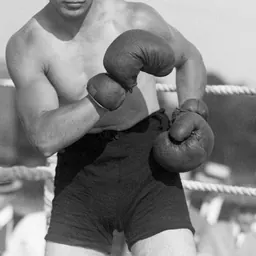



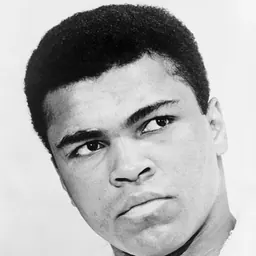
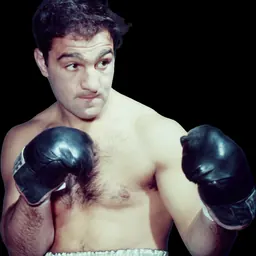

Related people
Same field, nearest in time




Contemporaries
People whose lives overlapped Gene Tunney's


Frequently asked questions
Who was Gene Tunney?
American boxer (1897-1978)
When was Gene Tunney born?
Gene Tunney was born on 25 May 1897 in New York City.
When did Gene Tunney die?
Gene Tunney died on 7 November 1978 in Greenwich.
What was Gene Tunney's occupation?
Gene Tunney was a boxer.
What nationality was Gene Tunney?
Gene Tunney was American.
Sources & further reading
Cite this page
APA: Biography.guide. (2026). Gene Tunney. https://biography.guide/gene-tunney/
MLA: "Gene Tunney." Biography.guide, https://biography.guide/gene-tunney/.
Chicago: "Gene Tunney." Biography.guide. https://biography.guide/gene-tunney/.
Data last updated: 2026-09-20 · Spot an error? Report a correction.
Page generated 2026-09-27 05:22 UTC