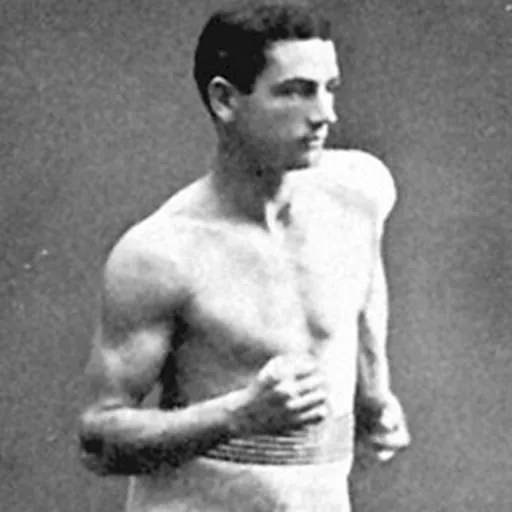
About Kid McCoy
Lived 1872 – 1940 (aged 67). Kid McCoy was an American boxer and film actor.
Charles "Kid" McCoy (October 13, 1872 – April 18, 1940), born Norman Selby, was an American boxer and early Hollywood actor. He claimed the vacant world middleweight title when he scored an upset victory over Tommy Ryan by 15th-round knockout.
Overview Born in Moscow, Rush County, Indiana, and go on to a record 81 wins (55 by KO, with 6 losses, 9 no decision, and 6 disqualifications). McCoy was noted for his "corkscrew punch" – a blow delivered with a twisting of the wrist. He was also regarded as a formidable puncher, and was included in Ring Magazine's list of 100 greatest punchers of all time.
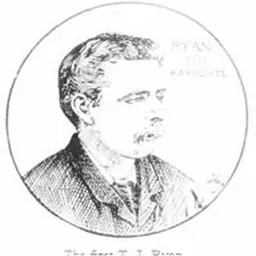
Boxing career Tommy Ryan was knocked out by Kid McCoy in the 15th round on March 2, 1896. This bout forms part of the lore of the McCoy legend. McCoy served as a sparring partner for Ryan, and absorbed many beatings at the hands of his employer. Ryan was notorious for showing little mercy to his sparring partners. Tommy Ryan and Fireman Jim Flynn, between 1910 and 1915. As a result, McCoy hated Ryan, and sought revenge. It is alleged that McCoy, who appeared thin, pale and frail, persuaded Ryan that he was seriously ill before their fight. McCoy, who was famed as a trickster, purportedly rubbed flour on his face so as to appear deathly ill. Ryan is said to have fallen for the ruse, failed to train properly and was not in top condition for the bout. Whether true or not, McCoy scored an upset win over Ryan in a fight billed for the American and World 154lbs Middleweight Title.
Another one of McCoy's tactics was demonstrated while McCoy was on a tour of Australia and some other Pacific Islands. To supplement his income, he would take on all comers. In one unidentified port, McCoy, who scarcely weighed , agreed to box a huge native reputed to weigh in excess of . McCoy watched him train and noted the man fought in his bare feet. When the fight began, McCoy's corner threw handfuls of tacks into the ring, causing the bare-footed challenger to drop his guard and raise up one foot. As soon as he did so, McCoy lowered the boom on his distracted adversary.
Although slight of build, McCoy captured the world middleweight championship by defeating Dan Creedon. McCoy never defended the title, choosing to abandon the crown to enable him to pursue the world heavyweight championship. Despite his handicap in size, McCoy battled the best heavyweights of his era, and defeated Joe Choynski and Peter Maher. He was defeated by Tom Sharkey and Jim Corbett. The Corbett fight was the subject of controversy, as the ending was suspect and Corbett's estranged wife claimed the bout was fixed. Although, she later recanted her statement.
"The real McCoy"
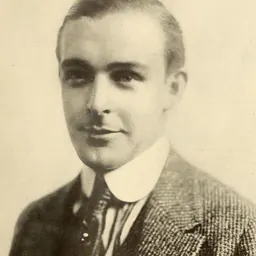
It has been incorrectly asserted the expression "The Real McCoy" originally referred to Kid McCoy. One origin involves a local tough who bumped into McCoy and laughed when he was told the fellow he was annoying was Kid McCoy. He then challenged McCoy to fight, and upon reviving from being knocked out allegedly remarked "Oh my God, that was the real McCoy". However, it is believed that the first publication of the phrase with this spelling occurred in James S. Bond's 1881 dime novel, The Rise and Fall of the "Union club": or, Boy life in Canada, wherein a character utters, "By jingo! yes; so it will be It's the 'real McCoy,' as Jim Hicks says." performed in theater, and went west to California during the birth of the movie industry in Los Angeles. He appeared in films, including a scene fighting Wallace Reid in the 1922 film, The World's Champion.
McCoy was sent to San Quentin, but was paroled from prison in 1932. Afterwards he worked for Ford Motor Company.
Marriages
Kid" Young. In a suit filed by Piehler in Hamilton County, Ohio, a divorce decree – rendered by default due to Selby's failure to show-up in court – was awarded February 21, 1898, in favor of Piehler.
Charlotte Smith; married Selby in St. Louis; Charlotte divorced Selby in Hamilton, Ohio.
Julia Crosselman (née Julia Ella Woodruff; 1874–1952); Julia's other husbands include (a) George A. Wheelock (1858–1922), whom she married February 1912 in Jersey City, (b) Ralph Thompson, and (c) Crosselman.
Julia Crosselman; re-married Selby January 7, 1901, in Boston.
Julia Crosselman; re-married Selby April 11, 1902, in Hoboken, New Jersey; divorced June 9, 1903. (see List of people who remarried the same spouse)
Indiola Arnold (née Indiola Alice Arnold; 1885–1978), married Selby December 14, 1903, in New York; she was a showgirl; she divorced Selby April 5, 1905, in Providence, Rhode Island.
Lillian Ellis (aka Lillian Estelle Earle); widow of Edward C. Ellis (1877–1904), Lillian married Selby October 19, 1905, in Manhattan. When they married Lillian's net worth was estimated to be from $5 to $7 million (the latter, adjusted for inflation, is approximately ). Lillian was a close friend of Julia, Selby's former wife. Earle and Selby divorced December 1910.
Edna Fernanda Valentine (maiden; 1886–1950) married Selby October 27, 1911, in Gaston County, North Carolina. Her marriage to Selby was her second of three.
Dagmar Dahlgren (aka Carmen M. Crowder; 1880–1951) married Selby April 22, 1920, in Los Angeles County He committed suicide at the Hotel Tuller in Detroit
Selected filmography and publications Filmography As actor 1913: The Great Jewel Robbery 1918: The House of Glass 1919: Eyes of Youth 1919: Broken Blossoms 1920: The Fourteenth Man 1920: The Honey Bee 1922: The World's Champion 1922: Oath-Bound 1922: Tom Mix in Arabia 1923: April Showers
As subject 1989: Brutal Glory, highly fictionalized film, loosely about Norman Selby
Publications As subject 2002: The Real McCoy, by Darin Strauss; (2002, 2003); ; ; ; (Dutch language)
Professional boxing record All information in this section is derived from BoxRec, unless otherwise stated.
Official record
All newspaper decisions are officially regarded as “no decision” bouts and are not counted in the win/loss/draw column.
Unofficial record
Record with the inclusion of newspaper decisions in the win/loss/draw column.
Don’t just read it —
keep it.
Full-length biographies made to live with: read them, listen on the way to work, watch them tonight.
- E-book
- Audio
- Video
Instant download · yours to keep · every purchase keeps this site free
Important facts
People in Kid McCoy's life
Named in this biography and alive at the same time


Related people
Same field, nearest in time


Contemporaries
People whose lives overlapped Kid McCoy's

Frequently asked questions
Who was Kid McCoy?
American boxer (1872-1940)
When was Kid McCoy born?
Kid McCoy was born on 13 October 1872 in Rush County.
When did Kid McCoy die?
Kid McCoy died on 18 April 1940 in Detroit.
What was Kid McCoy's occupation?
Kid McCoy was a boxer and film actor.
What nationality was Kid McCoy?
Kid McCoy was American.
Sources & further reading
Cite this page
APA: Biography.guide. (2026). Kid McCoy. https://biography.guide/kid-mccoy/
MLA: "Kid McCoy." Biography.guide, https://biography.guide/kid-mccoy/.
Chicago: "Kid McCoy." Biography.guide. https://biography.guide/kid-mccoy/.
Data last updated: 2026-09-23 · Spot an error? Report a correction.
Portrait: Wikimedia Commons · author & licence
Page generated 2026-09-27 05:07 UTC