
Harald Schultz-Hencke
Psychiatrist and psychotherapist
About Harald Schultz-Hencke
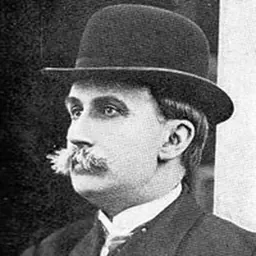
Lived 1892 – 1953 (aged 60). Harald Schultz-Hencke was a German psychologist, psychiatrist, psychotherapist and physician.
Harald Julius Alfred Carl-Ludwig Schultz-Hencke (18 August 1892, Berlin – 23 May 1953, Berlin) was a German psychiatrist and psychotherapist. After an initial introduction to psychoanalysis, with Sandor Rado as psychoanalyst, he was excluded from the German Society of Psychoanalysis because of, among other things, his divergent views on sexuality.
Schultze-Hencke was the son of Dankmar Schultz-Henke, a chemist who was the founder of the photographic institute at the Lette-Verein, and Rosa Zingler, a graphologist who had written the libretto to the opera Die Sibylle von Tivoli by Alfred Sormann and who was rumoured to be an illegitimate daughter of King Edward VII.
Career in psychotherapy In 1933, like several non-Jewish psychotherapists (Felix Julius Boehm, Carl Müller-Braunschweig and Werner Kemper) he helped set up the "Göring Institute" (named after Matthias Göring), which was closely linked to the Nazi regime and promoted a “New German soul medicine," a psychotherapy for Germans. After the war, his participation in this institute created controversy in professional circles such as the International Psychoanalytical Association.
With other psychotherapists and analysts who had left or had been excluded from other psychoanalytic organizations, he started the DPV (Deutsche Psychoanalytische Vereinigung). After numerous debates regarding whether or not these analysts should join the International Psychoanalytical Association, Schultz-Hencke, who had long been in disagreement with the basic tenets of Freudian theory, created "Neopsychanalyse." "Neopsychanalyse" or neopsychoanalysis is a psychotherapeutic technique thus named by Schultz-Hencke.
Influence of Leibnizian symbolic thought In one of his books, Schultz-Hencke had asserted that all psychotherapy should be submitted to the Leibnizian principle that "all science must be expressed in mathematical terms." This implies that even a young science must strive towards this goal. In this perspective, Schultz-Hencke analyzed all Freudian concepts and eliminated all those that do not respond to this precept, or that, according to him, could never respond to it, such as infantile sexuality, etc. So, in a way, the dualistic view of Freudian psychoanalysis is challenged in favor of a monistic view (and thus does not include notions of conflict between psychic entities, etc.).
Schultz-Hencke also wanted to subject the Oedipus complex to statistical studies. To some extent, this criticism joined that of Karl Popper and other more modern scientists who, before anything else, advocated quantitative analysis and, thus, statistics. The treatment technique advocated by Schultz-Hencke was subsequently developed by Helmut Bach, among others, who progressively demarcated the ideas of its founder to create a "psychoanalysis" within the limits of practices imposed by the IPA; psychotherapists such as Franz Alexander, Karen Horney, René Laforgue, and Erich Fromm have contributed significantly to this endeavor.
Publications (selected) 1917: Der Einfluß des militärischen Kriegsdienstes auf die progressive Paralyse. - Freiburg i. B. : Speyer & Kaerner 1920: Der Sinn unserer Zeit und die freien Volkshochschulen als Vorkämpfer neuen Bildungswesens : Grundsätzliches z. Revolutionierung von Schule u. Unterricht, Berlin-Wilmersdorf: Volkshaus-Verlag 1927: Einführung in die Psychoanalyse; Jena: G. Fischer 1931: Schicksal und Neurose : Versuch e. Neurosenlehre vom Bewusstsein her, Jena: Fischer 1940: Der gehemmte Mensch : Entwurf eines Lehrbuches der Neo-Psychoanalyse, Stuttgart: Thieme, 6. unveränd. Auflage, Stuttgart 1989, 1949: Lehrbuch der Traumanalyse. Stuttgart: G. Thieme
Don’t just read it —
keep it.
Full-length biographies made to live with: read them, listen on the way to work, watch them tonight.
- E-book
- Audio
- Video
Instant download · yours to keep · every purchase keeps this site free
Important facts
People in Harald Schultz-Hencke's life
Named in this biography and alive at the same time




Related people
Same field, nearest in time


Contemporaries
People whose lives overlapped Harald Schultz-Hencke's

Frequently asked questions
Who was Harald Schultz-Hencke?
Psychiatrist and psychotherapist (1892–1953)
When was Harald Schultz-Hencke born?
Harald Schultz-Hencke was born on 18 August 1892 in Berlin.
When did Harald Schultz-Hencke die?
Harald Schultz-Hencke died on 23 May 1953 in Berlin.
What was Harald Schultz-Hencke's occupation?
Harald Schultz-Hencke was a psychologist, psychiatrist, psychotherapist and physician.
What nationality was Harald Schultz-Hencke?
Harald Schultz-Hencke was German.
Sources & further reading
· Wikipedia: Harald Schultz-Hencke
· DBpedia: Harald Schultz-Hencke
Cite this page
APA: Biography.guide. (2026). Harald Schultz-Hencke. https://biography.guide/harald-schultz-hencke/
MLA: "Harald Schultz-Hencke." Biography.guide, https://biography.guide/harald-schultz-hencke/.
Chicago: "Harald Schultz-Hencke." Biography.guide. https://biography.guide/harald-schultz-hencke/.
Data last updated: 2026-09-20 · Spot an error? Report a correction.
Page generated 2026-09-27 05:04 UTC