
About Gustav Engeström
Lived 1738 – 1813 (aged 75). Gustav Engeström was a Swedish chemist and mineralogist.
Gustaf von Engeström (1 August 1738 – 12 August 1813) was a Swedish mineralogist, chemist, and an official on the Swedish Board of Mines. He was a member of the Royal Swedish Academy of Sciences.
Biography Gustaf von Engeström was born in Lund. He was the son of Bishop of Lund and linguist and Margareta , and was knighted along with his siblings for their father's achievements in 1751 with the name . Of six brothers, Gustaf and his youngest brother made careers in the mining industry.
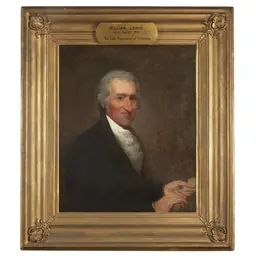
He studied in Lund, graduating in law in 1755. Engeström was enrolled in 1756 as an auskultant – an unpaid civil servant allowed to take part in the agency's negotiations – at the Swedish Board of Mines. He studied chemistry and mineralogy under , Henrik Teofilus Scheffer, Georg Brandt and Axel Fredrik Cronstedt, learning from the latter the practicalities of mining, and undertook study trips to Norway (1760) and England, the Dutch Republic, and Prussia (1764). In England, he trained in chemistry, including in William Lewis' laboratory, and continued the translation of Cronstedt's mineralogy book into English. In London, he published a dissertation in English in 1770, "The use of the blowpipe in mineralogy". He became known for his description of the use of the blowpipe (which came from Cronstedt) in the analysis of minerals, originating from lectures during his stay in London in 1765 and which was subsequently translated into Swedish as . Von Engeström published papers on mineralogy and chemistry (including the recovery of mercury from mirror glass, recovery of silver from silver chloride by reaction with potassium carbonate, alum production, and minerals from China). Between 1781 and 1784 he published the first part of a larger work, , and a French guide to Swedish mines. He compiled mineral collections for the Prince of Condé in France and for Catherine the Great in Russia.
He worked at the Board of Mines from 1764, first as an analyst in ore. He was promoted to supervisor of the mint in 1768, became an assessor in 1774, and in 1781 became a bergsråd (mining councilor).
Family Von Engeström was married to Abela Charlotta Lagerbring and Ulrika.
He died in Vrå, Uppsala County, in 1813.
Don’t just read it —
keep it.
Full-length biographies made to live with: read them, listen on the way to work, watch them tonight.
- E-book
- Audio
- Video
Instant download · yours to keep · every purchase keeps this site free
Important facts
People in Gustav Engeström's life
Named in this biography and alive at the same time



Related people
Same field, nearest in time


Contemporaries
People whose lives overlapped Gustav Engeström's





Frequently asked questions
Who was Gustav Engeström?
Swedish mineralogist and chemist (1738–1813)
When was Gustav Engeström born?
Gustav Engeström was born on 1 August 1738 in Lund Cathedral parish.
When did Gustav Engeström die?
Gustav Engeström died on 12 August 1813.
What was Gustav Engeström's occupation?
Gustav Engeström was a chemist and mineralogist.
What nationality was Gustav Engeström?
Gustav Engeström was Swedish.
Sources & further reading
· DBpedia: Gustaf von Engeström
Cite this page
APA: Biography.guide. (2026). Gustav Engeström. https://biography.guide/gustav-engestrom/
MLA: "Gustav Engeström." Biography.guide, https://biography.guide/gustav-engestrom/.
Chicago: "Gustav Engeström." Biography.guide. https://biography.guide/gustav-engestrom/.
Data last updated: 2026-09-20 · Spot an error? Report a correction.
Page generated 2026-09-27 04:58 UTC