
About August Batsch
Lived 1761 – 1802 (aged 40). August Batsch was a German chemist, botanist, university teacher, mycologist, entomologist and philosopher, known for Fungi and Taxonomy (biology).
August Johann Georg Karl Batsch (28 October 1761 – 29 September 1802) was a German naturalist. He was a recognised authority on mushrooms, and also described new species of ferns, bryophytes, and seed plants.
Life and career Batsch was born in Jena, Saxe-Weimar to George Lorenz Bratsch and Ernestine (nee Franke) Bratsch. He studied at the Jena City School, and then had private tuition. He showed an aptitude for natural sciences and drawing, and so subsequently studied medicine and philosophy at the University of Jena (now known as the Friedrich Schiller University of Jena), entering in 1772 and obtaining his doctorate in philosophy in 1781 and in medicine in 1786, his supervisor being Justus Christian Loder. Batsch was married in 1787 to Amalie Pfaundel. They had three children, Friedrich (born 1789), George Friedrich Karl (1792), and Karoline (1795). He died in 1802 after a short illness.
In 1786 Batsch began to teach natural history at the University of Jena and in 1787 he was appointed associate professor of medicine and botany. In 1792 he became Professor of Philosophy. He advised Johann Wolfgang von Goethe on his botanical research. Batsch's organization of plants in progressive forms may have influenced Goethe's thinking on the transmutation of species. In 1790, Batsch founded a botanical garden in Jena, and the Naturforschende Gesellschaft ("Nature Investigator's Club").
Botany
Batsch discovered almost 200 new species of mushrooms, including Clitocybe nebularis, Calocera cornea, Paxillus involutus, and Tapinella atrotomentosa. He was a recognised authority writing two books on the topic, Elenchus Fungorum (Discussion of Fungi, between 1783 and 1789), which is still highly rated today and Versuch einer Anleitung zur Kenntniss und Geschichte der Pflanzen (Attempt at Instruction in the Knowledge and History of Plants, between 1787 and 1788). Versuch einer Anleitung... looked into the nature of what we now know to be fungal diseases of plants (such as Dutch elm disease), but without realizing their origin. Rejecting the system of Carl Linnaeus, he began to classify plants on the basis of their external form and shape and to make them generally understandable by means of a clear, precise representation, as best known in his three volume Elenchus Fungorum.While well versed in the flora of the Jena area, the weakness of his system lay in his lesser familiarity with the plants of the rest of the world.
Other works include Dispositio Generum Plantarum Jenensium Secundum Linnaeum et Familias Naturales, Jena 1786, generally referenced as Dispos. Gen. Pl. Jenens., alternatively titled as Dissertatio inauguralis botanica sistens dispositionem generum plantarum Jenensium. His taxonomic classification of plants is summarised in his last work, the Tabula affinitatum regni vegetabilis (1802), which was notable for its diagram depicting the network of affinities within the vegetable kingdom. His Synopsis vniversalis analytica genervm plantarvm (1793–4) is the source for valid names for Melanthiaceae and Primulaceae.
Zoology Batsch wrote Versuch einer Anleitung, zur Kenntniß und Geschichte der Thiere und Mineralien, für akademische Vorlesungen entworfen, und mit den nöthigsten Abbildungen versehen, in English Provisional guide to the knowledge, development and history of the animals and minerals, designed for academic lectures. The first part (Erster Theil) Allgemeine Geschichte der Natur; besondre der Säugthiere, Vögel, Amphibien und Fische German natural history, mammals, birds amphibians and fish appeared in 1788.Part two (Zweyter Theil). Besondre Geschichte der Insekten, Gewürme und Mineralien on insects, worms and minerals was published in the following year, 1789. He was also known for his work on turtles.
Selected publications
Legacy
Batsch is considered one of the most important late eighteenth century naturalists in central Germany. The fungal species Tricholoma batschii is named after him.
Don’t just read it —
keep it.
Full-length biographies made to live with: read them, listen on the way to work, watch them tonight.
- E-book
- Audio
- Video
Instant download · yours to keep · every purchase keeps this site free
Important facts
People in August Batsch's life
Named in this biography and alive at the same time

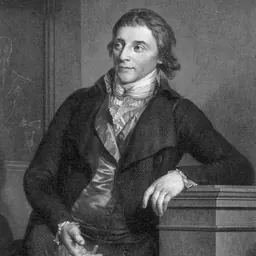


Related people
Same field, nearest in time


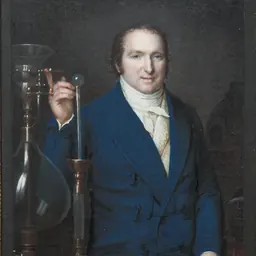

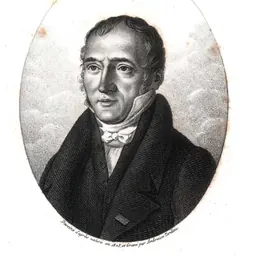
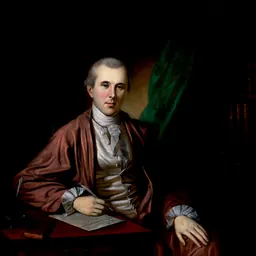
Contemporaries
People whose lives overlapped August Batsch's




Frequently asked questions
Who was August Batsch?
German naturalist (1761-1802)
When was August Batsch born?
August Batsch was born on 28 October 1761 in Jena.
When did August Batsch die?
August Batsch died on 29 September 1802 in Jena.
What was August Batsch's occupation?
August Batsch was a chemist, botanist, university teacher, mycologist, entomologist and philosopher.
What was August Batsch known for?
August Batsch was known for Fungi and Taxonomy (biology).
What nationality was August Batsch?
August Batsch was German.
Sources & further reading
Cite this page
APA: Biography.guide. (2026). August Batsch. https://biography.guide/august-batsch/
MLA: "August Batsch." Biography.guide, https://biography.guide/august-batsch/.
Chicago: "August Batsch." Biography.guide. https://biography.guide/august-batsch/.
Data last updated: 2026-09-20 · Spot an error? Report a correction.
Page generated 2026-09-27 05:21 UTC