
Günter Blobel
German American biologist (1999 Nobel Prize)
About Günter Blobel
Lived 1936 – 2018 (aged 81). Günter Blobel was a German and American biochemist, physician, university teacher, cell biologist and molecular biologist, known for Gene gating hypothesis, Protein targeting and Signal recognition particle.
Günter Blobel (; May 21, 1936 – February 18, 2018) was a Silesian German and American biologist and 1999 Nobel Prize laureate in Physiology for the discovery that proteins have intrinsic signals that govern their transport and localization in the cell.
Education and early life Günter Blobel was born in Waltersdorf in the Prussian Province of Lower Silesia, then located in eastern Germany. In January 1945 his family fled from native Silesia to Dresden to escape from the advancing Red Army. During the bombing of Dresden, Blobel, then 8, stayed with his family at a relative's farm to the west of the city. After the war, Blobel grew up and attended gymnasium in the Saxon town of Freiberg. He studied medicine and graduated from the University of Tübingen in 1960. After two years service in a medical internship, he moved to Madison, Wisconsin, following an older brother, enrolling in the University of Wisconsin–Madison and, joining the lab of Van R. Potter for his graduate work. Blobel matriculated in 1967 with a Ph.D. He then moved to Rockefeller University as a postdoctoral fellow with George Palade, and was soon appointed as a professor. Career and research Blobel was appointed to the Howard Hughes Medical Institute in 1986. Blobel was the sole recipient of the 1999 Nobel Prize in Physiology or Medicine for the discovery of signal peptides. Signal peptides form an integral part of protein targeting, a mechanism for cells to direct newly synthesized protein molecules to their proper location by means of an "address tag" (i.e., a signal peptide) within the molecule.
Blobel died of cancer in Manhattan at New York-Presbyterian Weill Cornell Medical Center on February 18, 2018 at the age of 81. By the time of his death, Blobel was described as having "ushered cell biology into the molecular age" through his work on the fractionation and reconstitution of functional protein complexes and sub-cellular components in vitro. Philanthropy Blobel became well known for his direct and active support for the rebuilding of Dresden in Germany, becoming, in 1994, the founder and president of the nonprofit "Friends of Dresden, Inc." He donated all of the Nobel award money to the restoration of Dresden, in particular for the rebuilding of the Frauenkirche (completed in 2005) and the building of a new synagogue. In Leipzig he pursued a rebuilding of the Paulinerkirche, the university church of the University of Leipzig, which had been blown up by the communist regime of East Germany in 1968, arguing "this is a shrine of German cultural history, connected to the most important names in German cultural history." Gunter was also a founding member of the board of directors of Research Foundation to Cure AIDS, a U.S. not-for-profit research organization.
Personal life Blobel lost his older sister to aerial bombing of a train she was on in 1945, shortly after the bombing of Dresden, while an older brother survived the war and became a veterinarian in the United States. He was on the board of directors for Nestlé and the Board of Scientific Governors at The Scripps Research Institute. Furthermore, he was Co-Founder and Chairman of the Scientific Advisory Board for Chromocell Corporation. He sat on the Selection Committee for Life Science and Medicine which chooses winners of the Shaw Prize. Blobel had a passion for opera and architecture, in addition to his passion for experimental science. 1983: Richard Lounsbery Award 1983: Member of the German Academy of Sciences Leopoldina Member of the United States National Academy of Sciences 1984: Member of the American Academy of Arts and Sciences 1986: V. D. Mattia Award 1992: Max Delbrück Medal 1993: Albert Lasker Award for Basic Medical Research 1995: Ciba Drew Award in Biomedical Research 1996: King Faisal International Prize 1997: Mayor's Award for Excellence in Science and Technology 1999: Massry Prize from the Keck School of Medicine, University of Southern California 1999: Nobel Prize in Physiology or Medicine 2001: Pontifical Academy of Sciences 2001: Pour le Mérite 2006: Inaugural class of winner of the Great Immigrants Award named by Carnegie Corporation of New York 2008: Foreign Member of the Russian Academy of Science 2014: AACR Academy
Don’t just read it —
keep it.
Full-length biographies made to live with: read them, listen on the way to work, watch them tonight.
- E-book
- Audio
- Video
Instant download · yours to keep · every purchase keeps this site free
Important facts
People in Günter Blobel's life
Named in this biography and alive at the same time


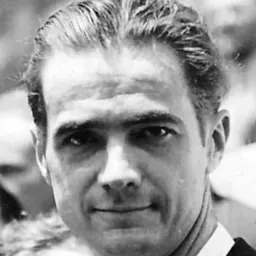


Related people
Same field, nearest in time

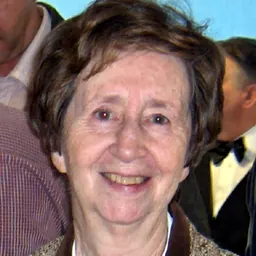



Contemporaries
People whose lives overlapped Günter Blobel's





Frequently asked questions
Who was Günter Blobel?
German American biologist (1999 Nobel Prize)
When was Günter Blobel born?
Günter Blobel was born on 21 May 1936 in Niegosławice.
When did Günter Blobel die?
Günter Blobel died on 18 February 2018 in New York City.
What was Günter Blobel's occupation?
Günter Blobel was a biochemist, physician, university teacher, cell biologist and molecular biologist.
What was Günter Blobel known for?
Günter Blobel was known for Gene gating hypothesis, Protein targeting and Signal recognition particle.
What nationality was Günter Blobel?
Günter Blobel was German and American.
Sources & further reading
Cite this page
APA: Biography.guide. (2026). Günter Blobel. https://biography.guide/gunter-blobel/
MLA: "Günter Blobel." Biography.guide, https://biography.guide/gunter-blobel/.
Chicago: "Günter Blobel." Biography.guide. https://biography.guide/gunter-blobel/.
Data last updated: 2026-09-26 · Spot an error? Report a correction.
Page generated 2026-09-27 05:16 UTC