
About Gottlieb Olpp
Lived 1872 – 1950 (aged 78). Gottlieb Olpp was a university teacher and physician.
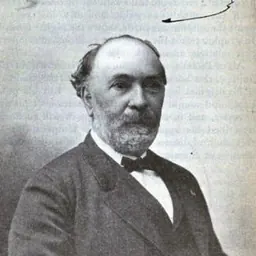
Gottlieb Friedrich Adolf Olpp (3 January 1872 – 24 August 1950) was a German missionary and tropical medicine doctor, accredited with spreading Traditional Chinese Medicine and aiding the development of sinology in Germany and the West in early 20th century. As a medical missionary from the Rhenish Missionary Society from 1898 to 1907 in Dongguan, Guangdong Province of China, he conducted extensive research on local diseases and healing practices, such as Traditional Chinese Medicine (TCM) and wrote extensively throughout his life for publication in Germany on the topic of tropical medicine, theology and missionary work. After his return to Germany, he was appointed to be the director of the German Institute of Medical Missionary (Deutsches Instituts für ärztliche Mission), a director of the Tübingen Convalescent Homes and associate professor of Tropical Medicine at the University of Tübingen. A street in Tübingen is named in his honor.
Family background
Olpp was born 3 January 1872 in Gibeon, Namibia, the second of seven children in a missionary family. His parents were members of the Rhenish Missionary Society (Rheinische Missionsgesellschaft) and married in Africa. His mother was Louise Regine Karoline Olpp, née Wagner. His father, Johannes Olpp, was ordained on the Rhenish mission in Southwest Africa from 1864 to 1879, stationed first in Berseba until 1868 then Gibeon after. Olpp's father dedicated himself to the study of Nama language, tradition and customs and published many works on this field. As a reverend at the local Gibeon church, he educated Hendrik Witbooi, one of Namibia's national heroes, and maintained correspondences with Witbooi even after his return to Germany. In 1883 to 1913, Olpp's father became a preacher in Herford, Germany, and continued to composed several books on the Rhenish Mission in Southwest Africa. Olpp's oldest brother, Johannes, and his younger brother, Theodor, also became notable members of the Rhenish Missionary Society.
Education From 1878 to 1891, he received schooling in Johanneum, Gütersloh and was raised in Salm-Horstmar. After completing his Abitur primus omnium in 1891, he pursued medical schooling at Marburg University (1891–1893), the University of Tübingen (summer term 1893), and the Ludwig-Maximilians-Universität München (1893–1895). While at these three places, he was active at the Christian student fraternity, Wingolf, where he remained in touch for life. In 1896, he graduated. In the following years, he continued to build expertise in the areas of Infectious-and-Tropical Diseases by studying at the University of London, the University of Edinburgh, the University of Liverpool, the Friedrich Wilhelm University of Berlin, and the University of Paris. He was also listed in their handbook as a doctor and a Landwehr for Munich. In 1898, he began his medical residence period (Spitaldienst) in Tungkun, in Canton Province, China (now Dongguan, Guangdong Province, China). At the time of his arrival, Olpp was the second medical missionary from the Rhenish Mission in China, working alongside the first medical missionary, Dr. Johannes E. Kühne, and a male nurse who came in 1901, Johannes Baumann. The hospital compound was initially located entirely within the city walls, surrounded by Chinese dwelling, but since 1903–1906, it was relocated the bank of the East River, where cases from afar can be brought by boat directly. It was constructed to accommodate 100 patients. In order to better communicate with the local patients, Olpp spent one and a half year studying Chinese, which subsequently allowed him to perform extensive research on Tropical Diseases and to read and translate Traditional Chinese Medicine directly. 》 A Compilation of Healing Methods of Famous Doctors), the Shou Shi Bao Yuan (《寿世保元 》 Longevity and Life Preservation), the book on surgery Jin Jian Wai Ke (《金鉴外科》 Golden Mirror of Surgery), Wang Shu He Tu Zhu Nan Jing Mai Jue (《王叔和图注难经脉决》Work of Wang Shuhe about Classics of Difficult Inquiries and Rhyming Book of Pulse), Ben Cao Gang Mu, Xuan Er Chuang Tu (《旋耳疮图》 Picture of Ulcer Behind the Ear), Chen Xiu Yuan Yi Shu Er Shi Yi Zhong (《陈修园医书二十一种》 Twenty-one Kinds of Medicine Books by Chen Xiuyuan), the Zeng Ding Yan Fang Xin Bian (《增订验方新编》 Revised Edition of New Compilation of Empirical Formulas), and the Xu Hui Xi Xian Sheng Shi San Zhong (《徐洄溪先生十三种》 Thirteen Kinds of Books. Olpp was also critical of both Chinese people and Chinese doctors, seeing their practices as an unnegligible factor in the development and spread of illnesses in China. In his later monograph On Chinese Medicine from the Perspective of Tropical Pathology, he wrote that Prolapsus uteri is partly caused by "new mothers who stood up too soon and the unskilled handling of ignorant local midwives." On the mass spread of tuberculosis in South China, he attributed a partial cause to the Chinese's lack of awareness about the dangers of infection. On the leprosy pandemic, Olpp described the Chinese population as struggling victims and criticized the lack of effective response by the Chinese government.
At the time, the negative evaluation of Western physicians about TCM led to a general disregard of Chinese doctors as not "real doctors." Olpp seemed to share a similar opinion. In one of his writings, he remarked that Chinese doctors make empty promises to patients and simply take money. In another description of modern Chinese doctors on the Munich Medicine Weekly, he emphasized their negative work ethics and encouraged youth to "pursue the train to an education in Western medicine." According to sinologist Yuan, the frequent comparison with European medicine demonstrated a clear sense of superiority over Chinese medicine. Yuan suggests that Olpp, along with other medical missionaries of the time, did not encounter actual TCM because the majority of their patients belonged to the lower class, who can only afford "quacks and European hospitals and doctors, where cheaper or free treatments are offered," whereas those from the upper social class, by and large, continued to use Traditional Chinese physicians.
In 1907, Olpp returned to Germany. In that same year, he compiled the monograph Beiträge zur Medizin in China mit besonderer Berücksichtigung der Tropenpathologie ("On Chinese Medicine from the Perspective of Tropical Pathology"), consisting of his extensive multilingual research, 9-year observations and medical experiences in Dongguan. The monograph also served as his Habilitation post-doctoral thesis on Tropical Medicine in Tübingen, opening doors to professorship.
On 12 September 1912, Olpp departed from Hamburg on the SS Kaiserin Auguste Victoria. He came to New York City on the 22 September with a final destination in the US of Washington, DC.
In Summer 1914, he was giving lectures on Tropical Disease and Tropical Hygiene for the Medicine Department at the University of Tübingen. In 1916, he was appointed as chief physician for the newly opened Tübinger Tropengenesungsheims (Tuebinger Convalescent Homes), also called Tropical Clinic Paul-Lechler-Hospital. The institute has direct connections with and is supported by Difäm, originally created to take care of those returning home from tropical areas. Olpp held an address about the clinic and its importance in global medical missions at a conference by natural sciences and medicine organization in Tübingen on 14 May 1916 and wrote about it at length on the magazine Deutsche Medizinische Zeitschrift in 1936.
On 2 July 1917, The building was originally built in 1908–1909 to serve medical missionaries. During his tenure, he oversaw 32 dissertations from his students. On 19 October 1934, he received an honorary degree in theology by the Martin Luther University Halle-Wittenberg. Due to deteriorating health, Olpp left Difäm, the Paul-Lechler Hospital and Tübingen on 1 October 1937 and moved to Schwarzenbruck-Rummelsberg. There, he continued his medical practice, support for medical missionary and research on submerged intestinal bath.
He was successful as a book author. (1913) Schwarzwasserfieber (Blackwater Fever) (1922) Medizin und Naturwissenschaften in China (Medicine and Natural Sciences in China) (1912 & 1923) Malaria (1928) Die deutsche ev. ärztliche Mission (1929) Moderne ärztliche Mission in aller Welt (Modern Medical Missions across the world) (1929) Die internationale ärztliche Mission (The International Medical Mission) (1930) Tropenheilkunde: Leitfaden für die Praxis (Tropical Treatments: Handbook for Practical Use) (1930) Hervorragende Tropenärzte in Wort und Bild (The Great Tropical Doctors in Words and Pictures) (1934) 25 Jahre deutsche ärztliche Mission (25 Years of German Medical Missions) (1935) German Medical Mission Book Review (1935) Ruf und Dienst der ärztlichen Mission (The Call and Service to Medical Missions) (1936) Charakterköpfe der Tropenmedizin (Characteristics of Tropical Medicine) (1954) Das subaquale Darmbad und seine Verwendung (The Submerged Intestinal Bath and its uses) - after his death various publications on the Deutschen Tropenmedizinischen Zeitschrift and Münchener Medizinische Wochenschrift
Don’t just read it —
keep it.
Full-length biographies made to live with: read them, listen on the way to work, watch them tonight.
- E-book
- Audio
- Video
Instant download · yours to keep · every purchase keeps this site free
Important facts
People in Gottlieb Olpp's life
Named in this biography and alive at the same time

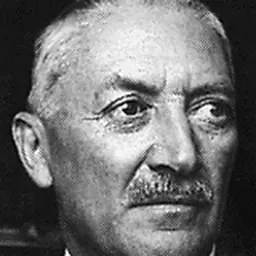


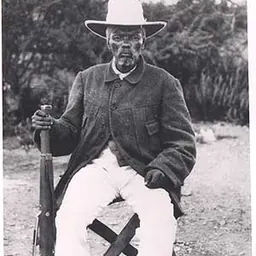

Related people
Same field, nearest in time

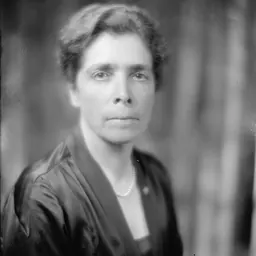
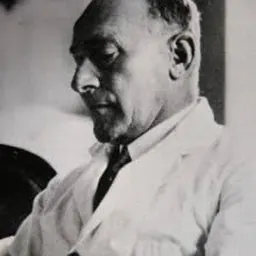
Contemporaries
People whose lives overlapped Gottlieb Olpp's



Frequently asked questions
Who was Gottlieb Olpp?
German medical missionary (1872–1950)
When was Gottlieb Olpp born?
Gottlieb Olpp was born on 3 January 1872 in Gibeon.
When did Gottlieb Olpp die?
Gottlieb Olpp died on 4 August 1950 in Esslingen am Neckar.
What was Gottlieb Olpp's occupation?
Gottlieb Olpp was a university teacher and physician.
Sources & further reading
Cite this page
APA: Biography.guide. (2026). Gottlieb Olpp. https://biography.guide/gottlieb-olpp/
MLA: "Gottlieb Olpp." Biography.guide, https://biography.guide/gottlieb-olpp/.
Chicago: "Gottlieb Olpp." Biography.guide. https://biography.guide/gottlieb-olpp/.
Data last updated: 2026-09-22 · Spot an error? Report a correction.
Page generated 2026-09-27 05:33 UTC