
About Gleb Bokii
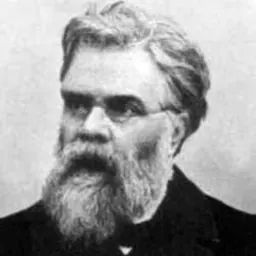
Lived 1879 – 1937 (aged 58). Gleb Bokii was a Russian politician.
Gleb Ivanovich Bokii (, ; 21 June 1879 – 15 November 1937) was a Soviet Communist political activist, revolutionary, and paranormal investigator in the Russian Empire. Following the October Revolution of 1917, Bokii became a leading member of the Cheka, the first Soviet secret police, and later of the OGPU and NKVD.
From 1921 through 1934, Bokii (alternative transliteration, Boky) headed the "special department" of the Soviet secret police apparatus. He remained a top level functionary in the secret police apparatus until his sudden arrest in May 1937 as part of the Great Terror. Following an extended investigation, Bokii was given a summary trial and executed in November of that same year. In 1956, Bokii was posthumously rehabilitated by Soviet authorities.
Early years Gleb Bokii was born July 3, 1879 (June 21 O.S.) into the family of an ethnic Ukrainian chemistry teacher and nobleman in Tiflis, Georgia in 1879. Bokii grew up in St. Petersburg, Russia, where he attended school, graduating from the Petersburg Mining Institute in 1896.
Revolutionary career Bokii was a participant in revolutionary student circles from an early age. Initially member and head of Ukrainian student hromada in St. Petersburg, he later became an adherent of Marxism and working with Vladimir Lenin's Union of Struggle for the Emancipation of the Working Class in 1897. Bokii joined the Russian Social Democratic Labor Party (RSDLP) in 1900 and worked in that organization as a professional revolutionary as a party organizer and propagandist. Bokii was a loyalist to the Bolshevik faction of that organization, headed by V.I. Lenin and was elected a member of the governing Petersburg Committee of the RSDLP from 1904 to 1909. Ukrainian student community (hromada) in St. Petersburg, early 1900s. Gleb Bokiy in the second row holds a smoosh cap in his hand.
In the Revolution of 1905, Bokii participated in street fighting on Vasilyevsky Island, part of St. Petersburg bounded by the Neva River.
Early in 1917, Bokii was arrested and sentenced to exile in Yakutsk, but before he was transported, the Tsar Nicholas II was overthrown by the February Revolution, and he was released and resumed his leading role on the Petrograd City Committee,
A special party conference to decide the peace question was called for by Bokii and his comrades of the Peterburg Committee.
Secret police activities On March 13, 1918, Bokii went to work as deputy head of the Extraordinary Commission (Cheka) of the Northern oblast and Petrograd.
Despite this complicity, historian Alexander Rabinowitch indicates that Bokii was among the more moderate Bolshevik voices on the question of the use of terror in the summer of 1918, siding with Elena Stasova in opposing Grigory Zinoviev's call for a full scale Red Terror at a critical meeting held in the wake of Uritsky's killing.
Whatever his personal views, Bokii as head of the Petrograd Cheka in the days after Uritsky's death was the ultimate authority behind the Red Terror in Petrograd and it was to him that the German government directed its complaints. The German consul in Petrograd was bombarded with letters demanding the release of individuals from countries under German protection who were swept up in the dragnet — over 1000 in all. Stasova seems to have felt that her ally Bokii was in physical danger if he remained in Petrograd without protection and she appealed to Yakov Sverdlov for his transfer to Moscow, outside of Zinoviev's fief.
Other sources indicate that Bokii remained as the head of the Petrograd secret police until November 1918, at which time he was made a member of the collegium of the People's Commissariat of Internal Affairs (NKVD) of Soviet Russia. He remained there in that capacity until the effective end of the Russian Civil War in August 1920.
Bokii was shaken by the terror he played significant roles in. Regarding Kronstadt, Bokii later stated, "The Kronstadt events produced an indelible impression on me. I could not reconcile myself to the idea that the very sailors who took part in the October Revolution revolted against our party and our power." His further ideological disillusionment or frustration lead to his delving into esoteric mysticism in the 1920s.
Bokii became head of the "special department" of the All-Union Extraordinary Commission in the last days of January 1921. Such claims may tend to hyperbole, however, as he figures in the account of Alexander Solzhenitsyn only as the head of the Moscow troika rather than as architect or chief of the camp system itself.
Bokii remained as head of the "special department" of the secret police apparatus through its various incarnations as the Cheka, the GPU, and the OGPU, until July 10, 1934.
Posthumous rehabilitation and legacy Bokii's fellow bureaucratic NKVD foes had conjured up fictions of his being as a sort of Dracula-like human blood drinker. On June 27, 1956, as part of the Thaw sponsored by new Soviet leader Nikita Khrushchev, Gleb Bokii's case was reviewed by the Military Collegium of the Supreme Soviet and he was posthumously rehabilitated, enabling his family members to receive social benefits which had been previously denied to them by the state.
Footnotes
Don’t just read it —
keep it.
Full-length biographies made to live with: read them, listen on the way to work, watch them tonight.
- E-book
- Audio
- Video
Instant download · yours to keep · every purchase keeps this site free
Important facts
People in Gleb Bokii's life
Named in this biography and alive at the same time




Related people
Same field, nearest in time




Contemporaries
People whose lives overlapped Gleb Bokii's


Frequently asked questions
Who was Gleb Bokii?
Soviet politician
When was Gleb Bokii born?
Gleb Bokii was born on 21 June 1879 in Tbilisi.
When did Gleb Bokii die?
Gleb Bokii died on 15 November 1937 in Moscow.
What was Gleb Bokii's occupation?
Gleb Bokii was a politician.
What nationality was Gleb Bokii?
Gleb Bokii was Russian.
Sources & further reading
Cite this page
APA: Biography.guide. (2026). Gleb Bokii. https://biography.guide/gleb-bokii/
MLA: "Gleb Bokii." Biography.guide, https://biography.guide/gleb-bokii/.
Chicago: "Gleb Bokii." Biography.guide. https://biography.guide/gleb-bokii/.
Data last updated: 2026-09-26 · Spot an error? Report a correction.
Page generated 2026-09-27 05:16 UTC