
About Elena Stasova
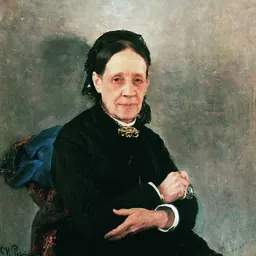
Lived 1873 – 1966 (aged 93). Elena Stasova was a Russian politician and revolutionary.
Elena Dmitriyevna Stasova (; 15 October [ O.S. 3 October] 1873 – 31 December 1966) was a Russian Soviet revolutionary, Old Bolshevik and an early leader of the Russian Communist Party (Bolsheviks).
Stasova was born to an eminent aristocratic family in Saint Petersburg. She worked as a teacher during her youth and came to embrace revolutionary politics. In 1898, she joined the Russian Social Democratic Labour Party (RSDLP) at the time of its establishment. Following the RSDLP ideological split in 1903, Stasova joined Vladimir Lenin's Bolshevik faction. She continued her revolutionary activities in Russia, Switzerland and Finland despite frequent threats of imprisonment and deportation. In 1913, she was exiled to Siberia, but returned to Saint Petersburg shortly before the February Revolution. She was named secretary and alternate member of the Central Committee, but by 1920 she had been fully frozen out of Soviet power. Afterwards, Stasova was a Comintern representative to Germany until 1927, when she returned to Russia and took on a leadership position in the International Red Aid (MOPR). From 1938 to 1946, she found work as an editor of the magazine International Literature. Stasova died in 1966 at the age of 93.
Biography
Early years Elena Stasova was born in Saint Petersburg in 1873, the youngest of five children, in an eminent noble family. Her father was the state attorney Dmitry Stasov, while her aunt was the feminist activist Nadezhda Stasova. She was educated at home until the age of 13, and then at the prestigious Tagantsev private school for girls. Stasova described her political awakening as being tied to a realization that other people "made it possible for us, the intelligentsia, to live the way we did." At the age of about 20 she began teaching in evening classes and Sunday schools in Ligovo, which brought her into contact with female political activists such as Nadezhda Krupskaya, future wife of Vladimir Lenin. She joined the Russian Social Democratic Workers Party (RSDLP) at the time of its establishment in 1898, her main contribution being to use her parents' house to store illegal socialist literature. Her uncle was art critic Vladimir Stasov. Her father, Dmitry (1828–1918), was the most eminent liberal Russian lawyer of his generation. As a young man, he had a promising career working for the Senate, and a Herald at the coronation of Alexander II – but was barred for life from government service after he was arrested during a student demonstration. He set up in private practice, and was defence counsel in numerous political trials, including the trial of Dmitry Karakozov, the first of the revolutionaries to attempt to assassinate Alexander II, the Trial of the 50, which was the first political trial to be held in public in Russia, and at Russia's largest political trial, the Trial of the 193. He was arrested in 1880, by order of the Tsar, and banished from St Petersburg for a time. Later, he was President of the Russian Council of Lawyers. A keen pianist, he also co-founded the St Petersburg Conservatory with Anton Rubinstein.
Bolshevik revolutionary
When the RSDLP split into Bolshevik and Menshevik factions in 1903, Stasova cast her lot with Lenin and the Bolsheviks as a professional revolutionary. Over the next two years Stasova adopted the pseudonyms "Absolute" and "Thick". Other pseudonyms which Stasova used during the underground period included "Delta", "Heron", "Knol", and "Varvara Ivanovna". She served as the conduit for Lenin's newspaper, Iskra, in St. Petersburg, until her arrest in January 1904, which forced her to leave the capital and hide in Minsk. For the rest of that year she traveled to several cities, acting as a specialist in "technical matters", such as creating false passports, organising escape routes, and making contact with sympathisers in the Russian army. In spring 1904, Stasova was appointed secretary of the Northern Bureau of the Bolshevik Central Committee. In June, she was assigned to take over the Southern Bureau, based in Odessa, but was arrested and held in Taganka Prison for six months. Arrested on her return to Tiflis, in May 1912, she was tried in May 1913, with Suren Spandaryan and others, and sentenced to deportation to Siberia. She was allowed to return to St Petersburg in autumn 1916, and was arrested there and held in a police station overnight in February 1917, but released in the morning because of the outbreak of the February Revolution.
Stasova served as a member of the Central Control Commission of the Russian Communist Party from 1930 to 1934, and in 1935 the 7th World Congress of the Comintern named her a member of the International Control Commission. Unusually, she retained her place on the International Control Commission until the Comintern was abolished in 1943, and in 1938 was re-employed as an editor of the magazine International Literature. Stasova continued in this role until 1946, when she retired.
Death and legacy After Stalin's death, Elena Stasova was the last surviving Old Bolshevik who had served on the Central Committee during the 1917 revolution. She made very few public appearances after retiring, but in 1961, she was one of four Old Bolsheviks who signed an appeal to the 22nd Congress of the Communist Party of the Soviet Union for the posthumous rehabilitation of Nikolai Bukharin.
A boarding school for foreigners in Ivanovo, Russia called the Ivanovo International Boarding School ("Interdom"), established by MOPR in 1933, was named after Elena Stasova.
Stasova died on 31 December 1966 at Moscow and was placed in an urn in the Kremlin Wall Necropolis.
Writings MOPR's Banners Abroad: Report to the Third MOPR Congress of the Soviet Union. Moscow: Executive Committee of International Red Aid, 1931. (By-line given as "H. Stassova" on cover.)
Honours and awards Hero of Socialist Labour (1960) Order of Lenin (5 times: 1933, 1953, 1956, 1960, 1963)
Don’t just read it —
keep it.
Full-length biographies made to live with: read them, listen on the way to work, watch them tonight.
- E-book
- Audio
- Video
Instant download · yours to keep · every purchase keeps this site free
Important facts
People in Elena Stasova's life
Named in this biography and alive at the same time
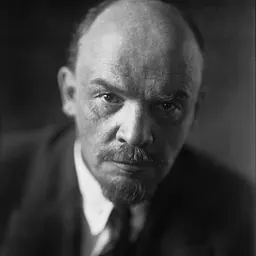

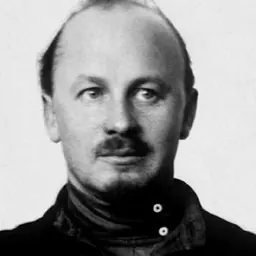
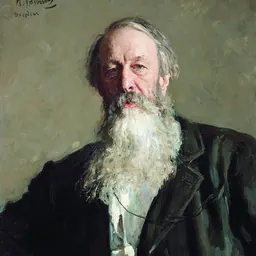
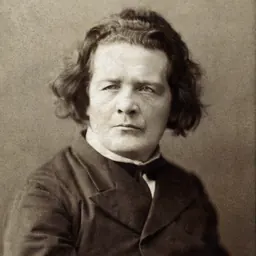


Related people
Same field, nearest in time





Contemporaries
People whose lives overlapped Elena Stasova's


Frequently asked questions
Who was Elena Stasova?
Russian revolutionary, soviet politician (1873–1966)
When was Elena Stasova born?
Elena Stasova was born on 3 October 1873 in Saint Petersburg.
When did Elena Stasova die?
Elena Stasova died on 31 December 1966 in Moscow.
What was Elena Stasova's occupation?
Elena Stasova was a politician and revolutionary.
What nationality was Elena Stasova?
Elena Stasova was Russian.
Sources & further reading
Cite this page
APA: Biography.guide. (2026). Elena Stasova. https://biography.guide/elena-stasova/
MLA: "Elena Stasova." Biography.guide, https://biography.guide/elena-stasova/.
Chicago: "Elena Stasova." Biography.guide. https://biography.guide/elena-stasova/.
Data last updated: 2026-09-20 · Spot an error? Report a correction.
Page generated 2026-09-27 05:17 UTC