
About Giuseppe Genco Russo
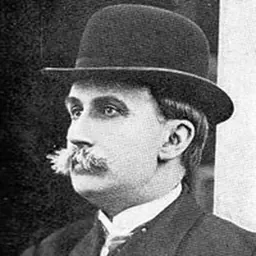
Lived 1893 – 1976 (aged 83). Giuseppe Genco Russo was an Italian politician and made man.
Giuseppe Genco Russo (26 January 1893 – 18 March 1976) was a Sicilian Mafia boss from Mussomeli in the province of Caltanissetta, Sicily. Genco Russo, also known as "Zi Peppi Jencu", was an uncouth, sly, semi-literate thug with excellent political connections. A vulgar man, as he used to spit on the floor no matter who was present, he was often photographed with bishops, bankers, civil servants and politicians. He was considered to be the arbiter of Mafia politics, and was regarded as the successor of Calogero Vizzini, who had died in 1954. Although by then a wealthy landowner and politician as a member of Christian Democracy (DC), Genco Russo still kept his mule in the house and the toilet outside, which was little more than a hole in the ground with a stone for a seat and no walls or door according to Mafia turncoat Tommaso Buscetta.
Traditional mafiosi like Genco Russo and Calogero Vizzini, the Sicilian Mafia bosses in the years between the two world wars until the 1950s and 1960s, were the archetypes of the "man of honour" of a bygone age, as a social intermediary and a man standing for order and peace. Although they used violence to establish their position in the first phase of their careers, in the second stage they limited recourse to violence, turned to primarily legal sources of gain, and exercised their power in an open and legitimate fashion and became "[men] of order".
Early years
Genco Russo was born on January 26, 1893, in Mussomeli, Sicily, into a life of deep poverty. His father was a peasant, and, according to one local, Russo himself had once been little more than a beggar. As a young boy, he had to work as a goatherd on the vast Polizzello estate, which belonged to the aristocratic Lanza Branciforti family. He began his criminal life early, engaging in juvenile highway robbery and livestock theft, rustling cattle and sheep. From the 1920s through the 1940s, he embarked on a "career of violence" to climb the ranks, eventually securing his status as a mafioso — or a "man of honour," as the Mafia calls it.
Until 1934, Genco Russo officially held no significant land holdings. As caretaker and lease-holder (gabelotto or bailiff), he controlled part of an estate and was an associate in a cooperative that controlled another. As an associate of a cooperative of ex-combatants, he also had a share in the Polizzello estate. He ruled the cooperative through intimidation and threats, while at the same time, he kept working as a labourer in the fields. In 1944, Genco Russo was officially granted a decree of rehabilitation by the court for his sole conviction, thereby allowing him "to recreate a moral and social virginity, acquiring a respectability which will permit him to undertake even political activity."
From man of honour to man of order From 1944, Genco Russo was to face no more criminal charges. Police files described him as a "man of order".
Both Genco Russo and Calogero Vizzini established peasant cooperatives in the aftermath of both world wars. These cooperatives served to undermine the influence of left-wing political movements, reinforce their control over the rural population, and secure continued access to land. When land reform was finally introduced in 1950 with the "Gullo law" – named after the former Minister of Agriculture Fausto Gullo – the mafiosi benefitted since they were well positioned to assume their traditional role as intermediaries between peasants, landlords, and the state. They took advantage of the peasants' desperation for land, brokered deals that secured concessions from landlords by softening the reform's effects, and profited significantly from mediating land transactions.
A local peasant described to the social activist Danilo Dolci how Genco Russo's reputation changed. He said: "He is constantly in contact with priests, priests go to his place, and he goes to the bank – which is always run by priests – the bank director is a priest, the bank has always been the priests' affair. Spending time with this sort of person has changed him, and now the police treat him with great respect, they greet him when they see him and go out of their way to show their regard for him. He wears better clothes today, and the marshal goes up to him and takes him by the hand, calls him Cavaliere ... during the election campaign, he went and had dinner with Zaccagnini, the Minister, and with Lanza, the Deputy – the three of them together – they had dinner and then they came out arm-in-arm."
Post-war activities
Persecution by the Italian Fascist authorities proved a blessing in disguise when the regime of Benito Mussolini was toppled and the Allies of World War II military invaded Sicily in July 1943 (Operation Husky). The Allied Military Government of Occupied Territories (AMGOT) looking for anti-fascist notables to replace Fascist authorities made Genco Russo mayor of his hometown Mussomeli. Coordinating the AMGOT effort was the former lieutenant governor of New York, Colonel Charles Poletti, whom Lucky Luciano once described as "one of our good friends".
Initially, Genco Russo's political activity was in support of the separatist and monarchist causes (he was awarded the honorific title of Cavaliere della Corona d'Italia in 1946), He became a local DC leader and town councillor in the 1960s, but in 1962 he was forced to step down after he was denounced in the press.
Heir of Vizzini Genco Russo apparently irritated other Mafia bosses because he was too much in the media spotlight. A mafioso one said, "Did you see him in the newspaper today, that Gina Lollobrigida?", referring to the notoriously ugly appearance of Genco Russo.
Genco Russo was considered to be the heir of Calogero Vizzini when Don Calò died in 1954. Genco Russo had been at the right-hand side of Don Calò's bier, the ancient sign that the heir-apparent was taking the place of the deceased. In the media, both mafiosi were often depicted as the "boss of bosses" (capo di tutti i capi), although such a position does not exist in the loose structure of the Mafia. According to Antonino Calderone, a Mafia turncoat (pentito), Genco Russo never had been the boss of Cosa Nostra, the real name of the Mafia. The notoriety of Genco Russo was not looked upon well by other mafiosi. Like Vizzini, he exposed himself too much, giving interviews and getting photographed.
Genco Russo was present at the Grand Hotel et des Palmes Mafia meeting, which was a series of meetings between top American and Sicilian mafiosi that took place in Palermo between 12 and 16 October 1957. Joseph Bonanno, Carmine Galante, and Lucky Luciano were among the American mafiosi present, while among the Sicilian side there were, apart from Genco Russo, Salvatore "Ciaschiteddu" Greco, his cousin Salvatore "The Engineer" Greco, Angelo La Barbera, Gaetano Badalamenti, Totò Minore, and Tommaso Buscetta. One of the outcomes of this meeting was that the Mafia composed its first Sicilian Mafia Commission and appointed "Ciaschiteddu" Greco as its "primus interpares".
In the aftermath of the First Mafia War in 1962–1963 and the Ciaculli massacre that prompted the first concerted anti-Mafia efforts by the state in post-war Italy through the Antimafia Commission, Genco Russo was among the many mafiosi arrested on 6 February 1964, when he turned himself in. He was often seen with Sicily's DC deputy and Antonino Pietro Gullotti, the future Minister of Public Works, was photographed hand in hand with Genco Russo at the time when he was secretary for the DC in Sicily. All of this was duly recorded by the Antimafia Commission.
Decline and death
His forced retirement as town councillor of Mussomeli, his arrest and years of confinement initiated the decline of Genco Russo's power. Within the Mafia, a new generation of mafiosi was coming to the forefront. Genco Russo represented the old rural and semi-feudal Mafia that based their power on access to land and openly acknowledged community power. The new generation was more entrepreneurial and made their money with cigarette smuggling, drug trafficking, skimming off public contracts, and speculating in real estate. The fact that Salvatore "Ciaschiteddu" Greco, a representative of the Palermo-based Mafia, was made secretary of the first Sicilian Mafia Commission and not Genco Russo was a clear sign that his influence was limited. Genco Russo probably only was present at the Grand Hotel et des Palmes Mafia meeting in 1957 because Santo Sorge, one of his relatives from the United States, was there as well.
Genco Russo died peacefully at the age of 83 in March 1976 from a pulmonary emphysema. At the time of his death, he possessed 147,000 hectares of land in several holdings around Caltanissetta, Canicattì, and Casteltermini through front men and family members.
Don’t just read it —
keep it.
Full-length biographies made to live with: read them, listen on the way to work, watch them tonight.
- E-book
- Audio
- Video
Instant download · yours to keep · every purchase keeps this site free
Important facts
People in Giuseppe Genco Russo's life
Named in this biography and alive at the same time

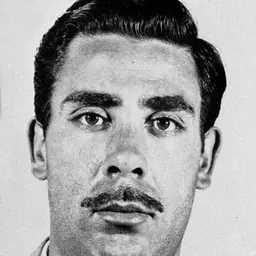




Related people
Same field, nearest in time





Contemporaries
People whose lives overlapped Giuseppe Genco Russo's
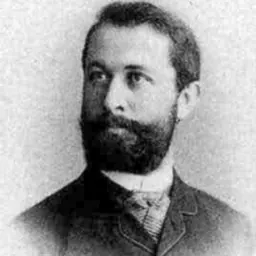

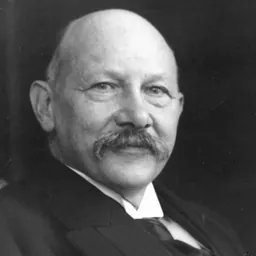
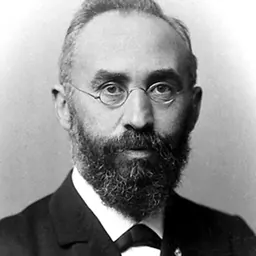

Frequently asked questions
Who was Giuseppe Genco Russo?
Italian Mafia boss (1893-1976)
When was Giuseppe Genco Russo born?
Giuseppe Genco Russo was born on 26 January 1893 in Mussomeli.
When did Giuseppe Genco Russo die?
Giuseppe Genco Russo died on 18 March 1976 in Mussomeli.
What was Giuseppe Genco Russo's occupation?
Giuseppe Genco Russo was a politician and made man.
What nationality was Giuseppe Genco Russo?
Giuseppe Genco Russo was Italian.
Sources & further reading
· Wikipedia: Giuseppe Genco Russo
· DBpedia: Giuseppe Genco Russo
Cite this page
APA: Biography.guide. (2026). Giuseppe Genco Russo. https://biography.guide/giuseppe-genco-russo/
MLA: "Giuseppe Genco Russo." Biography.guide, https://biography.guide/giuseppe-genco-russo/.
Chicago: "Giuseppe Genco Russo." Biography.guide. https://biography.guide/giuseppe-genco-russo/.
Data last updated: 2026-09-20 · Spot an error? Report a correction.
Page generated 2026-09-27 05:31 UTC