
About Danilo Dolci
Lived 1924 – 1997 (aged 73). Danilo Dolci was an Italian poet, architect, sociologist, social reformer and writer, known for Italy and Non-violence.
Danilo Dolci (28 June 1924 – 30 December 1997) was an Italian social activist, sociologist, popular educator and poet. He is best known for his opposition to poverty, social exclusion and the Mafia in Sicily, and is considered to be one of the protagonists of the non-violence movement in Italy. He became known as the "Gandhi of Sicily".
In the 1950s and 1960s, Dolci published a series of books (notably, in their English translations, To Feed the Hungry, 1955, and Waste, 1960) that stunned the outside world with their emotional force and the detail with which he depicted the desperate conditions of the Sicilian countryside and the power of the Mafia. Dolci became a kind of cult hero in the United States and Northern Europe; he was idolised, in particular by idealistic youngsters, and support committees were formed to raise funds for his projects.
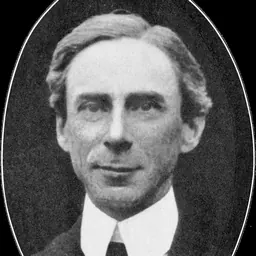
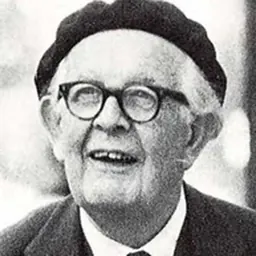
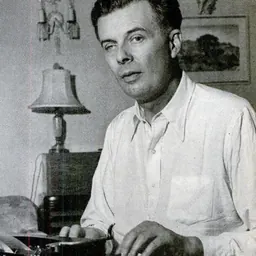
In 1958 he was awarded the Lenin Peace Prize, despite being an explicit non-communist. Among those who publicly voiced support for his efforts were Carlo Levi, Erich Fromm, Bertrand Russell, Jean Piaget, Aldous Huxley, Jean-Paul Sartre and Ernst Bloch. In Sicily, Leonardo Sciascia advocated many of his ideas. In the United States his proto-Christian idealism was absurdly confused with communism. He was also a recipient of the 1989 Jamnalal Bajaj International Award of the Jamnalal Bajaj Foundation of India.
Early years
Danilo Dolci was born in the Karstic town of Sežana (now in Slovenia), at the time part of the Italian border region known as Julian March. His father was an agnostic Sicilian railway official, while his mother, Meli Kokelj, was a deeply Catholic local Slovene woman. The young Danilo grew up in Mussolini's fascist state. As a teenager Dolci saw Italy enter into World War II. He worried his family by tearing down any Fascist war posters he came across.
"I had never heard the phrase 'conscientious objector, Dolci later said, "and I had no idea there were such persons in the world, but I felt strongly that it was wrong to kill people and I was determined never to do so." He tried to escape from the authorities who suspected him of tearing down the posters, but he was caught while trying to reach Rome and ended up in jail for a short time. He refused to enlist in the army of the Republic of Salò, Mussolini's puppet state after the Allied invasion in 1943.
Peaceful protest
Throughout his career in Sicily, Dolci used methods of peaceful protest, with one of his most famous hunger strikes occurring in November 1955, when he fasted for a week in Partinico to draw attention to the misery and violence in the area and to promote the building of a dam over the Iato River, which roared down in the winter rains and dried up in the nine arid months, that could provide irrigation for the entire valley.
One technique that he innovated was the "strike in reverse" (working without pay), which initiated unauthorized public works projects for the poor. This earned him his first notoriety in 1956, when he gathered some 150 unemployed men to mend a public road. The police called it obstruction; his helpers walked away; he lay down on the road and was arrested. Skilfully, he drummed up publicity. Famous lawyers such as Piero Calamandrei offered to defend him for free. Famous writers, such as Ignazio Silone, Alberto Moravia, Carlo Levi, among others, protested. The Palermo court acquitted Dolci and his two dozen co-defendants of resisting and insulting the police, but sentenced them to 50 days' imprisonment (time they had already served) and a 20,000 lire (US$32) fine for "having invaded ground that belonged to the government." On his release he resumed the campaign for the dam on the Iato river and work would eventually start in February 1963.
Subsequently, he started a campaign for a dam in the Belice river, to avoid the valley from becoming a wasteland and providing jobs to stop the emigration of workers. In January 1968, the area was hit by an earthquake which destroyed much of the Belice valley. Dolci actively assisted victims and months after the disaster he announced demonstrations and hunger strikes to demand immediate help for homeless families living in tents. Funds for relief and reconstruction were siphoned off by greedy administrators, and "Belice" has since become an Italian by-word for political corruption.
Antimafia Dolci became aware of the stranglehold of the Mafia upon the poor in Sicily. He did not attack the Mafia at first but he did come up against them at once challenging their monopoly of water supply with the project of the Iato River dam.
He began his crusade against the Mafia by claiming that government officials were receiving help in their elections from Cosa Nostra. Rather than making his accusations only in Sicily, he traveled to Rome to participate before the Antimafia Commission, which was established in 1963, to ensure that his worries about the Mafia in Sicily were heard. His willingness to stand up to the Mafia in his quest to improve the living conditions of Sicilians helped him to gain the confidence of the locals.
Tried for libel
In the ensuing two-year trial, dozens of witnesses were heard and many documents were considered. When the Court refused to allow new evidence from witnesses, Dolci and Alasia decided that the trial was a travesty. They announced that under these circumstances they would no longer attempt to defend themselves. The remainder of the trial, therefore, took place with Dolci and Alasia absent from the courtroom. Dolci responded by broadcasting his opinions over a private radio station, which was promptly closed.
On June 21, 1967, the Court of Rome determined that Mattarella had offered reliable evidence of his opposition to the Mafia in the entire course of his political career. The statements collected by the defendants – Dolci and his assistant Alasia – were considered nothing more than "deplorable gossip, malicious rumour or even simple lies." The Court was of the opinion that Mattarella "never had relations with the Mafia environment." The results of the investigation were published in 1966 in the book Chi gioca solo (The Man Who Plays Alone).
Dolci made an application for an amnesty, but was sentenced to two years imprisonment for libel along with heavy fines. Alasia received a sentence of one and a half year. They never served the verdict, because of a pardon. It would have been too scandalous to send Dolci to prison and the sentence was cancelled. Mattarella had won the trial but lost a cabinet post in the new government of Aldo Moro. In appeal the sentences were confirmed in 1973. "To each his own responsibility before today's public opinion and tomorrow's history", Dolci commented on the sentence.
Popular educator In the vein of Mahatma Gandhi and Martin Luther King Jr., Dolci believed that conflicts in society were inevitable, but that any attempt to resolve conflicts by violence or other coercive means would eventually backfire. In the short run violent solutions might offer an advantage; in the long run, however, all positions depending on such dominative means would collapse in renewed violence.
Dolci became convinced that education was the key to social progress. With the money he received for the Lenin Peace Prize in 1958, he founded the Centro studi e iniziative per la piena occupazione (Center of Research and Initiatives for Full Employment) in Partinico, the village in the Palermo hinterland that had become his home, and other towns on the island. In his community work Dolci "sought concrete methods of pedagogy and conflict resolution that would pave the way for a fully democratic and non-violent society."
The centre was one of the most important examples of community development in Italy and especially in the south since World War II. It became both a form of self-organisation of local communities and a training school for a generation of socially and politically committed young people, who found their cohesion as a group and attempted to construct a process of social aggregation through the methods and instruments of active non-violence.
Dolci used the Socratic method, a dialectic method of inquiry, and "popular self-analysis" for empowerment of communities. His pedagogical methods emphasized social awareness and cultural interaction, and won him a worldwide standing. His ideas were taken up by a small but passionate group of supporters that took his methods across Sicily and into mainland Italy. could be interpreted as a kind of endorsement for his liquidation and increased concerns for Dolci's safety.
In 1968 Dolci was accused of embezzling funds sent from abroad to help the victims of the earthquake which destroyed much of the Belice valley, though the charges were never substantiated. At the same time, some of his followers left to set up their own educational centres accusing him of excessive authoritarianism.
He never joined a political party despite several invitations from the Italian Communist Party to run for office. "Reality is very complex", he said. "To understand it, men have tried Christianity, liberalism, Gandhism, socialism. There is some truth in all solutions. We are all mendicants of truth." His papers are currently housed at the Howard Gotlieb Archival Research Center at Boston University.
Books in English To Feed the Hungry (1955/1959), London: MacGibbon & Kee. Report from Palermo (1959), New York: The Orion Press, Inc. The Outlaws of Partinico (1960) London: MacGibbon & Kee Sicilian Lives (1960/1981), New York: Pantheon Books. Waste (1964), New York: Monthly Review Press A New World in the Making (1965) Translated by R. Munroe. Monthly Review Press The Man Who Plays Alone (1968), New York: Random House
Biographies McNeish, James (1965). Fire Under the Ashes: The Life of Danilo Dolci, London: Hodder and Stoughton. Mangione, Jerre (1968). A Passion for Sicilians: The World around Danilo Dolci, New York: William Morrow and Co.
Don’t just read it —
keep it.
Full-length biographies made to live with: read them, listen on the way to work, watch them tonight.
- E-book
- Audio
- Video
Instant download · yours to keep · every purchase keeps this site free
Important facts
People in Danilo Dolci's life
Named in this biography and alive at the same time




Related people
Same field, nearest in time


Contemporaries
People whose lives overlapped Danilo Dolci's

Frequently asked questions
Who was Danilo Dolci?
Italian author, sociologist and social activist (1924-1997)
When was Danilo Dolci born?
Danilo Dolci was born on 28 June 1924 in Sežana.
When did Danilo Dolci die?
Danilo Dolci died on 30 December 1997 in Trappeto.
What was Danilo Dolci's occupation?
Danilo Dolci was a poet, architect, sociologist, social reformer and writer.
What was Danilo Dolci known for?
Danilo Dolci was known for Italy and Non-violence.
What nationality was Danilo Dolci?
Danilo Dolci was Italian.
Sources & further reading
Cite this page
APA: Biography.guide. (2026). Danilo Dolci. https://biography.guide/danilo-dolci/
MLA: "Danilo Dolci." Biography.guide, https://biography.guide/danilo-dolci/.
Chicago: "Danilo Dolci." Biography.guide. https://biography.guide/danilo-dolci/.
Data last updated: 2026-09-22 · Spot an error? Report a correction.
Page generated 2026-09-27 05:19 UTC