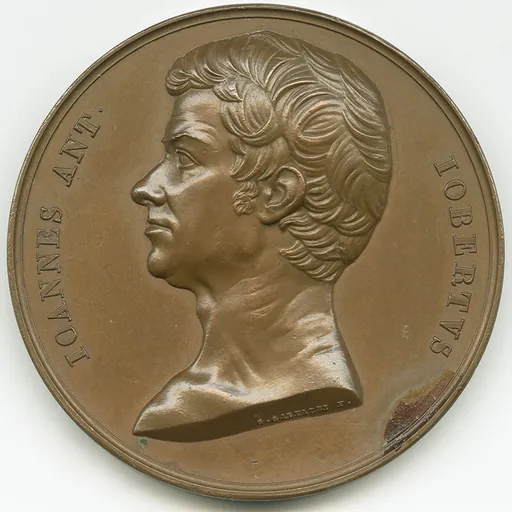
About Giovanni Antonio Giobert
Lived 1761 – 1834 (aged 72). Giovanni Antonio Giobert was a chemist and university teacher.
Giovanni Antonio Giobert (27October 176114September 1834), also known as Jean-Antoine Giobert, was an Italian chemist and mineralogist who studied magnetism, galvanism, and agricultural chemistry. He identified the correct composition of the mineral Gioberite, a form of magnesite (MgCO3) found in the Piedmont area.
Science In his early twenties, Giobert focused his studies on the application of chemistry in agriculture and industry. He served as president of the academy, He edited and contributed to a Journal of Arts, Sciences, and Literature, by a Philosophical Society at Turn, writing about marl and other fossil substances.
In 1800 he became Professor of Agriculture and as of 1802 professor of chemistry and mineralogy at the University of Turin. He was involved in the Reale Società Agraria di Torino,
Giobert was part of a Turin-based Comitato Galvanico that supported the theories of Luigi Galvani against those of Alessandro Volta.
Giobert was one of the first to spread Antoine Lavoisier's theories in Italy. He published experimental work in the debate over whether water was a simple element or chemical composition of hydrogen and oxygen. In 1792, his work on the refutation of phlogiston theory won a prize competition on the subject, put forward by the Academy of Letters and Sciences of Mantua in 1790 and 1791. His "Examen chimique de la doctrine du phlogistique et de la doctrine des pneumatistes par rapport à la nature de l 'eau", presented to the Académie royale des Sciences of Turin on 18 March 1792, is considered the most original defense of Lavoisier's theory of water composition to appear in Italy. Humphry Davy, John Dalton, and Joseph Louis Gay-Lussac. Nicolas-Théodore de Saussure commended it for its accuracy, describing its use in his studies of the roles of water and gases in the nutrition of plants as follows:
quote|In this work, when I have given readings of the phosphorus eudiometer, they have always been cleared of the error that nitrogen gas can introduce through the expansion it undergoes in dissolving the phosphorus… In the first moments of the disappearance of the oxygen gas, the expansion of the nitrogen gas is undetectable… For these experiments I used rapid combustion and the bent tube indicated by Giobert (Analyse des Eaux de Vaudier). I tilt the eudiometer when the phosphorus is melting, so that the phosphorus flows and spreads over the full length of the tube. With this procedure, the analysis of air is completed in less than half an hour, and at this time needs no correction. The Piedmontese variety of magnesite is sometimes referred to as Gioberite, distinguishing it from other forms. It was named after Giobert by François Sulpice Beudant. Identifying its composition was an important contribution to the industry of pottery-making. Giobert also investigated the influence of magnesia on plant growth and found that the presence of earths of silica, lime, alumina and magnesia in the soil was not sufficient for plant growth. This work was important to Saussure and others studying plant growth. Giobert identified a colorless form of indigo (sometimes called indigogen or 'white' indigo) in plants, convertible to indigo-blue through oxidation. For his work on the indigo color dyeing method, Giobert was made a knight (Cavaliere).
Giobert also developed the Gioberti tincture, which involved application of hydrochloric acid and potassium ferrocyanide. The Gioberti tincture was used in the 19th century and early 20th century to restore illegible writings or faded pictures, before less harsh chemical reagents were found. Gioberti tincture was used to show the original inscriptions of palimpsests by conservators at the Vatican.
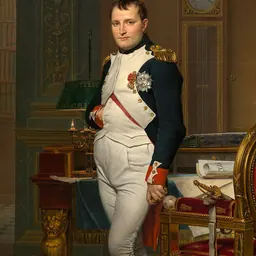
Politics The period in which Giobert was active was one of considerable political upheaval. The University of Turin was closed in both 1797 and 1799 due to political events. Giobert was a francophile and a strong republican supporter of Napoleon. In 1798 he was appointed to the provisional government of Piedmont (Il Governo Provvisorio della Nazione Piemontese), only to be imprisoned in 1799 when the Austrians briefly took power. Scholars continue to study his life and work.
Selected works
Don’t just read it —
keep it.
Full-length biographies made to live with: read them, listen on the way to work, watch them tonight.
- E-book
- Audio
- Video
Instant download · yours to keep · every purchase keeps this site free
Important facts
People in Giovanni Antonio Giobert's life
Named in this biography and alive at the same time

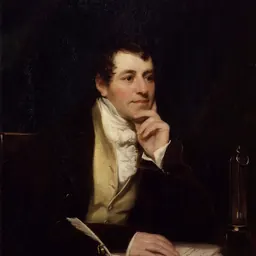
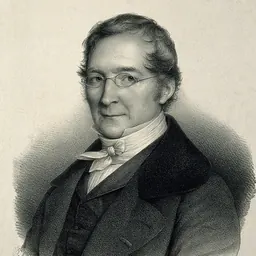

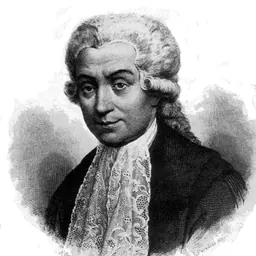

Related people
Same field, nearest in time


Contemporaries
People whose lives overlapped Giovanni Antonio Giobert's





Frequently asked questions
Who was Giovanni Antonio Giobert?
Italian chemist
When was Giovanni Antonio Giobert born?
Giovanni Antonio Giobert was born on 28 October 1761 in Mongardino.
When did Giovanni Antonio Giobert die?
Giovanni Antonio Giobert died on 14 September 1834 in Turin.
What was Giovanni Antonio Giobert's occupation?
Giovanni Antonio Giobert was a chemist and university teacher.
Sources & further reading
· Wikipedia: Giovanni Antonio Giobert
· DBpedia: Giovanni Antonio Giobert
Cite this page
APA: Biography.guide. (2026). Giovanni Antonio Giobert. https://biography.guide/giovanni-antonio-giobert/
MLA: "Giovanni Antonio Giobert." Biography.guide, https://biography.guide/giovanni-antonio-giobert/.
Chicago: "Giovanni Antonio Giobert." Biography.guide. https://biography.guide/giovanni-antonio-giobert/.
Data last updated: 2026-09-20 · Spot an error? Report a correction.
Portrait: Wikimedia Commons · author & licence
Page generated 2026-09-27 04:58 UTC