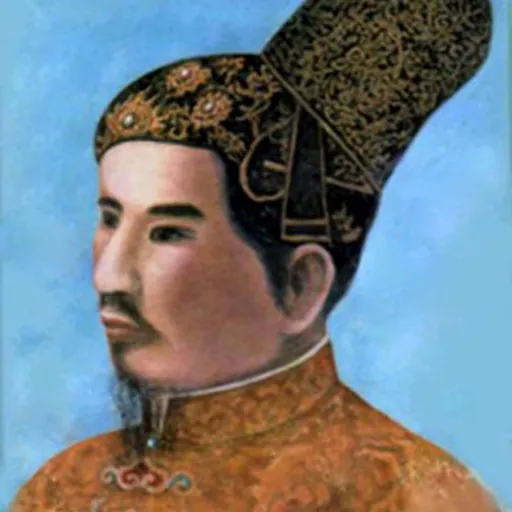
About Gia Long
Lived 1762 – 1820 (aged 57). Gia Long was a Vietnamese monarch.
Consolidation of Southern Annam After more than a decade of conflict, Nguyễn Phúc Ánh had finally managed to gain control of Saigon for long enough to have time to start a permanent base in the area and prepare to build up for a decisive power struggle with the Tây Sơn. The area around Saigon, known as Gia Định, began to be referred to as its own region, because Nguyễn Phúc Ánh's presence was becoming entrenched, distinguishing and associating the area with a political base. Nguyễn Phúc Ánh's military was able to consolidate, and a civil service was reestablished. According to the historian Keith Taylor, this was the first time that the southern third of Vietnam was integrated "as a region capable of participating successfully in war and politics among Vietnamese speakers", which could "compete for ascendancy with all the other places inhabited by speakers of the Vietnamese language".
The French officers enlisted by Pigneau helped to train Nguyễn Phúc Ánh's armed forces and introduced Western technological expertise to the war effort. The navy was trained by Jean-Marie Dayot, He introduced European infantry training, formations and tactics while also facilitating various methods of manufacturing and using European-style artillery, thereby making cannonry and projectiles a central part of the military. Upon Pigneau's death, Pigneau was buried in the presence of the crown prince, all mandarins of the court, the royal bodyguard of 12,000 men and 40,000 mourners.
Fortifications
Following the recapture of Saigon, Nguyễn Phúc Ánh consolidated his power base and prepared the destruction of the Tây Sơn. His enemies had regularly raided the south and looted the annual rice harvests, so Nguyễn Phúc Ánh was keen to strengthen his defence. One of Nguyễn Phúc Ánh's first actions was to ask the French officers to design and supervise the construction of a modern European-style citadel in Saigon. The citadel was designed by Theodore Lebrun and de Puymanel, with 30,000 people mobilized for its construction in 1790. The fortress was bordered on three sides by pre-existing waterways, bolstering its natural defensive capability. Following the construction of the citadel, the Tây Sơn never again attempted to sail down the Saigon River and try to recapture the city, its presence having endowed Nguyễn Phúc Ánh with a substantial psychological advantage over his opponents. Nguyễn Phúc Ánh took a keen personal interest in fortifications, ordering his French advisors to travel home and bring back books with the latest scientific and technical studies on the subject. The Nguyễn royal palace was built inside the citadel.
Agricultural reform and economic growth With the southern region secured, Nguyễn Phúc Ánh turned his attention to agricultural reforms. Due to Tây Sơn naval raids on the rice crop via inland waterways, the area suffered chronic rice shortages. Although the land was extremely fertile, the region was agriculturally underexploited, having been occupied by Vietnamese settlers only relatively recently. Furthermore, agricultural activities had also been significantly curtailed during the extended warfare with the Tây Sơn. Nguyễn Phúc Ánh's agricultural reforms were based around extending to the south a traditional form of agrarian expansion, the đồn điền, which roughly translates as "military settlement" or "military holding", the emphasis being on the military origin of this form of colonization. These were first used during the 15th-century reign of Lê Thánh Tông in the southward expansion of Vietnam. The central government supplied military units with agricultural tools and grain for nourishment and planting. The soldiers were then assigned land to defend, clear and cultivate, and had to pay some of their harvest as tax. In the past, a military presence was required because the land had been seized from the conquered indigenous population. Under Nguyễn Phúc Ánh's rule, pacification was not usually needed but the basic model remained intact. Settlers were granted fallow land, given agricultural equipment, work animals, and grain. After several years, they were required to pay grain tax. The program greatly reduced the amount of idle, uncultivated land. Large surpluses of grain, taxable by the state, soon resulted. By 1792, fifteen frigates were under construction, with a design that mixed Chinese and European specifications, equipped with 14 guns. The Vietnamese learned European naval architecture by dismantling an old European vessel into its components, so that Vietnamese shipbuilders could understand the separate facets of European shipbuilding, before reassembling it. They then applied their newfound knowledge to create replicas of the boats. Nguyễn Phúc Ánh studied naval carpentry techniques and was said to be adept at it, and learned navigational theory from the French books that Pigneau translated, particularly Denis Diderot and Jean le Rond d'Alembert's Encyclopédie. The Saigon shipyard was widely praised by European travelers. During this four-year period, Nguyễn Phúc Ánh sent missions to Siam, Cambodia and south to the Straits of Malacca and purchased more European military equipment.
Over time, Nguyễn Phúc Ánh gradually reduced the military role of his French allies on the battlefield. the European-style vessels in the Nguyễn fleet inflicted hundreds of losses against the Tây Sơn in 1792 and 1793. A common modern myth about this reign title is that was derived from Gia Định (Saigon) and Thăng Long (Hanoi) to symbolise the unification of northern and southern Vietnam, despite no contemporary evidence supporting this. He then quickly overran the north, with Hanoi captured on 22 July 1802. After a quarter-century of continuous fighting, Gia Long had unified these formerly fractious territories, ultimately leading what is now modern Vietnam The French failure to honor the treaty signed by Pigneau meant Vietnam was not bound to cede the territory and trading rights that they had promised.
Due to a Tây Sơn massacre of ethnic Chinese, the Nguyễn were subsequently supported by most ethnic Chinese against the Tây Sơn. The Tây Sơn's downfall and defeat at the hands of Nguyễn Phúc Ánh was therefore due, at least in part, to the ethnic Chinese support given the Nguyễn.
Rule Gia Long's rule was noted for its strict Confucian orthodoxy. Upon toppling the Tây Sơn, he repealed their reforms and reimposed classical Confucian education and civil service systems. He moved the capital from Hanoi in the north to Huế in central Vietnam to reflect the southward migration of the population over the preceding centuries. The Emperor built new fortresses and a palace in his new capital. Using French expertise, Gia Long modernized Vietnam's defensive capabilities and, in recognition of the assistance of his French friends, he permitted the activities of Catholic missionaries, something, however, which was less tolerated by his successors. Under Gia Long's rule, Vietnam strengthened its military dominance in Indochina, expelling Siam from Cambodia and turning it into a vassal state. Despite this, he was relatively isolationist in outlook towards European powers.
Renaming Vietnam Gia Long decided to join the Imperial Chinese Tributary System. He sent an embassy to Qing China and requested to change his country's name to Nam Việt (南越). Gia Long explained that the word Nam Việt derived from An Nam (安南) and Việt Thường (越裳), two toponyms mentioned in ancient Chinese records that were located in northern and southern Vietnam respectively, to symbolize the unification of the country. The Qing Jiaqing Emperor of China refused his request because it had an identical name with the ancient kingdom of Nam Việt (Nanyue), and the territory of Nam Việt contained Liangguang which belonged to Qing China at that time. Instead, Jiaqing agreed to change it to Việt Nam (越南).
However, Gia Long copied the Imperial Chinese system, basing it on the Chinese Confucian model and attempting to create a Vietnamese Imperial tributary system. In 1805, Gia Long used "Trung Quốc" (中國), the very same word and characters used to refer to China, as a name for Vietnam.
It was said "Hán di hữu hạn" (漢夷有限, "the Vietnamese and the barbarians must have clear borders") by the Gia Long Emperor (Nguyễn Phúc Ánh) when differentiating between Khmer and Vietnamese. Minh Mạng implemented an acculturation integration policy directed at minority non-Vietnamese peoples. Thanh nhân (清人 Qingren) was used to refer to ethnic Chinese by the Vietnamese while Vietnamese called themselves as Hán nhân (漢人 Hanren) in Vietnam during the 1800s under Nguyễn rule.
Administrative structure
During the war era, Nguyễn Phúc Ánh had maintained an embryonic bureaucracy in an attempt to prove his leadership ability to the people. Due to the incessant warfare, military officers were generally the most prominent members of his inner circle. This dependency on military backing continued to manifest itself throughout his reign. The provinces were classified into trấn and dinh. These were in turn divided into phủ, huyện and châu. Tonkin, with the administrative seat of its imperial military protector (quan tổng trấn) at Hanoi, had thirteen provinces (tổng trấn Bắc Thành), and in the Red River Delta, the old officials of the Le administration continued in office. In the south, Saigon was the capital of the four provinces of Cochinchina (tổng trấn Gia Định), as well as the seat of the military protector. The citadels in the respective cities directly administered their military defense zones. This system allowed Gia Long to reward his leading supporters with highly powerful positions, giving them almost total autonomy in ordinary administrative and legal matters. This system persisted until 1831–32, when his son Minh Mạng centralized the national government. When Gia Long unified the country, it was described by Charles Maybon as being chaotic: "The wheels of administration were warped or no longer existed; the cadres of officials were empty, the hierarchy destroyed; taxes were not being collected, lists of communal property had disappeared, proprietary titles were lost, fields abandoned; roads bridges and public granaries had not been maintained; work in the mines had ceased. The administration of justice had been interrupted, every province was a prey to pirates, and violation of law went unpunished, while even the law itself had become uncertain." Furthermore, Cambodia had been periodically invaded by both Vietnam and Siam. Cambodia lurched uneasily between both poles of domination as dictated by the internal strife of her two larger neighbors. In 1796, Ang Eng, a pro-Siamese king, had died, leaving Ang Chan, who was born in 1791. When Gia Long unified Vietnam, Eng was given investiture by Siam to hold out Vietnamese influence, Gia Long responded by sending an ambassador bearing the book of investiture, together with a seal of gilded silver. In 1812, Ang Chan refused a request from his brother Ang Snguon to share power, leading to a rebellion. Siam sent troops to support the rebel prince, hoping to enthrone him and wrest influence from Gia Long over Cambodia.
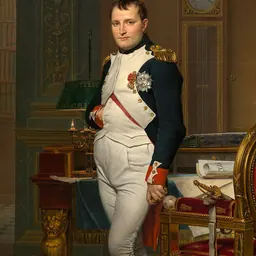
Napoleon's aims to conquer Vietnam as a base to threaten Company rule in India never materialized, having been preoccupied by vast military ambitions on mainland Europe. Gia Long was generally dismissive of European commercial overtures. This was part of a policy of trying to maintain friendly relations with every European power by granting favors to none. In 1804, a British delegation attempted to negotiate trading privileges with Vietnam. It was the only offer of its kind until 1822, such was the extent of European disinterest in Asia during the Napoleonic Wars. Gia Long had purchased arms from British firms in Madras and Calcutta on credit, prompting the British East India Company to send John Roberts to Huế. However, Roberts's gifts were turned away and the negotiations for a commercial deal never started. The British then made a request for the exclusive right to trade with Vietnam and the cession of the island of Cham near Faifo, In 1817, the French Prime Minister Armand-Emmanuel du Plessis dispatched the Cybele, a frigate with 52 guns to Tourane (now Da Nang) to "show French sympathy and to assure Gia Long of the benevolence of the King of France".
Gia Long kept four French officers in his service after his coronation: Philippe Vannier, Jean-Baptiste Chaigneau, de Forsans and the doctor Despiau. All became high ranking mandarins and were treated well.
Domestic policies and capital works Jean-Marie Dayot (left) took a leading role in the training of Gia Long's navy.
Gia Long abolished all large landholding by princes, nobles, and high officials. He dismantled the 800-year-old practice of paying officials and rewarding or endowing nobles with a portion of the taxes from a village or a group thereof. Existing highways were repaired, and new ones constructed, with the north–south road from Saigon to Lạng Sơn put under restoration. He organized a postal service to operate along the highways and public storehouses were built to alleviate starvation in drought-affected years. Gia Long enacted monetary reform and implemented a more socialized agrarian policy. There was little emphasis on innovation in agricultural technology, so the improvements in productivity were mainly derived from increasing the amount of cultivated farmland.
Although the civil war was over, Gia Long decided to add to the two citadels that had been built under the supervision of French officers. Gia Long was convinced of their effectiveness and during his 18-year reign, a further 11 citadels were built throughout the country. De Puymanel and Lebrun left Vietnam before the end of the war, so the forts were designed by Vietnamese engineers who oversaw the construction. The position of Citadel Supervision Officer was created under the Ministry of War and made responsible for the work, underlining the importance that Gia Long placed on fortifications. Gia Long's fortifications program was marred by accusations that the people labored all day and part of the night in all weather conditions, and that as a direct consequence, land went fallow. Complaints of mandarin corruption and oppressive taxation were often leveled at his government. It consisted of the Four Books and Five Classics, commentaries on these by Zhu Xi, It focused on strengthening the power and authority of the emperor, his mandarins, and the traditional family unit. In cases of serious crimes, particularly those against the state, collective punishment was meted out to the family of the convict, including the death penalty.
Now that Vietnam was unified, the center of gravity of the country moved further south, following centuries of southerly migration and conquest, The structure was a square shape of 2.5 km per side. A 9 m rampart was encased with masonry and protected by protruding bastions, each defended by 36 guns.
Gia Long tolerated the Catholic faith of his French allies and permitted unimpeded missionary activities out of respect to his benefactors. The missionary activity was dominated by the Spanish in Tonkin and French in the central and southern regions. However, he expressed dismay at the Catholic condemnation of the traditional ancestor worship, a basic tenet of Vietnamese culture. Gia Long was also known for his disdain for Buddhism, the religion practiced by the majority of the population. Despite its popularity among ladies of the court, Gia Long often restricted the activities of Buddhists.
In August 1802, Gia Long retaliated against the captured Tây Sơn leadership who had executed his family in the 1770s. The surviving members of the family and its leading generals and their families were executed. The remains of Quang Trung and his queen were exhumed and desecrated, and his son, the last Tây Sơn monarch Quang Toản was bound to four elephants and torn apart.
Family and succession
Gia Long had many wives, but the most famous consorts are Empress Thừa Thiên, Empress Thuận Thiên, and Consort Lê Ngọc Bình. In 1780, during the war against the Tây Sơn, he married Tống Thị Lan, the daughter of a Nguyen general. They had two sons, the first being Nguyễn Phúc Chiêu, who died shortly after birth in Phú Quốc island, and later Crown Prince Nguyễn Phúc Cảnh. Following Gia Long's ascension to the throne, she became Empress consort and was given the title of Empress Thừa Thiên posthumously. Around 1781, during the war with the Tây Sơn, he married his second wife Trần Thị Đang, a daughter of one of his ministers. They had three sons, Nguyễn Phúc Đảm, Nguyen Phuc Dai and Nguyen Phuc Chan, and was posthumously given the title of Empress Thuận Thiên. After his conquest of Vietnam, Gia Long, took his third wife, Lê Ngọc Bình. A daughter of Lê Hiển Tông, the penultimate emperor of the Lê dynasty, she was betrothed by Emperor Quang Trung to his son Quang Toản. After Gia Long defeated the Tây Sơn and executed Quang Toan, he took her as his wife. Gia Long had almost 100 concubines who were daughters of his mandarins; Gia Long did not favor polygamy but he did so to secure the loyalty of his inner circle. Gia Long chose him for his strong character and his deep aversion to westerners, whereas Canh's lineage had converted to Catholicism and were reluctant to maintain their Confucian traditions such as ancestor worship. Before his accession, Nguyễn Phúc Đảm was reported to have praised the Japanese for having expelled and eradicated Christianity from their country. Gia Long told his son to treat the Europeans respectfully, especially the French, but not to grant them any position of preponderance.
Don’t just read it —
keep it.
Full-length biographies made to live with: read them, listen on the way to work, watch them tonight.
- E-book
- Audio
- Video
Instant download · yours to keep · every purchase keeps this site free
Important facts
Family & relationships
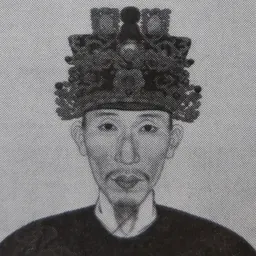
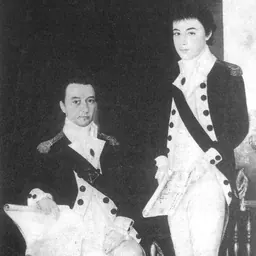
People in Gia Long's life
Named in this biography and alive at the same time


Related people
Same field, nearest in time


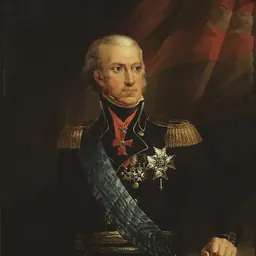
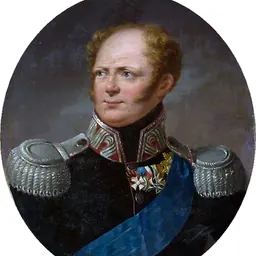
Contemporaries
People whose lives overlapped Gia Long's





Frequently asked questions
Who was Gia Long?
founder and 1st emperor of the Nguyễn dynasty of Vietnam (r. 1802-04)
When was Gia Long born?
Gia Long was born on 8 February 1762 in Huế.
When did Gia Long die?
Gia Long died on 3 February 1820 in Huế.
What was Gia Long's occupation?
Gia Long was a monarch.
What nationality was Gia Long?
Gia Long was Vietnamese.
Sources & further reading
Cite this page
APA: Biography.guide. (2026). Gia Long. https://biography.guide/gia-long/
MLA: "Gia Long." Biography.guide, https://biography.guide/gia-long/.
Chicago: "Gia Long." Biography.guide. https://biography.guide/gia-long/.
Data last updated: 2026-09-20 · Spot an error? Report a correction.
Portrait: Wikimedia Commons · author & licence
Page generated 2026-09-27 04:58 UTC