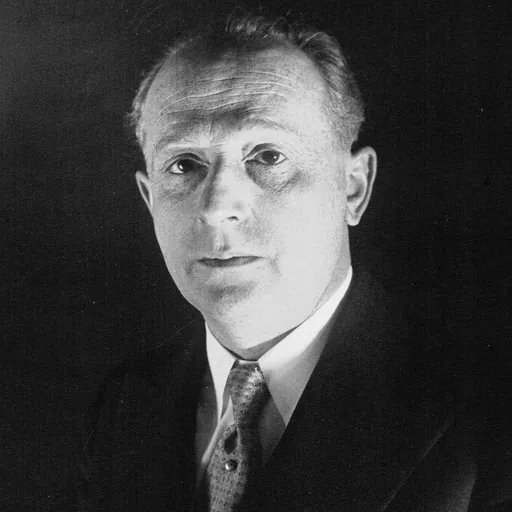
About Georges Weill
Lived 1882 – 1970 (aged 87). Georges Weill was a French and German politician, journalist, opinion journalist, editing staff and member of parliament.
Georges Weill (17 September 1882 – 10 January 1970) was an Alsatian politician who was a Socialist member of parliament for Metz in the German Reichstag from 1912 to 1914. After the outbreak of World War I, he declared his loyalty to France and joined the French Army. In response he was stripped of German citizenship on 5 August 1914. After the Allied victory the provinces of Alsace-Lorraine returned to France, he was elected general counsel of the Lower Rhine in 1919 and became a socialist member of the French Parliament for the Bas-Rhin district.
Early life Georges Weill was born in 1882 to the merchant Elias Weill and his wife Melanie Weill Dreyfus in Strasbourg. He came from a bilingual family living in the German-controlled Alsace-Lorraine. He attended secondary school in Strasbourg, the Faculté des Lettres (Sorbonne) in Paris, the law and political science faculty of the University of Strasbourg and received his PhD in 1904 as Doctor of Political Sciences in Strasbourg with the German economist Georg Friedrich Knapp. From 1900 to 1901, he was the editor of the magazine Le Mouvement socialiste in Paris, in 1902–1904 research assistant at the Chamber of Commerce in Strasbourg, in 1905 the editor of the Free Press in Strasbourg and in 1906–1910 editor of the Franconian Daily Mail in Nuremberg. His writings got him in trouble, and he frequently suffered fines because of press offenses and had two prison sentences.
Political career From 1912 he was a member of the German Reichstag for the Social Democratic Party of Germany (SPD) for the constituency of the Alsace-Lorraine city of Metz. He won the constituency against the previous mandate holder, the Lorraine protester Albert Grégoire, in the runoff election with the support of the Liberals. He was with famed socialist Jean Jaurès when Jaurès was assassinated on 31 July 1914.
When war broke out in 1914 he joined the French Army on 5 August as an interpreter and publicly declared to stand on the side of France. For joining the French, he was stripped of his German citizenship and he lost his seat in the Reichstag. The German SPD disavowed him.
From 1924 to 1928 and from 1932 to 1936, he was a member of the French National Assembly. In 1928, he was in a runoff election with candidate Jean-Pierre Mourer. He was vice president of the National Republican League (Ligue républicaine national), a party founded by former French President Alexandre Millerand.
During the Second World War he lived in the city of Algiers. He died in Paris on 10 January 1970, at the age of 87.
Don’t just read it —
keep it.
Full-length biographies made to live with: read them, listen on the way to work, watch them tonight.
- E-book
- Audio
- Video
Instant download · yours to keep · every purchase keeps this site free
Important facts
People in Georges Weill's life
Named in this biography and alive at the same time



Related people
Same field, nearest in time




Contemporaries
People whose lives overlapped Georges Weill's




Frequently asked questions
Who was Georges Weill?
French politician (1882-1970)
When was Georges Weill born?
Georges Weill was born on 17 September 1882 in Strasbourg.
When did Georges Weill die?
Georges Weill died on 10 January 1970 in 16th arrondissement of Paris.
What was Georges Weill's occupation?
Georges Weill was a politician, journalist, opinion journalist, editing staff and member of parliament.
What nationality was Georges Weill?
Georges Weill was French and German.
Sources & further reading
Cite this page
APA: Biography.guide. (2026). Georges Weill. https://biography.guide/georges-weill/
MLA: "Georges Weill." Biography.guide, https://biography.guide/georges-weill/.
Chicago: "Georges Weill." Biography.guide. https://biography.guide/georges-weill/.
Data last updated: 2026-09-20 · Spot an error? Report a correction.
Portrait: Wikimedia Commons · author & licence
Page generated 2026-09-27 04:58 UTC