
About Jean Jaurès
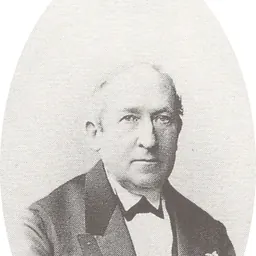
Lived 1859 – 1914 (aged 54). Jean Jaurès was a French politician, professor, journalist, writer, historian and reporter.
Auguste Marie Joseph Jean Léon Jaurès (3 September 185931 July 1914), commonly referred to as Jean Jaurès (; ), was a French socialist leader. Initially a Moderate Republican, he later became a social democrat and one of the first possibilists (the reformist wing of the socialist movement) and in 1902 the leader of the French Socialist Party, which opposed Jules Guesde's revolutionary Socialist Party of France. The two parties merged in 1905 into the French Section of the Workers' International (SFIO). An antimilitarist, he was assassinated in 1914 at the outbreak of World War I but remains one of the main historical figures of the French Left. As a heterodox Marxist, Jaurès rejected the concept of the dictatorship of the proletariat and tried to conciliate idealism and materialism, individualism and collectivism, democracy and class struggle, and patriotism and internationalism.
Early career The son of an unsuccessful businessman and farmer, Jean Jaurès was born in Castres, Tarn, into a modest French provincial haut-bourgeois family. His younger brother, Louis, became an admiral and a Republican-Socialist deputy.
A brilliant student, Jaurès was educated at the Lycée Sainte-Barbe in Paris and admitted first at the École normale supérieure, in philosophy, in 1878, ahead of Henri Bergson. He obtained his agrégation of philosophy in 1881, ending up third, and then taught philosophy for two years at the Albi lycée before lecturing at the University of Toulouse. He was elected Republican deputy for the département of Tarn in 1885, sitting alongside the moderate Opportunist Republicans, opposed both to Georges Clemenceau's Radicals and to the Socialists. He then supported both Jules Ferry and Léon Gambetta. On 29 June 1886 Jaurès married Louise Bois who despite Jaurès's secularism remained a devout Catholic.
Historian In 1889, after unsuccessfully contesting the Castres seat, this time under the banner of Socialism, he returned to his professional duties at Toulouse, where he took an active interest in municipal affairs and helped to found the medical faculty of the university. He also prepared two theses for his doctorate in philosophy, ("On the first delineations of German socialism in the writings of [Martin] Luther, [Immanuel] Kant, [Johann Gottlieb] Fichte and [Georg Wilhelm Friedrich] Hegel") (1891), and .
Jaurès became a highly influential historian of the French Revolution. Research in the archives in the in Paris led him to the formulation of a theoretical Marxist interpretation of the events.
Rise to prominence Jaurès was initially a moderate republican, opposed to both 's Radicalism and socialism. He developed into a socialist during the late 1880s, when he was in his late 20s. In 1892 the miners of went on strike over the dismissal of their leader. 's campaigning forced the government to intervene and require 's reinstatement. The following year, Jaurès was re-elected to the National Assembly as socialist deputy for Tarn, a seat he retained (apart from the four years 1898 to 1902) until his death.
Defeated in the legislative election of 1898, he spent four years without a legislative seat. His eloquent speeches nonetheless made him a force to be reckoned with as an intellectual champion of socialism. He edited , and was, along with , one of the most energetic defenders of Alfred Dreyfus during the Dreyfus Affair. He approved of , and the socialist's inclusion in the cabinet, though this led to an irredeemable split with the more revolutionary section led by forming the Independent Socialists Party.
SFIO leadership
In 1902, Jaurès returned as deputy for Albi. The independent socialists merged with Paul Brousse's "possibilist" (reformist) Federation of the Socialist Workers of France and Jean Allemane's Revolutionary Socialist Workers Party to form the French Socialist Party, of which Jaurès became the leader. They represented a social democratic stance, opposed to Jules Guesde's revolutionary Socialist Party of France.
During the Combes administration his influence secured the coherence of the Radical-Socialist coalition known as the , which enacted the 1905 French law on the Separation of the Churches and the State. In 1904, he founded the socialist paper . According to Geoffrey Kurtz, Jaures was "instrumental" in the reforms carried out by the administration, Emile Combes, "influencing the content of legislation and keeping the factions within the Bloc united." Following the Amsterdam Congress of the Second International, the French socialist groups held a Congress at Rouen in March 1905, which resulted in a new consolidation, with the merger of Jaurès's French Socialist Party and Guesde's Socialist Party of France. The new party, headed by Jaurès and Guesde, ceased to co-operate with the Radical groups, and became known as the (PSU, Unified Socialist Party), pledged to advance a collectivist programme. All the socialist movements unified the same year in the French Section of the Workers' International (SFIO). Jaures opposed imperialism, arguing that it posed a threat to peace in Europe.
Anti-militarism
Jaurès was a committed antimilitarist who tried to use diplomatic means to prevent what became the First World War. In 1913, he opposed Émile Driant's Three-Year Service Law, which implemented a draft period, and tried to promote understanding between France and Germany. As conflict became imminent, he tried to organise general strikes in France and Germany in order to force the governments to back down and negotiate. This proved difficult, however, as many Frenchmen sought revenge for their country's defeat in the Franco-Prussian War and the return of the lost Alsace-Lorraine territory. Then, in May 1914, with Jaurès intending to form an alliance with Joseph Caillaux for the labour movement, the Socialists won the General Election. They planned to take office and "press for a policy of European peace". Jaurès accused French President Raymond Poincaré of being "more Russian than Russia" and premier René Viviani as being compliant.
In July 1914, he attended the Socialist Congress in Brussels where he struck up a constructive solidarity with German socialist party leader Hugo Haase. On the 20th of that month, Jaurès voted against a parliamentary subsidy for Poincaré's visit to St. Petersburg; which he condemned as both dangerous and provocative. The Caillaux–Jaurès alliance was dedicated to defeating military objectives that were aimed at precipitating war. France sent a mission, headed by Poincaré, to coordinate French and Russian responses. Always a pacifist, Jaurès rushed back to Paris to attempt an impossible reconciliation with the government. Russia had partially mobilized, which Germany took as an extreme provocation.
Assassination
On 31 July 1914, Jaurès was assassinated. At 9 pm, he went to dine at the Café du Croissant on Rue Montmartre. Forty minutes later, Raoul Villain, a 29-year-old French nationalist, walked up to the restaurant window and fired two shots into Jaurès's back. He died five minutes later at 9:45 pm. Jaurès had been due to attend an international conference on 9 August, in an attempt to dissuade the belligerent parties from going ahead with the war. Villain also intended to murder Henriette Caillaux with his two engraved pistols. Tried after World War I and acquitted, he was later killed by the Republicans in 1936 during the Spanish Civil War.
Shock waves ran through the streets of Paris. One of the government's most charismatic and compelling orators had been assassinated. His opponent, President Poincaré, sent his sympathies to Jaurès's widow. Paris was on the brink of revolution: Jaurès had been advocating a general strike and had narrowly avoided sedition charges. One important consequence was that the cabinet postponed the arrest of socialist revolutionaries. Viviani reassured Britain of Belgian neutrality but also said that "the gloves were off".
Jaurès's murder brought matters one step closer to world war. It helped to destabilise the French government, whilst simultaneously breaking a link in the chain of international solidarity. Speaking at Jaurès's funeral a few days later, CGT leader Léon Jouhaux declared, "All working men ... we take the field with the determination to drive back the aggressor." As if in reverence to his memory, the Socialists in the Chamber agreed to suspend all sabotage activity in support of the Union Sacrée. Poincaré commented that, "In the memory of man, there had never been anything more beautiful in France."
On 23 November 1924, his remains were transferred to the Panthéon.
Political legacy
Joseph Caillaux and Jaurès were fellow anti-militarists trying to halt the slide to war in July 1914. But Caillaux was paralyzed, politically and emotionally, by the trial of his wife for murder. With the trial over (July 28) Caillaux and Jaurès hoped they could expose the President's secret deal with Russia, possibly leading to a policy of détente with Germany, preventing war and the inevitable carnage. Russia had covertly subsidized Poincaré's election campaign. Poincaré had, in this theory, therefore abandoned socialism for another party and warfare. Even if Germany intentionally condemned Belgium to occupation, they had already accused Russia of starting the conflict. This theory, downplaying Germany's aggressive moves, was not widely supported in France. François Hollande declared that "Jaurès, the man of socialism, is today the man of all of France" while in 2007, Nicolas Sarkozy declared that his party was Jaurès's successor.
Numerous streets and squares in France are named for Jaurès, especially in the south of France, as well as in Vienna (Austria), Ghent (Belgium), Plovdiv (Bulgaria), Tel Aviv and Haifa (Israel), Buenos Aires (Argentina), Cluj (Romania) and also in Germany. Metro stations have been named after Jaurès in Paris (Jaurès and Boulogne - Jean Jaurès), Toulouse (Jean-Jaurès), and Lyon (Place Jean-Jaurès).
Don’t just read it —
keep it.
Full-length biographies made to live with: read them, listen on the way to work, watch them tonight.
- E-book
- Audio
- Video
Instant download · yours to keep · every purchase keeps this site free
Important facts
People in Jean Jaurès's life
Named in this biography and alive at the same time


Related people
Same field, nearest in time




Contemporaries
People whose lives overlapped Jean Jaurès's


Frequently asked questions
Who was Jean Jaurès?
French / Occitan socialist leader (1859-1914)
When was Jean Jaurès born?
Jean Jaurès was born on 3 September 1859 in Castres.
When did Jean Jaurès die?
Jean Jaurès died on 31 July 1914 in Paris.
What was Jean Jaurès's occupation?
Jean Jaurès was a politician, professor, journalist, writer, historian and reporter.
What nationality was Jean Jaurès?
Jean Jaurès was French.
Sources & further reading
Cite this page
APA: Biography.guide. (2026). Jean Jaurès. https://biography.guide/jean-jaures/
MLA: "Jean Jaurès." Biography.guide, https://biography.guide/jean-jaures/.
Chicago: "Jean Jaurès." Biography.guide. https://biography.guide/jean-jaures/.
Data last updated: 2026-09-20 · Spot an error? Report a correction.
Page generated 2026-09-27 05:31 UTC