
About Alfred Dreyfus
Lived 1859 – 1935 (aged 75). Alfred Dreyfus was a French army officer and military officer.
Alfred Dreyfus (9 October 1859 – 12 July 1935) was a French Army officer best known for his central role in the Dreyfus affair. In 1894, Dreyfus fell victim to a judicial conspiracy that eventually sparked a major political crisis in the French Third Republic when he was wrongfully accused and convicted of being a German spy due to antisemitism. Dreyfus was arrested, cashiered from the French army and imprisoned on Devil's Island in French Guiana. Eventually, evidence emerged showing that Dreyfus was innocent and the true culprit was fellow officer Ferdinand Walsin Esterhazy.
Gradual revelations indicated that the internal investigation conducted by the French army was biased; Dreyfus was an ideal scapegoat due to being a Jew, and military authorities were aware of his innocence but chose to cover up the affair and leave him imprisoned rather than lose face. A political scandal subsequently erupted, shaking French political life and highlighting antisemitism in the French army and government. After numerous judicial and political developments, the publication of Émile Zola's manifesto J'Accuse...! in 1898 brought new momentum to Dreyfus' cause. Zola accused French military and political leadership of covering up the affair. Dreyfus was eventually exonerated, rehabilitated and reinstated in the French army, although at a lower rank than his seniority would have warranted.
"Anti-Dreyfusards" and antisemites in France, however, viewed even his rehabilitation unfavorably, and while attending the transfer of Zola's remains to the Panthéon, Dreyfus was the target of an unsuccessful assassination attempt by an antisemitic militarist who was later acquitted at trial. Dreyfus later fought in World War I, notably at the battles of Verdun and the Aisne, before retiring and leading a quiet life. He died in 1935 in Paris and was buried in the Montparnasse Cemetery. Dreyfus' life and the antisemitic persecutions he endured left a significant mark on French political consciousness, while Esterhazy remained unpunished until his death. Among Dreyfus’s defenders were writers such as Zola, Charles Péguy, and Anatole France, politicians such as Georges Clemenceau and Jean Jaurès, filmmakers such as Georges Méliès, and the founders of the Human Rights League (LDH) Francis de Pressensé and Pierre Quillard.
Early life, family, and education Born in Mulhouse, Alsace on 9 October 1859, to Raphaël and Jeannette Dreyfus (née Libmann), Alfred Dreyfus was the youngest of nine children (seven of whom survived to adulthood). Three days after the wedding, Dreyfus learned that he had been admitted to the École Supérieure de Guerre or War College. Two years later, he graduated ninth in his class with honourable mention and was immediately designated as a trainee in the French Army's General Staff headquarters, where he would be the only Jewish officer. His father Raphaël died on 13 December 1893.
At the War College examination in 1892, his friends had expected him to do well. However, one of the members of the panel, General Bonnefond, felt that "Jews were not desired" on the staff, and gave Dreyfus poor marks for cote d'amour (French slang: attraction; translatable as likability). Bonnefond's assessment lowered Dreyfus' overall grade; he did the same to another Jewish candidate, Lieutenant Picard. Learning of this injustice, the two officers lodged a protest with the director of the school, General Lebelin de Dionne, who expressed his regret for what had occurred, but said he was powerless to take any steps in the matter. The protest would later count against Dreyfus. The French army of the period was relatively open to entry and advancement by talent, with an estimated 300 Jewish officers, of whom ten were generals. However, within the Fourth Bureau of the General Staff, General Bonnefond's prejudices appear to have been shared by some of Dreyfus's superiors. The personal assessments he received during 1893/94 acknowledged his high intelligence, but were critical of aspects of his personality. The bordereau described a minor French military secret, and had obviously been written by a spy in the French military.
In 1894, this made the French Army's counter-intelligence section, led by Lieutenant Colonel Jean Sandherr, aware that information regarding new artillery parts was being passed to Maximilian von Schwartzkoppen, the German military attaché in Paris, by a highly placed spy most likely on the General Staff. Suspicion quickly fell upon Dreyfus, who was arrested for treason on 15 October 1894.
On 22 December 1894, Dreyfus was summarily convicted in a closed court martial and sentenced to life imprisonment which was to be served on Devil's Island in French Guiana. Following French military custom of the time, on 5 January 1895 Dreyfus was formally degraded (cashiered) by having the rank insignia, buttons and braid cut from his uniform and his sword broken, all in the courtyard of the École Militaire before silent ranks of soldiers, while a large crowd of onlookers shouted abuse from behind railings. Dreyfus cried out: "I swear that I am innocent. I remain worthy of serving in the Army. Long live France! Long live the Army!" reporting his confession and writing a leader column accusing the French military of antisemitism and calling for a retrial for Dreyfus.
In France there was a passionate campaign by Dreyfus' supporters, including leading artists and intellectuals such as Émile Zola, following which he was given a second trial in 1899, but again declared guilty of treason despite the evidence of his innocence.
However, due to public opinion, Dreyfus was offered and accepted a pardon by President Émile Loubet in 1899 and released from prison; this was a compromise that saved face for the military's mistake. Had Dreyfus refused the pardon, he would have been returned to Devil's Island, a fate he could no longer emotionally cope with; so officially Dreyfus remained a traitor to France, and pointedly remarked upon his release: The government of the Republic has given me back my freedom. It is nothing for me without my honour. and subsequently assigned to command an artillery unit at Vincennes. On 15 October 1906, he was placed in command of another artillery unit at Saint-Denis.
Aftermath While attending a ceremony relocating Zola's ashes to the Panthéon on 4 June 1908, Dreyfus was wounded in the arm by a gunshot from a right-wing journalist, , who was trying to assassinate him. Grégori was acquitted by the Parisian court, which accepted his defence that he had not meant to kill Dreyfus, meaning merely to graze him.
In 1937, Dreyfus' son Pierre published his father's memoirs based on his correspondence between 1899 and 1906. The memoirs were titled Souvenirs et Correspondance and translated into English, as Dreyfus: His Life and Letters, by Betty Morgan.
Dreyfus started corresponding with the marquise Marie-Louise Arconati-Visconti in 1899 and began attending her Thursday (political) salons after his release. They continued their correspondence until her death in 1923.
Later life World War I Dreyfus' prison sentence on Devil's Island had taken its toll on his health. He was granted retirement from the army in October 1907 at the age of 48. As a reserve officer, he re-entered the army as a major of artillery at the outbreak of World War I. Serving throughout the war, Dreyfus was promoted to the rank of lieutenant colonel.
By then in his mid-50s, Dreyfus served mostly behind the lines of the Western Front, in part as commander of an artillery supply column. However, he also performed front-line duties in 1917, notably at Verdun and on the Chemin des Dames. He was promoted to Officer of the Legion of Honour in November 1918.
Dreyfus' son Pierre also served throughout the entire war as an artillery officer, receiving the Croix de guerre.
Death
Dreyfus died in Paris aged 75, on 12 July 1935. Two days later, his funeral cortège passed the Place de la Concorde through the ranks of troops assembled for the Bastille Day national holiday. He was interred in the Cimetière du Montparnasse, Paris.
A statue of Dreyfus holding his broken sword is located at Boulevard Raspail, nº116–118, at the exit of the Notre-Dame-des-Champs metro station. A duplicate statue stands in the courtyard of the Museum of Jewish Art and History in Paris.
During the German occupation of France during WWII, Lucie Dreyfus, who had played a major role in the fight to exonerate her husband, was hidden in a convent in Valence. Their son, Pierre Léon Dreyfus (1891–1946), escaped to the United States in 1943. Their daughter, Jeanne Dreyfus Lévy (1893–1981), also survived, but granddaughter Madeleine Levy, arrested by French police in Toulouse, was deported and died of typhus in Auschwitz in January 1944, aged 25.
The reference to not repeating them follows attempts by the French far right to question Dreyfus' innocence. An army colonel was cashiered in 1994 for publishing an article suggesting that Dreyfus was guilty; far-right politician Jean-Marie Le Pen's lawyer responded that Dreyfus' exoneration was "contrary to all known jurisprudence". Éric Zemmour, a far-right political opponent of Macron, said repeatedly in 2021 that the truth about Dreyfus was not clear; his innocence was "not obvious". The promotion was finalized by President Emmanuel Macron on 17 November 2025.
Legacy Dreyfus' grandchildren donated over three thousand documents to the Musée d'Art et d'Histoire du Judaïsme (Museum of Jewish Art and History), including personal letters, photographs of the trial, legal documents, writings by Dreyfus during his time in prison, personal family photographs, and his officer stripes that had been ripped off as a symbol of treason. The museum created an online platform in 2006 dedicated to the Dreyfus Affair.
Military ranks
Honours, decorations and commemorations National honours
Decorations and medals
July 12- French day of commemoration On July 12, 2025, President Emmanuel Macron declared July 12 as a French day of national commemoration for Dreyfus, "for the victory of justice and the truth against hatred and antisemitism”.
Hommage au capitaine Dreyfus In 1985, the sculpture 'Hommage au capitaine Dreyfus', made of bronze, was created by French artist Louis Mitelberg ("Tim"). The 3.5-meter (12ft) piece had no permanent location due to disagreements over where it should be placed. On 12 July 2026, 120 years after Dreyfus was exonerated and on the first official national commemoration of Dreyfus's exoneration, the sculpture was installed outside the Cour de cassation (France's highest civil court and the court that cleared Dreyfus's name), on the Île de la Cité in Paris. President Emmanuel Macron attended the ceremony.
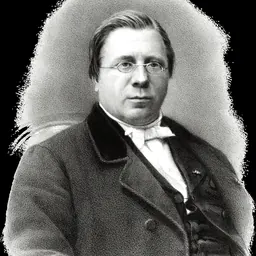
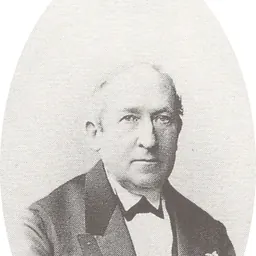
Images of Dreyfus from different time periods
Don’t just read it —
keep it.
Full-length biographies made to live with: read them, listen on the way to work, watch them tonight.
- E-book
- Audio
- Video
Instant download · yours to keep · every purchase keeps this site free
Important facts
Family & relationships
People in Alfred Dreyfus's life
Named in this biography and alive at the same time
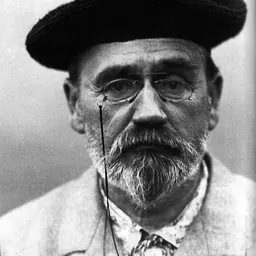
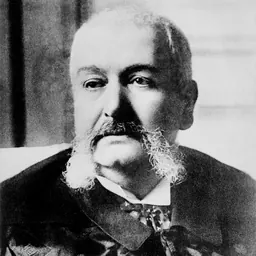



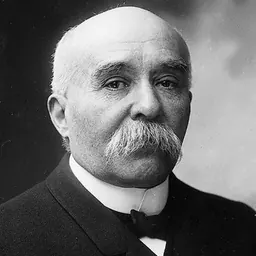
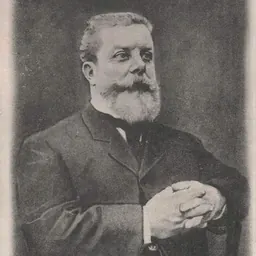
Related people
Same field, nearest in time

Contemporaries
People whose lives overlapped Alfred Dreyfus's


Frequently asked questions
Who was Alfred Dreyfus?
French artillery officer (1859–1935)
When was Alfred Dreyfus born?
Alfred Dreyfus was born on 9 October 1859 in Mulhouse.
When did Alfred Dreyfus die?
Alfred Dreyfus died on 12 July 1935 in Paris.
What was Alfred Dreyfus's occupation?
Alfred Dreyfus was an army officer and military officer.
What nationality was Alfred Dreyfus?
Alfred Dreyfus was French.
Sources & further reading
Cite this page
APA: Biography.guide. (2026). Alfred Dreyfus. https://biography.guide/alfred-dreyfus/
MLA: "Alfred Dreyfus." Biography.guide, https://biography.guide/alfred-dreyfus/.
Chicago: "Alfred Dreyfus." Biography.guide. https://biography.guide/alfred-dreyfus/.
Data last updated: 2026-09-20 · Spot an error? Report a correction.
Page generated 2026-09-27 05:27 UTC