
About Stephen D. Lee
Lived 1833 – 1908 (aged 74). Stephen D. Lee was an American army officer and politician.
Stephen Dill Lee (September 22, 1833 – May 28, 1908) was an American officer in the Confederate Army, politician, and first president of Mississippi State University from 1880 to 1899. He served as lieutenant general of the Confederate States Army in the Eastern and Western theaters of the American Civil War.
Early life and education Stephen Dill Lee was born in Charleston, South Carolina on September 22, 1833, the son of Thomas Lee and his wife Caroline Allison. Lee was raised in Abbeville, South Carolina. He possibly volunteered for service with the United States Army during the Mexican–American War. Lee entered the United States Military Academy in 1850, graduating four years later the 17th out of 46 cadets.
On July 1, 1854, Lee was commissioned a second lieutenant in the 4th Infantry Regiment. Lee was promoted to first lieutenant on October 31, 1856. He served as the regiment's quartermaster from September 18, 1857, to February 8, 1861.
American Civil War On March 6, he was assigned as the assistant adjutant general and assistant inspector general of the Forces at Charleston. On March 16, he was appointed a captain in the Regular Confederate States Artillery. Beginning on April 11, Lee was aide-de-camp to Brig. Gen. P. G. T. Beauregard.
When Beauregard received permission to organize two regular artillery companies on May 11, Lee was assigned to command one; the other went to Capt. Charles Sidney Winder. Lee's company was assigned to Castle Pinckney until May 30, when it was sent to Fort Palmetto on Cole's Island, arriving June 1.
In June 1861, Lee resumed his position in the South Carolina Militia, and then in November, he was promoted to the rank of major in the Confederate Army. He briefly served in the 4th Virginia Cavalry in July, was promoted to colonel on July 9, and assumed command of an artillery battalion of Maj. Gen. James Longstreet's Corps that same month. The following is a summary of Lee's involvement at Sharpsburg:
On November 6, 1862, Lee was promoted to the rank of brigadier general. Leaving the artillery branch, Lee briefly led an infantry division during the Battle of Chickasaw Bayou from December 26–29, where he repulsed the attacks of U.S. Maj. Gen. William Tecumseh Sherman. Beginning in January 1863, he led a brigade in the Department of Mississippi & Eastern Louisiana until that May when he was ordered to take command of Lt. Gen. John C. Pemberton's artillery defending access to the Mississippi River at Vicksburg, Mississippi. Lee fought notably during the Battle of Champion Hill on May 16, where he was wounded in the shoulder. Beginning on August 16, Lee was assigned to command the Department of Mississippi & Eastern Louisiana cavalry, and he was officially exchanged on October 13. During that time, General Joseph E. Johnston sent Lee's small cavalry force of 2,500 men to Tennessee to reinforce General Braxton Bragg, who was beginning to lay siege to Chattanooga. Lee rode from northern Mississippi into northern Alabama, where he met Confederate cavalry commander Joseph Wheeler who had just conducted a raid through central Tennessee and convinced Lee his plans would be hopeless against the great number of U.S. soldiers in the region.
Lee was then given command of the Department of Alabama & East Louisiana on May 9, 1864. On July 26 he was assigned to lead the Second Corps, Army of Tennessee, commanded by John Bell Hood. During the Atlanta campaign, Lee fought at the Battle of Ezra Church on July 28 and was in command of the extended line in southwest Atlanta in August 1864. His troops, with the attachment of William B. Bate's Division and a Brigade of Georgia militia, defeated Schofield's movement to break the railroad lines at East Point at the Battle of Utoy Creek. For this action, he published a general order recognizing Bate's Division for defeating the attack of the combined U.S. XXIII Corps and XIV Corps. He also commanded his corps at the Battle of Jonesborough on August 31 and September 1. Lee fought in the Franklin-Nashville Campaign and was severely wounded in the foot at the Battle of Spring Hill on November 29, but did not give up the command until an organized rearguard took over the post of danger. He then participated in the Battle of Franklin on November 30. Lee's men arrived at Franklin at 4:00 pm with orders from Hood to support Benjamin F. Cheatham's force if necessary. Meeting with Cheatham, Lee decided the situation was dire and attacked at 9:00 pm, taking serious losses from the U.S. position and Confederate artillery. Following the campaign's Battle of Nashville on December 15–16, Lee kept his troops closed up and well in hand despite the general rout of the rest of the Confederate forces. For three consecutive days, they would form the fighting rearguard of the otherwise disintegrated Army of Tennessee. Lee was wounded in the foot by shell fragments on December 17. When the remnants of Johnston's Army of Tennessee was reorganized in early 1865, Lee was left without a command matching his rank, and his commission as a lieutenant general was canceled on February 23; however, on March 23 he was appointed a "temporary" lieutenant general. Lee surrendered at that rank with Johnston's forces in April and was paroled on May 1. The official constitutional record of the 1890 convention reads that "It is the manifest intention of this Convention to secure to the State of Mississippi 'white supremacy'". In 1895 Lee was the first chairman of the Vicksburg National Park Association and was instrumental in the congressional passage of the law creating the national park in 1899. He also was an active member (and from 1904 commander-in-chief) of the United Confederate Veterans society. On March 2, 1900, Lee was president of the Mississippi Historical Society who, under an act of the state legislature of that date, was given authority to appoint the Mississippi Historical Commission, a forerunner of the state agency to act as custodian of the official records and historical materials of the state. In 1902, Lee became a trustee of the Mississippi Department of Archives and History.
In 1887 Lee wrote an article for the first volume of Battles and Leaders of the Civil War, and published Sherman's Meridian Expedition and Sooy Smith's Raid to West Point in 1880. Lee died in 1908 in Vicksburg, Mississippi, and was buried in Friendship Cemetery located in Columbus.
Legacy
Statue of Lee by H.H. Kitson at Vicksburg National Military Park
Based on Lee's familiarity with the three major arms of a Civil War-era army, military historian Ezra J. Warner summarized him as an able and versatile corps commander, writing: "Despite his youth and comparative lack of experience, Lee's prior close acquaintanceship with all three branches of the serviceartillery, cavalry, and infantryrendered him one of the most capable corps commanders in the army." He was entered into the Mississippi Hall of Fame.
Lee is also memorialized with a statue by Henry Hudson Kitson in the Vicksburg National Military Park dedicated in 1909, as well busts in the center of the Drill Field at Mississippi State University and Friendship Cemetery in Columbus. Lee Hall at Mississippi State University is also named in his honor. Some colleagues have called him 'the father of industrial education in the South'. The Lt. Gen. Stephen D. Lee Camp No. 545 of the Sons of Confederate Veterans in Vicksburg, the Stephen D. Lee's Caledonia Rifles Camp No. 2140 in Caledonia and the Captain Stephen D. Lee Chapter No. 301 of the Military Order of the Stars and Bars in Charleston, SC were named in his honor.
On April 25, 1906, in a speech given in New Orleans, Louisiana, Lee gave the following charge to the Sons of Confederate Veterans:
To you, Sons of Confederate Veterans, we will commit the vindication of the cause for which we fought. To your strength will be given the defense of the Confederate soldier's good name, the guardianship of his history, the emulation of his virtues, the perpetuation of those principles which he loved and which you love also, and those ideals which made him glorious and which you also cherish. Lee advocated for white women's suffrage in Mississippi, but historians argue that this was mostly to ensure the continuation of white domination of the vote. Hattaway quotes Lee on this issue: "We must retain our representation in Congress and the electoral college. We either submit to negro rule, adopt the shotgun policy or change our franchise laws." Elsewhere, Lee is recorded as stating, "Let us not fool ourselves. We know that the negro appreciates, and is proud of, his right to vote. He will undertake more trouble, and go further, to exercise this privilege than the white man". Believing that the U.S. Congress would insist on the right of black citizens to vote, Lee's solution was not to outright deny the black male citizen the vote – although he did also promote the Jim Crow laws of the 1890 convention instead he sought to ensure that the white citizens would always outvote the black citizens of the South by granting the taxpaying white women the right to vote as well.
Don’t just read it —
keep it.
Full-length biographies made to live with: read them, listen on the way to work, watch them tonight.
- E-book
- Audio
- Video
Instant download · yours to keep · every purchase keeps this site free
Important facts
People in Stephen D. Lee's life
Named in this biography and alive at the same time

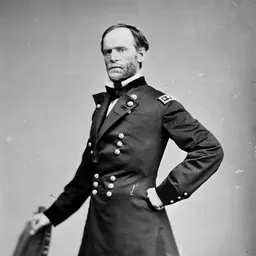

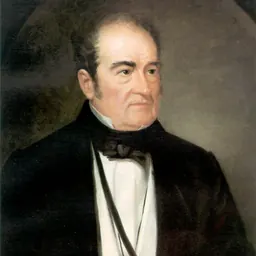
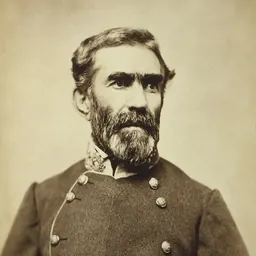
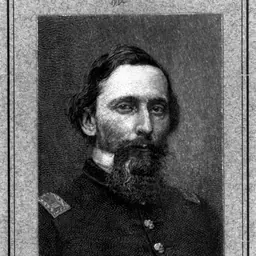
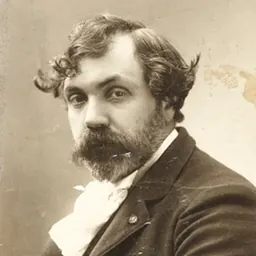
Related people
Same field, nearest in time

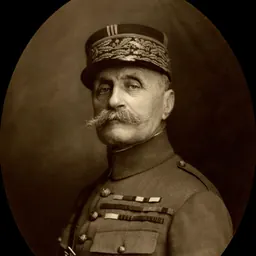
Contemporaries
People whose lives overlapped Stephen D. Lee's

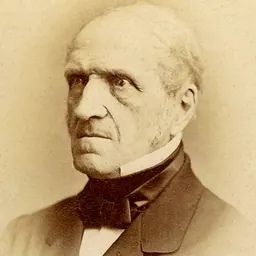


Frequently asked questions
Who was Stephen D. Lee?
Confederate general (1833-1908)
When was Stephen D. Lee born?
Stephen D. Lee was born on 22 September 1833 in Charleston.
When did Stephen D. Lee die?
Stephen D. Lee died on 28 May 1908 in Vicksburg.
What was Stephen D. Lee's occupation?
Stephen D. Lee was an army officer and politician.
What nationality was Stephen D. Lee?
Stephen D. Lee was American.
Sources & further reading
Cite this page
APA: Biography.guide. (2026). Stephen D. Lee. https://biography.guide/stephen-d-lee/
MLA: "Stephen D. Lee." Biography.guide, https://biography.guide/stephen-d-lee/.
Chicago: "Stephen D. Lee." Biography.guide. https://biography.guide/stephen-d-lee/.
Data last updated: 2026-09-27 · Spot an error? Report a correction.
Page generated 2026-09-27 05:16 UTC