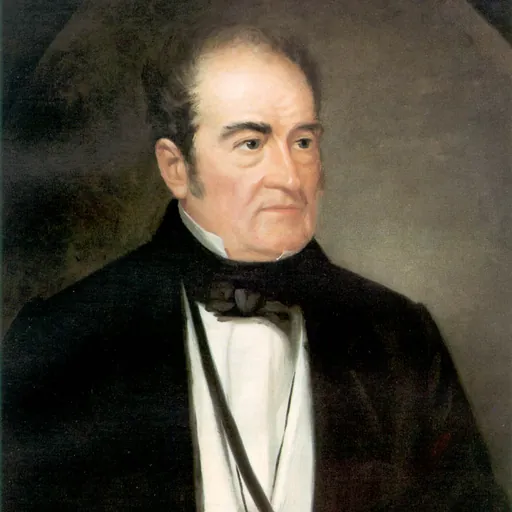
About John Bell
Lived 1796 – 1869 (aged 73). John Bell was an American politician and lawyer.
John Bell (February 18, 1796 – September 10, 1869) was an American politician, attorney, and planter who was a candidate for President of the United States in the election of 1860.
One of Tennessee's most prominent antebellum politicians, Bell served in the House of Representatives from 1827 to 1841, and in the Senate from 1847 to 1859. He was Speaker of the House for the 23rd Congress (1834–1835), and briefly served as Secretary of War during the administration of William Henry Harrison (1841). In 1860, he ran for president as the candidate of the Constitutional Union Party, a third party which took a neutral stance on the issue of slavery. He consistently battled Jackson's allies, namely James K. Polk, over issues such as the national bank and the election spoils system. Following the death of Hugh Lawson White in 1840, Bell became the acknowledged leader of Tennessee's Whigs. Bell was one of the few Southern politicians to oppose the expansion of slavery to the territories in the 1850s, and he campaigned vigorously against secession in the years leading up to the American Civil War. He graduated from Cumberland College (later renamed the University of Nashville) in 1814 and studied law. He was admitted to the bar in 1816 and established a prosperous practice in Franklin.
The division between Northern and Southern Whigs over the Kansas-Nebraska Act doomed the party, with Northern Whigs shifting to the new Republican Party. In early September 1856, he was selected to be a delegate to the 1856 National Whig Convention. The convention nominated former president Millard Fillmore, who had already been nominated by the American Party, or "Know Nothings". While he campaigned for Know Nothing candidates, Bell did not endorse many of the party's more controversial positions, such as its anti-Catholic stance. Bell was the only presidential candidate on the 1860 presidential election ballot that hailed from a future Confederate state.
While Bell had supporters throughout the Northern states and the border states, most of his Northern allies had thrown their support behind Republican candidate Abraham Lincoln or Northern Democratic candidate Stephen A. Douglas. He had little support south of the border states, where Southern Democratic candidate John C. Breckinridge was the clear frontrunner. Southern Democratic newspapers slammed him as a friend of abolitionists and Republicans. The Nashville Union, referring to the Constitutional Union Party's noncommitted platform, derided Bell as "Nobody's man," who "stands on nobody's platform." and by Douglas in Missouri, and lost badly in Delaware, Florida, Alabama, Mississippi, Arkansas, and Texas. While Bell received less than 3% of the popular vote cast in Northern states, several of his electors were on fusion tickets with Douglas and Breckinridge electors, so this figure may not be representative of his actual support. Following the speech, he walked across the street to the law office of long-time Whig attorney Oliver Perry Temple, where Temple and several other pro-Union leaders had gathered. Among them were Brownlow, Perez Dickinson, and William Rule. Temple later recalled:Mr. Bell said, in a half-sad and half-complaining tone: "I see that none of my old friends were over to hear me speak." "No," said Mr. Brownlow, "we were not present, and did not intend being. We did not wish to witness the spectacle of your being surrounded by your enemies, who a few months ago were denouncing you as a traitor. We did not wish to hear these men shouting for you and see you in such a position." Mr. Brownlow then poured forth a torrent of abuse and denunciation of secession. Mr. Bell made no attempt to defend them, nor indeed to defend his own course. Temple surmised that Bell's decision to support the Confederacy was driven by panic, for "there was not a drop of disloyal blood in his veins."
After Tennessee seceded on June 8, Bell retired from public life, though his sons and sons-in-law actively supported the Confederate cause. When the Union Army occupied Tennessee in 1862, Bell fled to Huntsville, Alabama, and later to Georgia. After the war, he moved to Stewart County, Tennessee, where he managed his family-owned ironworks. He died at his home near Dover, Tennessee in 1869, and he is buried in Mount Olivet Cemetery in Nashville.
Family Bell married his first wife, Sally Dickinson, in 1818. They had five children (Mary, John, David, Fanny, and Sally) before she died in 1832. Sally Dickinson was the sister of Congressman David W. Dickinson, the granddaughter of Hardy Murfree, and the aunt of author Mary Noailles Murfree. In 1835, Bell married Jane Erwin Yeatman, a prominent socialite and widow of wealthy businessman Thomas Yeatman.
Confederate Congressman Edwin Augustus Keeble (1807–1868) was a son-in-law of Bell's, being married to his daughter, Sally. Bell's great-grandson, also named Edwin A. Keeble, was a prominent Nashville-area architect, his best known design being the city's first skyscraper, the Life & Casualty Tower.
Don’t just read it —
keep it.
Full-length biographies made to live with: read them, listen on the way to work, watch them tonight.
- E-book
- Audio
- Video
Instant download · yours to keep · every purchase keeps this site free
Important facts
People in John Bell's life
Named in this biography and alive at the same time


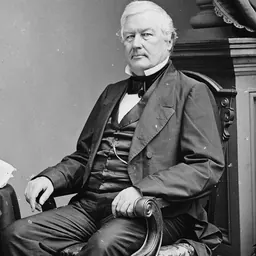
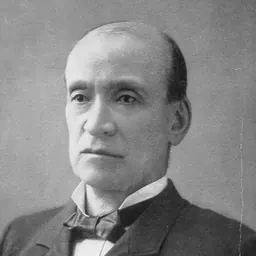
Related people
Same field, nearest in time


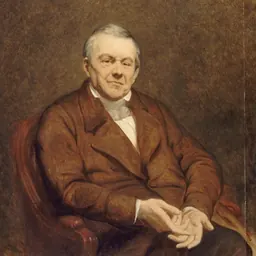


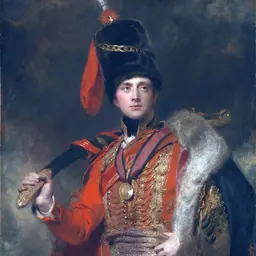
Contemporaries
People whose lives overlapped John Bell's






Frequently asked questions
Who was John Bell?
American lawyer and politician (1796–1869)
When was John Bell born?
John Bell was born on 18 February 1796 in Nashville.
When did John Bell die?
John Bell died on 10 September 1869 in Stewart County.
What was John Bell's occupation?
John Bell was a politician and lawyer.
What nationality was John Bell?
John Bell was American.
Sources & further reading
· DBpedia: John Bell (Tennessee politician)
Cite this page
APA: Biography.guide. (2026). John Bell. https://biography.guide/john-bell-politician/
MLA: "John Bell." Biography.guide, https://biography.guide/john-bell-politician/.
Chicago: "John Bell." Biography.guide. https://biography.guide/john-bell-politician/.
Data last updated: 2026-09-22 · Spot an error? Report a correction.
Portrait: Wikimedia Commons · author & licence
Page generated 2026-09-27 05:02 UTC