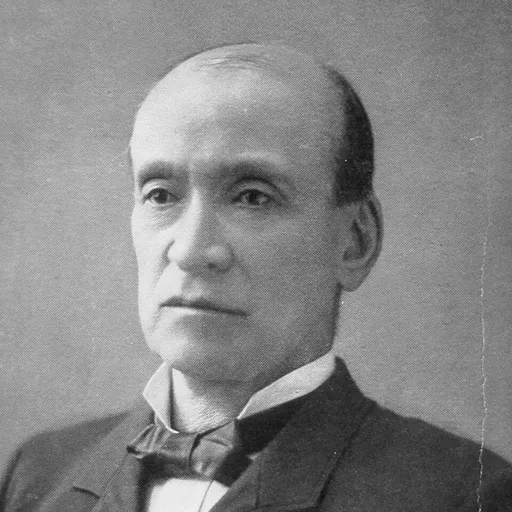
About Oliver Perry Temple
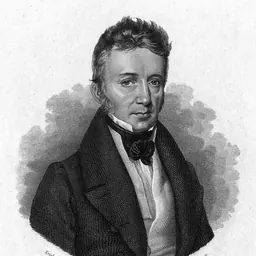
Lived 1820 – 1907 (aged 87). Oliver Perry Temple was an American lawyer, historian, judge and businessperson.
Early life Temple was born near Greeneville, Tennessee, to James and Mary (Craig) Temple, and was raised on his father's large farm. As a teenager, he was fond of debating, and would walk miles to participate in debate societies at country schools. At age 16, he enrolled in the fledgling Greeneville College, but quit in 1838 to march with the state militia to suppress a Cherokee uprising.
While serving with the militia, Temple was inspired to study law after reading An Essay Concerning Human Understanding by English philosopher John Locke. He attended Tusculum College from 1838 to 1841, and attended Washington College from 1841 to 1844. At the latter, he was a classmate and mentor of future North Carolina governor Zebulon Vance. On election day, Johnson narrowly prevailed, 5,758 votes to 5,342.
In 1848, Temple moved to Knoxville, Tennessee, where he established a law partnership with William H. Sneed. Within a few weeks, he returned, however, after promising the city's Confederate leaders he would remain neutral during the conflict.
Later life
After the war, Temple quickly formed a new law firm with Samuel A. Rogers and James Deaderick. In 1866, he was appointed chancellor of Tennessee's Eighth Chancery District, succeeding Samuel R. Rodgers, who had died. In 1870, he was moved to the Second Chancery District, where he served as chancellor until 1878. He lost much of his fortune during the Panic of 1873, however. Temple believed in a diversified economy that was based on both agriculture and industry. He gave numerous lectures extolling East Tennessee's climate and natural resources during this period.
In the late 1870s and early 1880s, Temple provided legal, agricultural, and promotional assistance to the Rugby Colony, then being developed on the Cumberland Plateau.
Temple retired from the legal profession in 1880, In 1893, he wrote a sketch of Tennessee governor John Sevier to mark the occasion of the reinterment of Sevier on the lawn of the Knox County Courthouse. In 1897, he published The Covenanter, The Cavalier, and The Puritan, which discusses the origins and contributions of the Scotch-Irish (Temple uses the broader term "Covenanter") in American history.
East Tennessee and the Civil War
In 1899, Temple published his Civil War memoir, East Tennessee and the Civil War, the purpose of which was to vindicate the actions of East Tennessee's Unionists, many of whom were considered traitors by fellow Southerners. Like his contemporary, Thomas William Humes, Temple traces the origins of East Tennessee's Unionist sentiments to Revolutionary War patriotism, but goes a step further, arguing this sentiment was rooted in the early influence of Scotch-Irish Covenanter settlers, who were devout and independent, and zealously committed to religious and political liberty.
Temple rejected secession as unconstitutional, arguing that the Founders clearly envisioned a perpetual Union. He argued that revolt was only acceptable to overthrow an unjust government, and endeavored to show that not only had the federal government gone to great pains to appease Southern slaveowners, but had been favorable to Southern interests throughout much of the nation's history. Temple suggested that the secession movement had little to do with slavery or states' rights, but was driven instead by Southern elites more concerned with personal ambitions. He went so far as to suggest that most Southerners opposed secession in 1860, and that votes in favor of secession were the result of intimidation, fraud, and temporary panic.
Temple's book contains detailed accounts of several key events of Civil War-era East Tennessee, many of which he personally witnessed. He provides one of the more extensive descriptions of the East Tennessee bridge-burnings, having gone to great pains to identify and correspond with members of the conspiracy. He also provides an invaluable account of the East Tennessee Convention, of which he had been an integral member, having provided the draft for the convention's final resolutions.
Death and legacy
Temple fell seriously ill in 1904, and never fully recovered. He died on November 2, 1907, and was buried in Knoxville's Old Gray Cemetery. A large obelisk marks the Temple family plot.
Temple married Scotia Caledonia Hume in 1851. Their only child, Mary Boyce Temple (1856–1929), compiled and published Notable Men of Tennessee, a collection of biographies her father had written about various Civil War-era figures. She was also a founding member of Knoxville's Ossoli Circle, and campaigned for women's suffrage in the early 20th century. Temple was of Scottish and English descent, and his mansion, Melrose, was named for Melrose, Scotland, the home of his wife's parents.
Temple was a trustee of the University of Tennessee for over a half-century, from 1854 until his death in 1907. He helped establish the school's College of Agriculture, and was a key advisor to President Charles Dabney. Hess Hall, on the university's campus, now stands where his Melrose mansion once stood.
Don’t just read it —
keep it.
Full-length biographies made to live with: read them, listen on the way to work, watch them tonight.
- E-book
- Audio
- Video
Instant download · yours to keep · every purchase keeps this site free
Important facts
Family & relationships
People in Oliver Perry Temple's life
Named in this biography and alive at the same time

Related people
Same field, nearest in time




Contemporaries
People whose lives overlapped Oliver Perry Temple's



Frequently asked questions
Who was Oliver Perry Temple?
American attorney (1820-1907)
When was Oliver Perry Temple born?
Oliver Perry Temple was born on 27 January 1820 in Greene County.
When did Oliver Perry Temple die?
Oliver Perry Temple died on 2 November 1907 in Knoxville.
What was Oliver Perry Temple's occupation?
Oliver Perry Temple was a lawyer, historian, judge and businessperson.
What nationality was Oliver Perry Temple?
Oliver Perry Temple was American.
Sources & further reading
· Wikipedia: Oliver Perry Temple
· DBpedia: Oliver Perry Temple
Cite this page
APA: Biography.guide. (2026). Oliver Perry Temple. https://biography.guide/oliver-perry-temple/
MLA: "Oliver Perry Temple." Biography.guide, https://biography.guide/oliver-perry-temple/.
Chicago: "Oliver Perry Temple." Biography.guide. https://biography.guide/oliver-perry-temple/.
Data last updated: 2026-09-22 · Spot an error? Report a correction.
Portrait: Wikimedia Commons · author & licence
Page generated 2026-09-27 04:59 UTC