
George Stringer Bull
Church of England clergyman and social reformer
About George Stringer Bull
Lived 1799 – 1865 (aged 66). George Stringer Bull was a British missionary, anglican priest and abolitionist.
George Stringer Bull (1799–1865) was an English missionary and cleric, a social and industrial reformer in the Bradford area.
Early life He was the sixth son of the Rev. John Bull (1767–1834) and his wife Margaret Towndrow, born at Stanway in Essex. Having served in the Royal Navy, he went for the Church Missionary Society to Sierra Leone in 1818, working there as a teacher. He was principal of the Christian Institution of Sierra Leone of the Society, near Freetown. Sir Charles MacCarthy had recently required that it act as a College. Bull had around 20 African students there. The College migrated in 1820, from Leicester Mountain to Regent's Town.
Bull returned to England in 1820 for health reasons. He was ordained deacon in the Church of England in 1823 by George Henry Law, taking a position at Hessle in the East Riding of Yorkshire. The following year he was ordained priest, by Edward Venables-Vernon-Harcourt. In 1825 he became curate at Hanging Heaton; and in 1826 he took the position of perpetual curate at Bierley Chapel, then just outside Bradford.
At Bradford Bull was an abolitionist and temperance campaigner. He also became involved with factory reform movement of the 1830s, as an ally of John Wood. He pursued the vigorous and attention-seeking tactics of Richard Oastler and the Member of Parliament Michael Thomas Sadler, becoming noted as the "Ten Hours Parson".
It was Bull that contacted Lord Ashley in 1833 about parliamentary moves for industrial legislation. Meeting Ashley – later the 7th Earl of Shaftesbury – in February, Bull pressed him to propose a ten-hours bill rapidly, since otherwise Lord Morpeth would propose a pre-emptive eleven-hours bill. Ashley's bill failed, and the Ten Hours Act would take another 14 years.
The impatient Oastler suggested machine-breaking to a Bradford meeting, after another reverse, in 1836, with Charles Hindley unable to revive the bill. Bull strongly disapproved, and Ashley broke off relations with Oastler.
Bull was a vociferous opponent of the Poor Law Amendment Act 1834. In testimony to parliament, he stated that birth control was prevalent in female factory workers; he put it down to the influence of a visit by Richard Carlile. As a clerical social critic, he has been classed with Patrick Brewster, William Hill (1806–1867) the Swedenborgian editor of the Northern Star, and Rayner Stephens. A Tory reformer, Bull also opposed the Chartists. While Bull and other Factor Movement leaders saw that Robert Owen was on their side of the argument, they regarded his approach as impractical.
At Bierley Chapel, Bull persuaded Frances Currer, the patron, to build a house. He set up two local schools, one in Bowling township, and one in Sticken Lane; and he expanded the chapel seating. The bone of contention between Wood and Scoresby was surplice fees. Bull departed in September 1840. The Bowling school, for Wood's factory, ran from 1832 to c.1846 superintended by Matthew Balme, and was visited by Lord Ashley in 1844; and the Sticken Lane school was still running in the 1850s.
Later life Bull moved to the Birmingham area, and was appointed to the new St Matthew's Church, Duddeston and Nechells as perpetual curate. In 1847 he became rector of St Thomas' Church, Birmingham, with its populous parish. The Church her Own Enemy (1834) Richard Oastler: A Sermon preached in St. James Church, Bradford (1861)
Don’t just read it —
keep it.
Full-length biographies made to live with: read them, listen on the way to work, watch them tonight.
- E-book
- Audio
- Video
Instant download · yours to keep · every purchase keeps this site free
Important facts
People in George Stringer Bull's life
Named in this biography and alive at the same time
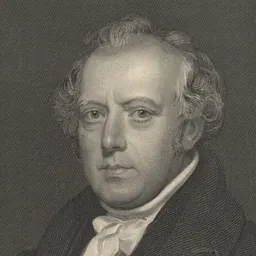
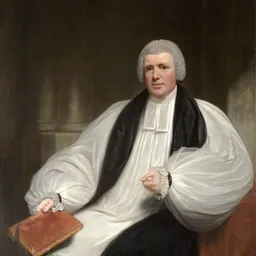
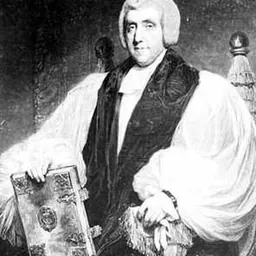
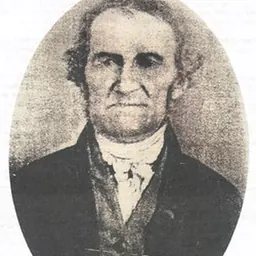
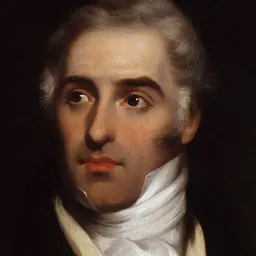
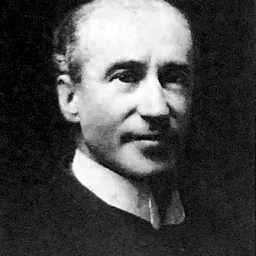
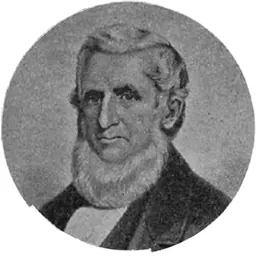
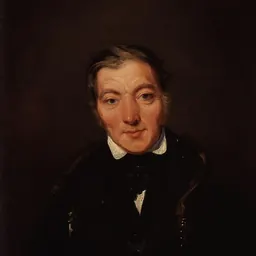
Related people
Same field, nearest in time



Contemporaries
People whose lives overlapped George Stringer Bull's





Frequently asked questions
Who was George Stringer Bull?
Church of England clergyman and social reformer
When was George Stringer Bull born?
George Stringer Bull was born on 17 January 1799.
When did George Stringer Bull die?
George Stringer Bull died on 17 January 1865.
What was George Stringer Bull's occupation?
George Stringer Bull was a missionary, anglican priest and abolitionist.
What nationality was George Stringer Bull?
George Stringer Bull was British.
Sources & further reading
· Wikipedia: George Stringer Bull
· DBpedia: George Stringer Bull
Cite this page
APA: Biography.guide. (2026). George Stringer Bull. https://biography.guide/george-stringer-bull/
MLA: "George Stringer Bull." Biography.guide, https://biography.guide/george-stringer-bull/.
Chicago: "George Stringer Bull." Biography.guide. https://biography.guide/george-stringer-bull/.
Data last updated: 2026-09-20 · Spot an error? Report a correction.
Page generated 2026-09-27 05:30 UTC