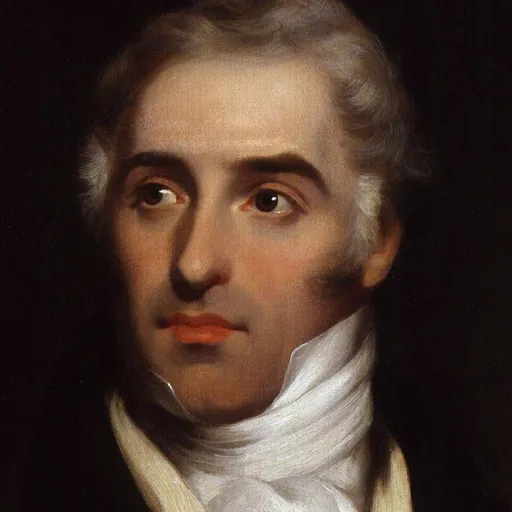
About Michael Thomas Sadler
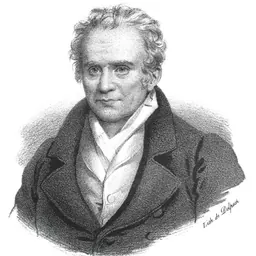
Lived 1780 – 1835 (aged 55). Michael Thomas Sadler was a British politician and economist.
Michael Thomas Sadler (3 January 1780 – 29 July 1835) was a British Tory Member of Parliament (MP) whose Evangelical Anglicanism and prior experience as a Poor Law administrator in Leeds led him to oppose Malthusian theories of population and their use to decry state provision for the poor.
Overview Michael Sadler entered the British House of Commons at the behest of the 4th Duke of Newcastle, returned by the pocket borough of Newark as an 'Ultra' opponent of Catholic emancipation, but he devoted much effort in Parliament to urging the extension of the Poor Law to Ireland. In 1832, in the last session of the unreformed House of Commons he brought forward a Bill to regulate the minimum age and maximum working hours of children (no more than ten hours for persons under eighteen) in the textile industry. He chaired a Select Committee on the Bill which heard evidence from witnesses on overwork and ill-treatment of factory children. No legislation had resulted before the Reform Act passed and in the election which followed Sadler stood for Leeds but failed to be elected. Parliamentary leadership of the factory reform movement passed to Lord Ashley. Publication of the evidence gathered by Sadler's Select Committee had a considerable effect on public opinion: the effect of Sadler's Bill and Committee on the Whig government was to persuade them that new factory legislation was required but that this should be based upon evidence gathered on a sounder basis. When he died, contemporaries mentioned his work on Ireland, population, and poverty as well as his ten-hour bill, but only the latter is now remembered.
Early life Michael Sadler was born in Snelston, Derbyshire, on 3 January 1780, the son of James Sadler a minor local squire; according to tradition his family came from Warwickshire and was descended from Sir Ralph Sadler. He was educated at home; when newly elected an MP he was said to have a 'rather broad' Yorkshire accent. In 1800 on the death of his mother he moved to Leeds to work with an elder brother (Benjamin); his father died soon afterwards. and went into partnership with the widow of an importer of Irish linen (in 1816 he married her eldest daughter A correspondent in the Leeds Intelligencer confirmed that Benjamin Sadler (now an Anglican Alderman and J.P.) had once been a Methodist circuit-steward and Michael had regularly gone to chapel with him, but denied that Michael had ever been a Methodist. Driver
His interests lay largely outside business; he became a member of Leeds Corporation (soon after his marriage), (or – from the Methodist perspective – soon after he stopped going to chapel.) New members of the Corporation were elected by the existing members; although they could in principle elect any (adult male) resident of Leeds their choice fell on residents who were invariably Anglican and usually Tory Sadler was associated with it even when an MP – there was no equivalent Anglican sick-visiting society in Leeds until 1833. 'Sick and destitute' includes those suffering from typhus: He became active in politics; a supporter of the Tories and strongly opposed to Catholic Emancipation. In 1817, he wrote a pamphlet First Letter to a Reformer countering the argument of a recent MP for Yorkshire that corruption and the power of the Crown were increasing and should be decreased, and that this showed the necessity for Parliamentary reform. ) of the Leeds Literary and Philosophical Society, and in 1825 delivered there a course of lectures on the Poor Laws. He disagreed strongly with the orthodox authorities of the age on economics and poverty such as David Ricardo and Thomas Malthus, believing that their views tended to a destruction of traditional society. As for his own views on these topics, he told a political dinner in 1826 " I .. simply sum them up in these terms, namely : – To extend the utmost possible degree of human happiness to the greatest possible number of human beings. To do this, seems to me to require far less of art than of benevolence; our duties are sufficiently plain, and fortunately for mankind, duty and interest are at length always found inseparably connected." In 1829 one of Newark's MPs was General Sir William Henry Clinton GCB, a kinsman of the Duke of Newcastle. He held a minor post (Lieutenant-General of the Ordnance) under the Duke of Wellington, whom he had served under in the Peninsula. Wellington had formed a government from the opponents of Catholic Emancipation, but by 1829 the state of Ireland was such that – despite his previous strong opposition to Catholic Emancipation – Robert Peel, the leading MP in the government became convinced that granting it was the only safe way to defuse the situation. Wellington's government therefore brought in a Catholic Relief Bill. Since Clinton felt unable to vote against this Bill, and Newcastle was strongly opposed to it, Clinton offered to resign as MP for Newark. (It has been suggested that Clinton, who repeatedly lobbied Wellington for a peerage, hoped to retain his position in government, but now with a seat in the House of Lords.) In the event he lost the government post, and never got a peerage. Sir, the Protestant cause has long been identified with that of the British nation. May they never be separated ! But we are firmly convinced, that to concede to its grand adversary the power it seeks to recover, to resign that influence which it would infalllibly exert, would be to dilapidate the venerable fabric of that happy constitution erected by the wisdom and cemented by the blood of our ancestors; would shake the very pillars on which the Protestant throne of these realms is founded; would invalidate the title of the present Protestant royal family; would threaten the existence of the Protestant establishment; would change many of our laws and subvert many of our sacred institutions; would extinguish the very spirit of the glorious revolution of 1688, and pour contempt on those great characters, who, under divine providence, brought about that happy event; and in fine, would, in the present state of political parties, deliver up the country to Roman Catholic ascendancy. In the by-election following Clinton's resignation, Sadler campaigned against Catholic Emancipation, but his Blue opponent campaigned against Newcastle's electoral tyranny as evidenced by Sadler being imposed on the borough without consultation: the candidate (or rather the selection process) had become the issue. Sadler was elected with a majority of 214, but at the General Election of 1830 was ahead of the Blue candidate by only 94 votes, the Blue cause having gained adherents and the Yellows having become less keen to enforce support of the Red candidate.
In parliament
Catholic relief Sadler's first major speech in the House of Commons was against the Second Reading of the Catholic Relief Bill. The speech was well received, but it was rapidly concluded that Sadler could never expect a government post under George IV was less successful an opponent describing his performance as the most perfect specimen of a canting Methodist I ever saw.
Irish Poor Laws He took up in Parliament the argument he had already made outside it that the English Poor Law system should be extended to Ireland (which at that point had no Poor Laws), presenting a petition in 1829 and the next year making a long speech in favour on his own motion, which he then withdrew; it being clear from the debate that his motion would be defeated: he also had declined to give evidence to it. In a speech in Leeds in 1831 he described the introduction of Irish Poor Laws as "not a measure of politics, but a measure of justice, policy and mercy" It lies at the very foundation of all civil institutions that where property is appropriated there should be a reservation for those who are left without provision when their labour is no longer demanded, when sickness assails them, and when calamity overtakes them. Whoever the authority might be, you will find that these rights of human nature are clearly recognised, and it is not denied by any jurist in the world that every human being whom the Providence of God has placed upon earth has a claim to sustenation and relief when his honest labour will no longer afford him the necessities of life the resolution was defeated 52–64, a margin so narrow as to be regarded as a moral victory, making it virtually inevitable that the Government would have to act. Reporting his final illness in 1835, the Yorkshire Gazette described him as "this philanthropic gentleman, whose great exertions to ameliorate the condition of the poor of the sister isle will never be forgotten". The Poor Law system was introduced to Ireland in 1838, after Sadler's death, but this was based not upon the Elizabethan Poor Law system which Sadler knew, but upon the 'New Poor Law' of 1834.
Work on population His argument for a Poor Law supporting the poor ran entirely contrary to the advice of orthodox political economists of the day, who held with Malthus;
Since population increased by geometrical progression whilst production increased by arithmetical progression, population was only held in check by the want and distress of the poor; hence to relieve that want and distress whether by charity or by the poor-rates was (however kind-hearted) wrong-headed since it would artificially sustain a greater number of the poor (and hence increase the number of those in distress).
Sadler scrutinised Malthus's An Essay on the Principle of Population and became convinced that the statistics it quoted in support were unsound (or where sound mis-used). was neither daunted nor impressed, beginning his review We did not expect a good book from Mr Sadler; and it is well that we did not; for he has given us a very bad one. The matter of his treatise is extraordinary; the manner more extraordinary still. His arrangement is confused, his repetitions endless, his style every thing which it ought not to be. Instead of saying what he has to say with the perspicuity, the precision, and the simplicity in which consists the eloquence proper to scientific writing, he indulges without measure in vague, bombastic declamation, made up of those fine things which boys of fifteen admire, and which every body, who is not destined to be a boy all his life, weeds vigorously out of his compositions after five-and-twenty.
Defence of his patron Newcastle's intimidatory power in Newark was strengthened by his holding (on -it was alleged – advantageous terms) the lease of Crown lands in the neighbourhood; the leases had come into his family by being granted by a previous Duke of Newcastle (when Prime Minister) to a close relative. A public meeting was held in Newark against these leases: Newcastle responded to an invitation to the meeting in a letter in which he asked "Is it presumed, then, that I am not to do what I will with my own ?". but it did not take too much ill-will to take him to mean his tenants' votes; and the phrase was widely quoted on that basis. In a Commons debate on the Crown leases Sadler spoke in defence of his patron, effusively and not entirely accurately. John Cam Hobhouse claimed that Sadler had admitted in his speech that he owed his return for Newark to the Duke (it was contrary to the privileges of the House of Commons for a member of the House of Lords to procure the election of an MP); Sadler rapidly denied he had said this, or that it was true.
1831; parliamentary reform The Catholic Relief Bill duly passed, but the Tory Ultras (those – such as Sadler – irreconcilably opposed to Catholic Relief) withdrew their support from the Wellington administration, which then fell. Their Whig opponents came to power, committed to Parliamentary Reform (sweeping away many of the 'rotten boroughs', creating new borough constituencies for unrepresented towns like Manchester and Leeds, and equalising the franchise). The 'Reform Bill' introduced in 1831 in fact consisted of separate Bills for England, for Scotland, and for Ireland. The English Bill went first; it passed its Second Reading, but upon it entering Committee stage, the first amendment to the Bill (a wrecking one, deploring the reduction in the number of English MPs, seconded by Sadler ("Mr Sadler, in seconding the amendment, inflicted upon the house a most discursive speech of three closely printed columns, amid general yawning and coughing") was carried by a majority of 8. The Government then withdrew the Bill and called a General Election. Sadler (having been burnt in effigy at Newark ) was now returned for Aldborough; His main contribution was to (like a few Radicals such as Henry Hunt) deplore the introduction of a uniform qualification for the vote sweeping away much wider "scot & lot" franchises in the few boroughs where they existed. However, where Hunt saw that demerit of Reform as an argument for universal male suffrage (or something not far short), at Second Reading Sadler saw it as an argument against equalisation of electoral qualifications, and for pocket boroughs (because they ensured enough ballast in the Commons to allow a few boroughs with a popular franchise to return MPs who could speak for the lower orders): There were many, however, whose rights were dear and valuable to them, and who did not occupy £10 houses. The valuable exertion was not confined to the £10 householders. The great majority—those who created all the property of the empire, and gave it its value when created, who fought the battles of the country on both elements, and who laid down their lives in its defence, were rarely inhabitants of £10 houses. It was a great objection, in his mind, to the Bill, that whereas, under the existing system, the lowest class of society had Representatives in that House, under the new system they would be entirely deprived of those Representatives. He did not hold nomination to be the purest part of the system, but he held it to be necessary to maintain the balance of the Constitution. In October he moved the First Reading of a Bill to improve the lot of the (agricultural) labouring poor (by Government building respectable cottages with land attached and letting them at an economic rent.) Both sides of the House agreed that in any reformed House of Commons Manchester Birmingham and Leeds should be represented, and in September 1831 Sadler was approached (and agreed) to stand as the Tory candidate for Leeds in the election that would follow passage of the Bill. However, in October 1831 the second Reform Bill was rejected by the Lords; Parliament was prorogued and Sadler's 'labouring poor' Bill lost. Sadler gave advance notice of three further Bills he might wish to bring in in the next session; for the relief of the Irish poor, for bettering the condition of the manufacturing poor, and for regulating the labour of Children in Factories. Attempts to form a Tory government failed, and Parliament reassembled before Christmas, still with a Whig government committed to the early passage of a Reform Bill. Sadler did not revive his 'labouring poor' Bill; instead he announced his intention to bring in a Bill regulating the Labour of Children in Mills and Factories.
1832: The Ten Hour Bill Parliamentary time in 1832 was largely taken up with passage of the third Reform Bill. Sadler's only recorded speech in the Reform Bill debates was a short one on Hunt's amendment for a 'scot-and-lot' franchise "That all householders paying taxes, shall have a vote for the respective Members to be chosen in the next, and every succeeding Parliament.": Sadler supported an even wider 'pot-walloper' franchise ("Every one above the rank of a pauper was entitled to the elective franchise.") (He did not feel this to be inconsistent with previous opposition to Reform.) On his analysis the Reform Bill was based upon a denial of the doctrine of 'virtual representation': that once elected MPs spoke for the interests of all (so it hardly mattered how they were elected). If 'virtual representation' was no longer acceptable to the middle classes, on what basis were the working classes to be denied the vote?
A network of 'Short Time Committees' had grown up in the textile districts of Yorkshire and Lancashire, working for a 'ten-hour day Act ' for children, with many millhands in the Ten Hour Movement hoping that this would in practice also limit the adult working day. Witnesses to one of the Committees taking evidence on Peel's Bill had noted that there were few millworkers over forty, and that they themselves expected to have to stop mill work at that age because of 'the pace of the mill' unless working hours were reduced. Hobhouse advised Richard Oastler, a Yorkshire supporter of Sadler, that Hobhouse had got as much as he could, given the opposition of Scottish flax-spinners and 'the state of public business': if Sadler put forward a Bill matching the aims of the Short Time Committees “he will not be allowed to proceed a single stage with any enactment, and … he will only throw an air of ridicule and extravagance over the whole of this kind of legislation”. Oastler responded that a failure with a Ten Hour Bill would "not dishearten its friends. It will only spur them on to greater exertions, and would undoubtedly lead to certain success "
Sadler's Bill when introduced indeed corresponded closely to the aims of the Short Time Committees. Hobhouse's ban on nightwork up to 21 was retained; no child under nine was to be employed; and the working day for under-eighteens was to be no more than ten hours (eight on Saturday). These restrictions were to apply across all textile industries. The Second Reading debate on Sadler's bill did not take place until 16 March 1832, the Reform Bill having taken precedence over all other legislation. Meanwhile, petitions both for and against the Bill had been presented to the Commons; both Peel and Sir George Strickland had warned that the Bill as it stood was too ambitious: more MPs had spoken for further factory legislation than against, but many supporters wanted the subject to be considered by a Select Committee. Sadler had resisted this "if the present Bill was referred to one, it would not become a law this Session, and the necessity of legislating was so apparent, that he was unwilling to submit to the delay of a Committee, when he considered they could obtain no new evidence on the subject". In his long Second Reading speech, Sadler argued repeatedly that a Committee was unnecessary, but concluded by accepting that he had not convinced the House or the Government of this, and that the Bill would be referred to a Select Committee. (Lord Althorp, responding for the Government, noted that Sadler's speech made a strong case for considering legislation, thought it did little to directly support the details of the Bill; the Government supported the Bill as leading to a Select Committee, but would not in advance pledge support for whatever legislation the Committee might recommend). Sadler attempted (31 July 1832) to progress his Bill without waiting for the committee's report; when this abnormal procedure was objected to by other MPs, he withdrew the Bill. Sadler, as chairman of the committee, reported the minutes of evidence on 8 August 1832, when they were ordered to be printed. Parliament was prorogued shortly afterwards: Sadler gave notice of his intention to reintroduce a Ten-Hour Bill in the next session
Leeds Election 1832 A map of the Parliamentary Borough of Leeds as created in the 1832 Reform Act. At the 1832 election Sadler stood for the newly enfranchised seat of Leeds. His rival candidates were Thomas Babington Macaulay a Whig politician of national standing (as well as a prolific reviewer for the Edinburgh Review) and John Marshall. Marshall's father had been a Leeds linen-draper and had become a millionaire by developing the spinning of flax by machinery, but as a Dissenter (Unitarian) had been excluded from Leeds Corporation (a'close corporation' ) – and hence prevented from becoming a magistrate – by the Anglican Tory circles which the Sadlers had joined. By 1832, the Marshalls were members of the Church of England, and Marshall's father had been Sheriff of Cumberland and MP for Yorkshire. but in 1832 Marshall's Mill in Leeds (although outside the existing Factory Act as it span flax, not cotton) normally worked the 69-hour week specified by the Factory Act; from information given by the younger Marshall at a public meeting in Leeds it voluntarily complied with the age limit as well: of whom – according to Lord John Russell ... Leeds has been regularly canvassed for the purposes of election, by twenty or thirty gentlemen, of respectable station and known character, in that chief seat of our woollen manufacture. The result of their canvass has been, that, in the quarters of the town chiefly inhabited by the working classes, not more than one in every fifty householders will have a vote under the 10l. clause. In the principal streets for shops, almost every male householder will have a vote. In the parts of the town occupied by dwelling houses, the number occupied by females makes a very material deduction from the number of votes. The working classes in Leeds, almost all live in houses of from 5l. to 8l. rent; out of 140 householders, heads of families (including several overlookers) employed in the mill of Messrs. Marshall and Co., not more than two will have votes; out of 160 householders in the mill of Messrs. C. Willans and Sons, Holbeck (including fifteen overlookers) many earning 25s. to 30s. a-week, not one will have a vote; out of 100 householders in the works of Messrs. Taylor and Wordsworth, machine makers, only one, even of this high class of mechanics, will have a vote; out of 11,000 inhabitants of the township of Holbeck, chiefly occupied by the working classes, but also containing mills, dye-houses, public-houses, and some respectable dwellings, there would be only 150 voters. The township of Wortley has nearly 6,000 individuals, and 130 voters. Armley, with 5,000 inhabitants, will have only 150 votes. Upon the whole, the unanimous opinion of the canvassers was, that the 10l. qualification does not admit any person who may not safely be intrusted with the elective franchise... Sadler was escorted to the meeting by a procession organised by the local Short-Time Committee, and all the candidates declared their views on factory legislation. Sadler was for a ten-hour bill; Marshall held that no great injury would come to children working cotton-mill hours in a well-regulated mill, but that it would be well for Parliament to reduce the working week to 65 or 66 hours; it was not necessary to set a 58-hour limit. its report of the following week has nothing on the subject. Equally, if not an issue, it may have been a factor: Richard Oastler later said that Sadler's efforts on behalf of the factory children had "offended some of the Tory party of Leeds" and the contemporary papers give no indication of support for Sadler by the Gotts, leading millowners and prominent supporters of the Tory candidate in the 1834 elections. Sadler's previous speeches and actions meant that there were substantive differences between the candidates on church rates, the Corn Laws and close corporations; these were supplemented by repeated claims by Whig supporters that Sadler's declared views on other issues were not his real views; he pretended to be the friend of the poor so that he could return to being the lackey of the Duke of Newcastle. Macaulay called Sadler 'a convenient philanthropist' and likened him to 'the Hyaena who, when it wishes to decoy the unwary into its den, has a singular knack of imitating the cries of little children . . .'. When the result was declared, Marshall had 2012 votes, and Macaulay 1984; Sadler failed to be elected, trailing badly with 1596 votes
Final years
Fate of the Ten Hour Bill Extracts from 'the report of Mr Sadler's Committee' began to appear in newspapers in January 1833 and painted a picture of the life of a mill-child as one of systematic over-work and systematic brutality. The conclusion many papers drew was that Sadler's Bill should be revived and passed. Lord Ashley, eldest son of the 6th Earl of Shaftesbury, took Sadler's place as the leading spokesman in Parliament for the factory reform movement, A Factory Commission was set up to investigate and report. Sadler and the Short Time Committees objected to any further fact-finding and attempted to obstruct the work of the Commissioners. Ashley's Bill proceeded to a Second Reading in early July 1833 (when the likely main recommendations of the commission were known, but its report was not yet available to MPs); Ashley wanted the Bill to then be considered by a Committee of the whole House and defeated Lord Althorp's amendment to refer the Bill to a Select Committee. However at Committee stage the first point considered where the Bill differed from the commission's was the age up to which hours of work should be limited Ashley lost (heavily) the vote on this, and left it to Althorp to pilot through a Factory Act based upon the commission's recommendations.
Huddersfield by-election 1834 In the autumn of 1834, it became clear that a by-election at Leeds was imminent as Macaulay intended to resign his seat in Parliament. It was widely assumed that Sadler would be the Tory candidate. However, there was an unexpected by-election at Huddersfield. The Whig MP elected in 1832, had been opposed only by a Radical (Captain Wood) : since then Wood had converted to Catholicism and felt (or was advised) that this made it unlikely that he would win the by-election. Wood therefore advised his supporters to invite Sadler to stand as a Tory with Radical support. Whig papers then publicised allegations by John Foster, a former editor of the Leeds Patriot. The Patriot had been a Radical paper supporting the Ten-Hour movement which had been bankrupted by the legal costs of preparing to defend a libel action. Foster said that he had been promised that the Ten-Hour committee would pay all his legal costs and had not done so; that Sadler had promised before the Leeds election to pay a handsome price for the Patriot and reneged on the agreement post-election; that money collected for the Ten-Hour campaign had been misappropriated by Oastler; and that Sadler had been evasive and duplicitous. This mud-slinging aside, there were also underlying policy differences between the Tories and the Radicals (e.g. attitude to the Corn Laws) and the passage of Althorp's Factory Act had for the moment removed the Ten-Hour Bill as a cause behind which they could easily unite. For whichever reason, the Huddersfield Radicals refused to support Sadler (whose campaign was already well under way) and persuaded Wood to stand as their candidate. At the election, Sadler came second with 147 votes, Wood third (108), behind the successful Whig candidate (234 votes).
This was the last election at which he stood: requisitioned to stand at the Leeds by-election, he declined the invitation. He and his family moved in July 1834 to Belfast, where he died in 1835 and was buried in Ballylesson churchyard. There is a Grade II listed statue of Sadler in St George's Fields (the former Woodhouse Cemetery) in Leeds.
Major works Ireland, Its Evils and their Remedies(first published 1828) The Law of Population: A Treatise, in Six Books (first published 1830) Report of the Select Committee on his Factory Regulation Bill, 1832
Minor works A refutation of an article in the Edinburgh Review (1830 : the article was the review by Thomas Babington Macaulay of Sadler's Law of Population) The Factory Girl's Last Day a poem
Don’t just read it —
keep it.
Full-length biographies made to live with: read them, listen on the way to work, watch them tonight.
- E-book
- Audio
- Video
Instant download · yours to keep · every purchase keeps this site free
Important facts
People in Michael Thomas Sadler's life
Named in this biography and alive at the same time


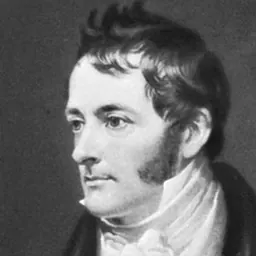


Related people
Same field, nearest in time
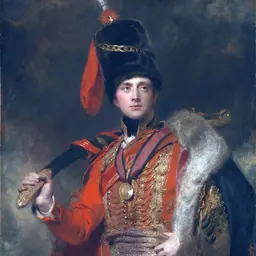


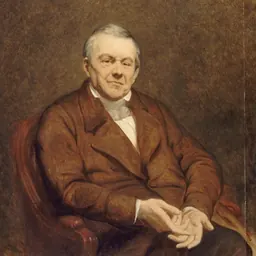

Contemporaries
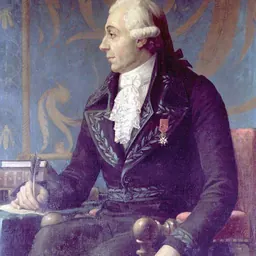
People whose lives overlapped Michael Thomas Sadler's

Frequently asked questions
Who was Michael Thomas Sadler?
British politician (1780-1835)
When was Michael Thomas Sadler born?
Michael Thomas Sadler was born on 3 January 1780 in Snelston.
When did Michael Thomas Sadler die?
Michael Thomas Sadler died on 29 July 1835 in Belfast.
What was Michael Thomas Sadler's occupation?
Michael Thomas Sadler was a politician and economist.
What nationality was Michael Thomas Sadler?
Michael Thomas Sadler was British.
Sources & further reading
· Wikipedia: Michael Thomas Sadler
· DBpedia: Michael Thomas Sadler
Cite this page
APA: Biography.guide. (2026). Michael Thomas Sadler. https://biography.guide/michael-thomas-sadler/
MLA: "Michael Thomas Sadler." Biography.guide, https://biography.guide/michael-thomas-sadler/.
Chicago: "Michael Thomas Sadler." Biography.guide. https://biography.guide/michael-thomas-sadler/.
Data last updated: 2026-09-22 · Spot an error? Report a correction.
Portrait: Wikimedia Commons · author & licence
Page generated 2026-09-27 05:01 UTC