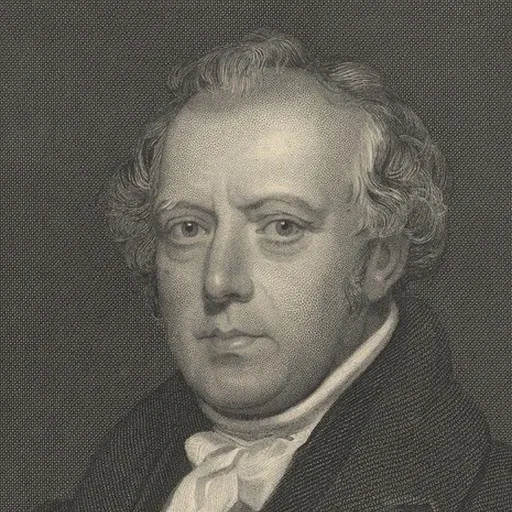
About Richard Oastler
Lived 1789 – 1861 (aged 71). Richard Oastler was a writer, known for Factory Acts.
Richard Oastler (20 December 1789 – 22 August 1861) was a "Tory radical", an active opponent of Catholic Emancipation and Parliamentary Reform and a lifelong admirer of the Duke of Wellington; but also an abolitionist and prominent in the "anti-Poor Law" resistance to the implementation of the "New Poor Law" of 1834. Most notably, as his sobriquet of the "Factory King" indicates, he was at the heart of the campaign for a ten-hour working day in its early years: although less so by the time of its successful culmination in the Factories Act 1847, he retained the sobriquet.
"Moved by pity and indignation at the long hours worked by young children in factories, he devoted his life to their emancipation, and was a tireless champion of the Ten Hours Factory Bill" noted a commemorative plaque erected in Leeds parish church in 1925. "He cannot altogether claim prominence as a political thinker...but history acclaims him not as a politician, but as an agitator" commented the Yorkshire Post on that occasion.
Early years Fixby HallBorn in Leeds, West Riding of Yorkshire, Oastler was the youngest of ten children born to Sarah (a daughter of Joseph Scurr) and Robert Oastler, a linen merchant. Robert continued to live in Leeds when he later became steward for Thomas Thornhill, the absentee landlord of Fixby, a large estate near Huddersfield, and of Calverley (between Leeds and Bradford, to the north of both). When Richard was six, his twelve-year-old brother Robert died as a result of a fire in a flax mill. Richard attended a Moravian boarding school from 1798 to 1806 ("It was there that I learned to be bold, for I was taught there to fear nothing but sin"), and then (his father vetoing Richard's desire to become a barrister) started training to become an architect.
After four years his failing sight forced him to give this up; in 1810 he became a commission agent, dealing in oils and dry-saltery: he also acted as a steward for the Dixons of Gledhow Hall near Leeds, He became involved in charity work in Leeds; sick visiting with Michael Thomas Sadler and organising charitable relief of the destitute. He later claimed that it was this struggle that had broken his health, leaving him liable to periodic breakdowns in health.
Political philosophy To Oastler "Tory-Radical" was not a description of a political philosophy (and certainly not of his) but of a tactical alliance of the supporters of two different philosophies against the Whigs. He was a "Church and King" Tory but, as the Duke of Wellington noted, a strange one. He denied any element of Radicalism in his political philosophy, and regarded himself as an "ultra-Tory" rather than a Peelite "Conservative"; he thought Peel too readily accepted (and adopted) the Whig application of the modern doctrines of "political economy" to the country's problems. He held that God knew better than Malthus: nothing could supersede Biblical injunctions that the poor should not be oppressed and the distressed should be succoured. Market forces were not a "hidden hand" working for some greater good, nor was interference with them imprudent folly. On the contrary I believe that man is a fallen, selfish, ignorant being, and that every unregulated and unrestrained action of his is fraught with evil – that, if left without the restraining and regulating laws of God (which, by our Constitution, must be part and parcel of the laws of the land), instead of preferring such schemes, in the search of his own advantage, as would be advantageous to the society, his selfishness would lead him to injure all for his own benefit. I learn this from the Holy Bible. I have often witnessed it. "Plunder and anarchy": the (eventual) suppression of the Bristol Riots of 1831 Reform on a Whig laissez-faire agenda had worsened the condition of the poor and led to chronic discontent, to which the response was greater centralisation and greater coercion; this was a vicious circle which could only end badly. He had seen the "poor deluded famished Luddites" and thought them to be pitied rather than feared If the working men of England were dealt with according to the Bible rather than "political economy" their economic woes would disappear. With those woes gone support for Reform, Radicalism, trades unionism etc. would evaporate. and be greeted with - (Tremendous cheering) the portrait of Oastler reproduced in this article was given away by the Chartist Northern Star in its series of prints of "Portraits of Patriots".
Factory Reform
"Yorkshire Slavery" In 1830 Oastler, a committed abolitionist, was visiting John Wood of Horton Hall near Bradford, one of the largest worsted spinners in the country. Whilst an existing (virtually un-enforceable) Factory Act specified a minimum age and maximum hours of work for children in cotton mills, it did not apply to other textile industries (such as: silk, flax, woollen and worsted ). Wood, unhappy at the hours and conditions of work for children in Yorkshire worsted mills and his inability to persuade his competitors to ameliorate them, explained his concerns to Oastler and got him to promise to "remove from our factory system the cruelties which are practised in our mills". Oastler wrote the next day a letter to the Leeds Mercury the leading West Riding newspaper contrasting speeches made at Yorkshire anti-slavery meetings with the treatment of children in Yorkshire factories – "Yorkshire Slavery":
Thousands of our fellow-creatures and fellow-subjects, both male and female, the miserable inhabitants of a Yorkshire town, (Yorkshire now represented in Parliament by the giant of anti-slavery principles) are this very moment existing in a state of slavery, more horrid than are the victims of that hellish system 'colonial slavery' These innocent creatures drawl out, unpitied, their short but miserable existence, in a place famed for its profession of religious zeal, whose inhabitants are ever foremost in professing 'temperance' and 'reformation' and are striving to outrun their neighbours in missionary exertions, and would fain send the Bible to the farthest corner of the globe aye, in the very place where the anti-slavery fever rages most furiously, her apparent charity is not more admired on earth, than her real cruelty is abhorred in Heaven. The very streets which receive the droppings of an 'Anti-Slavery Society' are every morning wet by the tears of innocent victims at the accursed shrine of avarice, who are compelled (not by the cart-whip of the negro slave-driver) but by the dread of the equally appalling thong or strap of the over-looker, to hasten, half-dressed, but not half-fed, to those magazines of British infantile slavery the worsted mills in the town and neighbourhood of Bradford!!! "But it shall not be well with the wicked, neither shall he prolong his days." " "A prayer out of a poor man's mouth reacheth to the ears of God, and his reproach cometh speedily." At a monster demonstration by West Riding textile workers at York (Easter 1832) he said "We will have our Act, whatever Parliament will vote"; the Leeds Mercury seized upon this as showing even less respect than the King for the judgement of Parliament, and mockingly dubbed him 'King Richard' and hence 'the Factory King', a title Oastler was happy to accept. Mill-owners (whether reconciled to the principle of state intervention or not) objected that the textile districts did not have the significant pool of unemployed children needed for a 'relay system': it was therefore virtually impossible to attempt to comply with the Act. Furthermore, mill-owner magistrates, who had been barred from hearing cases brought under the previous Factory Acts, were allowed to hear cases under the 1833 Act, which they saw no point in enforcing: only if non-compliance came to the attention of a Factory Inspector (given powers to act as a magistrate by the Act) was there any prospect of a successful prosecution
Blackburn speech of 1836 Oastler's agitation for a Ten-Hour Act having failed, he was temporarily swept aside in favour of a Society for Promoting National Regeneration, the brainchild of John Doherty and Robert Owen, which aimed to secure an eight-hour day by concerted strike action The Standard therefore did not report that Oastler had talked of teaching children to sabotage mill machinery,; "If after this your magistrates should refuse to listen to your complaints under the factory act and again refer you to me, bring with you your children and tell them to ask their grandmothers for a few of their old knitting needles which I will instruct them how to apply to the spindles in a way which will teach these law-defying mill owner magistrates to have respect even to 'Oastler's law* as they have wrongly designated the factory law." and was no longer actively involved in the textile trade or West Riding affairs. The Fleet Papers record a donation by Wood of £100 to the Oastler Liberty Fund which seems to have been originally given to the 'Oastler Testimonial Fund in 1838. 'I know that he still remembers me: I guess why he no longer seeks my company. ... my old friend Wood is ashamed of me.' said Oastler in 1840 the Leeds Intelligencer ceased to publish his letters : John Fielden however stood by him . Oastler's health broke down at the end of 1836; a meeting at Manchester in January 1837 was told he was unable to address it as 'his exertions on behalf of the factory slave had brought him to the edge of the grave'
'The fiend-begotten ...new Poor Law'
A 'Poor Law Bastille': 1835 model design of a workhouse to hold 300 paupers Less than a fortnight later, though, he was back in action at a mass meeting in Huddersfield, but in a new cause : delivering a speech (subsequently published under the (representative) title of Damnation! Eternal damnation to the fiend-begotten 'coarser-food', new Poor Law !) urging resistance to implementation of the 'New Poor Law'. In the preface to this speech, Oastler denounced the Poor Law Amendment Act as an unjust, unChristian measure, declaring
The Poor Law Amendment Act Alarmed at the cost of poor relief in the southern agricultural districts of England (where in many areas it had become a semi-permanent top-up of labourers' wages – the 'allowance system', 'Roundsman system', or 'Speenhamland system' ) Parliament had set up a Royal Commission into the operation of the Poor Laws. Its report had recommended sweeping changes: Out-relief should cease – relief should be given only in workhouses, and upon such terms that only the truly indigent would accept it. Different classes of paupers (men, women, boys, girls; able-bodied, infirm) should be segregated "the separation of man and wife was necessary, in order to ensure the proper regulation of workhouses" There should be a central board with powers to specify standards of pauper treatment and to enforce those standards; this could not be done directly by Parliament because of the legislative workload that would ensue. The ensuing Poor Law Amendment Act set up a three-man Poor Law Commission, an 'at arms' length' quango to which Parliament delegated the power to make appropriate regulations, without making any provision for effective oversight of the commission's doings. Local poor-rates payers still elected their local Board of Poor Law Guardians and still paid for local poor law provisions, but those provisions could be specified to the Board of Guardians by the Poor Law Commission; where they were the views of the local rate-payers were irrelevant. The Act was passed by large majorities, despite Oastler personally lobbying Tory leaders (including the Duke of Wellington) to oppose it. Oastler's objections were that the Act pursued aims dictated by political economy by un-Christian treatment of the poor (and particularly of the married poor: "whom God hath joined together let no man part asunder"), and to ensure this was done with consistent heartlessness was setting up an unconstitutional body. Oastler told the Duke "if that Bill passes, the man who can produce the greatest confusion in the country will be the greatest patriot, and I will try to be that man". The chairman of the commission was Sir Thomas Frankland Lewis, an exact contemporary of Thornhill at Eton
Resistance to the New Poor Law One of the 'Somerset House Despots': Sir Thomas Frankland Lewis, (Chairman of Poor Law Commission 1834–39: at Eton with Oastler's employer 1792–98)The new dispensation was implemented progressively, starting with the southern counties of England, where it achieved a considerable reduction in the poor rates. Not until January 1837 were the first steps taken to introduce the system into the West Riding by setting up 'poor law unions' and electing Boards of Guardians for them. The Poor Law Boards were then to appoint a clerk to administer whatever system of relief was specified for that Union by the central Commission. The Commission intended (or said they intended) to allow the new Poor Law Boards in manufacturing areas to continue out-relief, but opponents of the New Poor Law held that best way to defend out-relief was to prevent new Poor Law Boards being established (or clerks to Poor Law Boards being appointed), since their existence would greatly facilitate the cessation of out-relief should the Commission change its mind (or not be telling the truth). Short Time Committee men played a prominent part in organising protest meetings, disruption of Poor Law Board meetings (Keighley, Huddersfield) and/or election of anti- Poor Law 'Poor Law Guardians' (Huddersfield).
A meeting of Fixby rate-payers agreed to take no part in the election of a Poor Law Guardian; Thornhill instructed his tenants (through Oastler) that they should. Oastler passed on the instruction, but wrote back to Thornhill defending opposition to the appointment of guardians, concluding his letter "But it is no use my writing about these matters -you cannot understand me. My living is in your hands – my conscience is my own." at a by-election in Huddersfield, but was defeated by 50 votes by the Whig candidate. A fresh election was held in July (Parliament automatically being dissolved on the death of King William IV); Oastler stood again at Huddersfield, and was again defeated by 22 votes by a different Whig opponent. When Oastler fell behind in the poll, a mob attacked the hustings and polling had to be suspended: the Riot Act was read and the cavalry called out to restore order. ) and an orator. Lord Howick had dismissed petitions against the New Poor Law on the grounds that they came largely from areas where the new law was not yet in operation; the true views of the agricultural labourers in the areas where it had been applied was approbation as shown by agrarian unrest being much less than in 1830. Oastler responded in a speech in Halifax in July; telling his audience that there was little point in petitioning: the agricultural labourers had petitioned and government had laughed at them; they were now arming secretly. That could only lead to assassinations; better by far to arm openly, as was their right; the government and the poor law administrators would then treat them more civilly: "I would recommend you, every one, before next Saturday night, to have a brace of horse pistols, a good sword and a musket, and to hang them up on your mantelpieces (not by any means to use them). They will petition for you" As with the Blackburn speech, this alarmed and alienated moderate support.
The Anti-Poor Law agitation was however rapidly overtaken and supplanted as the great working-class Radical cause by the more sweeping Chartist movement, (whose constitutional program Oastler did not support); when that collapsed in 1839 (with the failure of the National Petition and a Government crackdown with many leaders arrested and charged with seditious speeches and involvement in unlawful assemblies), so did organised resistance to the New Poor Law. Many of Oastler's associates were involved in Chartism, and Oastler did not disown them: he played a prominent part in raising funds for the defence of J R Stephens; Nonetheless, Oastler was to spend over three years in prison.
Previous difficulties with Thornhill By Oastler's own account,Thornhill's Cowes letter (together with letters exchanged in 1834 and read out in court in July 1840 ) is the only glimpse of his view of the affair other than the one supported by his legal advisers; that Oastler owed money, and Thornhill wanted it; consequently any attempt to go into detail has to be based upon the ex parte statements of Oastler such as his speech on quitting Fixby, the more detailed account in, He eventually married her after her husband's death; their son was by then in his teens (and legally the son of the first husband). Oastler alluded to this rarely and in the vaguest of terms "My master had, many years before I entered on his service, for reasons which until further provoked, I shall forbear to name, exiled himself from the hall of his forefathers": Thornhill's letter was written at Cowes (17 August 1838) and hence without the knowledge of his legal adviser, who (once shown it) persuaded Thornhill to instead send to the papers a letter (also dated as from Cowes, 17 August) saying that Oastler had been sacked because he owed Thornhill money and was devoting his efforts to politics, rather than repaying the debt. Through the incompetence of Oastler's successor as steward of Fixby both letters were published in (different) Yorkshire papers. "He found he had gone too far, and having by his first letter dug a pit for his reputation, he writes another by way of putting a tombstone on it" said Oastler, Thornhill repeatedly postponed the action, which was not heard until July 1840. After the opening statement of Thornhill's counsel, Oastler said if his honesty was not being questioned he was prepared to settle. The Lord Chief Justice assured Oastler that there was no suggestion of dishonesty (Thornhill's counsel said only there had been no suggestion of dishonesty in the material he had laid before the court); He was unable to pay this: Thornhill's lawyer indicated that any indication that Oastler was prepared to declare himself bankrupt (under the Relief of Insolvent Debtors Act) if faced with debtors' prison would avoid any move to put him there, In prison Oastler wrote (weekly) his "Fleet Papers", ostensibly letters addressed to Thornhill reviewing current political affairs, published and sold for 2d per issue . This was the only means by which he could earn money, and the only way he could continue to resist the advances of 'political economy': "I can only now aid by my pen; but I will strive to do the duty of an Englishman, and, "whether they will hear or they will forbear," I will warn the people of the danger to which the Liberal schemes of the self-styled Free-trading Philosophers must eventually lead them.
After prison Oastler, initially recuperating at a nephew's country house, was soon drawn into a series of public meetings agitating for a Ten-Hour Bill, in the aftermath of the Government asserting that millworkers no longer wished for a Ten-Hour Act and making the retention of a twelve-hour limit in the 1844 Factory Act a question of confidence. He was now only a support speaker, and his speeches kept to the less violent tone promised at his Huddersfield homecoming.
In July 1844, having been advised by his Liberation Committee that money was not forthcoming to support him in public life, he advertised himself in Leeds papers as "Umpire, Arbitrator, Agent for the Purchase or Sale of Estates, and for Obtaining or Opposing Private Bills in Parliament". He was a Leeds sharebroker in 1845, by 1846 he was working in a London stockbroking office; in 1849 he was made bankrupt. Thereafter, Oastler was discreetly supported by his friends; from 1851 he edited a periodical The Home following this he undertook a similar speaking tour of textile areas in Scotland. He continued to argue for Protection, and against Free Trade and the "Manchester School", but his appearances at Short Time meetings were now to receive congratulatory addresses, to reminisce, and to pay tribute to former colleagues in the struggle. After an 'alarming illness' at the start of 1861, he recovered sufficiently to again visit Yorkshire to see old friends, but was taken ill en route near Harrogate (8 August 1861) and died there a fortnight later. He was buried in the family vault at Kirkstall, Leeds: he had asked for a simple and private funeral, but many of his old Short Time comrades attended and at their insistence the coffin was carried by twelve factory workers.
Memorials
At the nadir of Oastler's fortunes in 1840, the Leeds Intelligencer told its readers "Important religious, moral, and social consequences have been the fruits of his herculean labours, and it is probable that posterity will decree him a statue". After Oastler's death a national subscription was raised for a permanent memorial to Oastler. The Intelligencer, supporting this, noted that the Ten Hour Act had been so beneficial that it could not serve as that memorial. The ten-hour day was now accepted as normal and proper: consequently it was now passing from remembrance that "the agitation in favour of it was by no means well received, and the struggle that won it was a hard one".
The money to erect a statue was raised (somewhat delayed by the Cotton Famine) and the West Riding town in which the statue was to be erected was voted for by subscribers, Bradford being the overwhelming preference. The statue was unveiled in Forster Square, Bradford (in front of the railway station) on Whit Saturday 1869 by the former Lord Ashley, now Lord Shaftesbury. Church bells were rung and all places of business in Bradford were shut for the occasion. It was estimated that the preliminary procession had involved about 30,000; the crowds at the ceremony and along the procession route totalling over 100,000. The figures, sculpted by John Birnie Philip, were cast from three tons of bronze and cost £1,500. A public house (previously a chapel) in Park Street Market, Brighouse, and a school in the Armley district of Leeds, West Yorkshire, also bear his name.
Don’t just read it —
keep it.
Full-length biographies made to live with: read them, listen on the way to work, watch them tonight.
- E-book
- Audio
- Video
Instant download · yours to keep · every purchase keeps this site free
Important facts
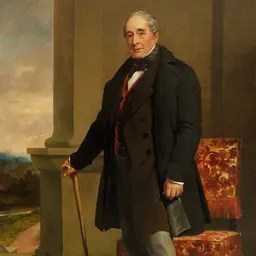
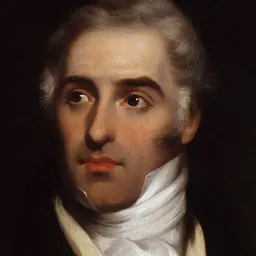
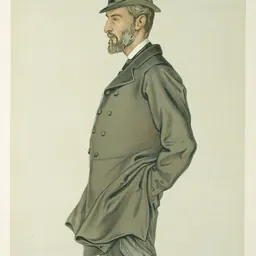
People in Richard Oastler's life
Named in this biography and alive at the same time


Related people
Same field, nearest in time




Contemporaries
People whose lives overlapped Richard Oastler's

Frequently asked questions
Who was Richard Oastler?
Nineteenth century labour reformer (1789-1861)
When was Richard Oastler born?
Richard Oastler was born on 20 December 1789 in Leeds.
When did Richard Oastler die?
Richard Oastler died on 22 August 1861 in Harrogate.
What was Richard Oastler's occupation?
Richard Oastler was a writer.
What was Richard Oastler known for?
Richard Oastler was known for Factory Acts.
Sources & further reading
Cite this page
APA: Biography.guide. (2026). Richard Oastler. https://biography.guide/richard-oastler/
MLA: "Richard Oastler." Biography.guide, https://biography.guide/richard-oastler/.
Chicago: "Richard Oastler." Biography.guide. https://biography.guide/richard-oastler/.
Data last updated: 2026-09-22 · Spot an error? Report a correction.
Portrait: Wikimedia Commons · author & licence
Page generated 2026-09-27 05:01 UTC