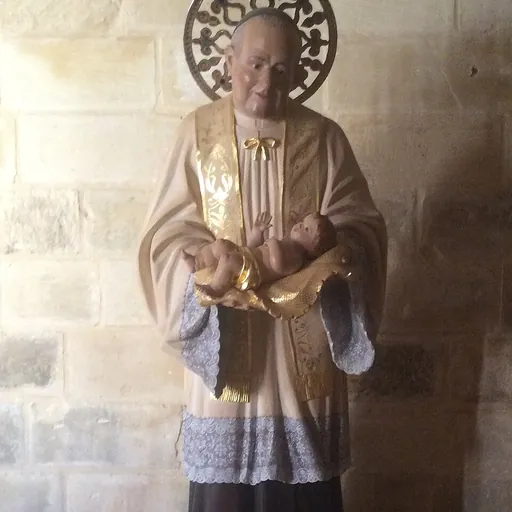
About George Preca
Lived 1880 – 1962 (aged 82). George Preca was a Maltese catholic priest.
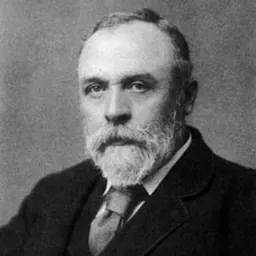
George Franco Preca, T.OCarm (in ) (12 February 1880 – 26 July 1962) was a Maltese Catholic priest, the founder of the Society of Christian Doctrine and a Third Order Carmelite. Pope John Paul II dubbed him "Malta’s second father in faith".
He assumed the religious name of "Franco" after becoming a Third Order Carmelite. He was a popular figure among some groups, and his pastoral care and religious teaching earned recognition. However, his activities raised suspicions of heresy from senior clergy. He was ordered to close down his teaching centres for a time while they could be investigated; they were subsequently re-opened.
His activism earned him praise and in 1952, Pope Pius XII nominated him as a papal privy chamberlain and awarded the rank of Monsignor. These seemed to have been the basis for the 5 Luminous Mysteries promoted by Saint John Paul II in 2002 in his Apostolic Letter Rosarium Virginis Mariae. He was canonized as a saint in 2007.
Life George Preca was born in Valletta on 12 February 1880 as the seventh of nine children of Vincent and Nathalie Ceravolo Preca. His father was both a merchant and a health inspector.
In 1886, the family relocated to Ħamrun. He received both his First Communion at some stage in his childhood and then his Confirmation on 2 August 1888 in the Parish Church of St Cajetan, Ħamrun.
On 8 April 1905 his confessor Aloysius Galea died and Preca would often recount that not long after Galea seemingly appeared to him and encouraged his call to the priesthood. In his studies he began to write a rule in Latin for use in a planned religious movement for permanent deacons that he wished to establish but this desire subsided over time. The idea remained much on Preca's mind but he altered the idea after being ordained. Preca received his ordination to the priesthood alongside thirteen others on 22 December 1906 from Bishop Pietro Pace and he celebrated his first Mass on 25 December – Christmas – at the Saint Cajetan parish church in Ħamrun. In February 1907 he arranged a spiritual conference at the Ta' Nuzzo church; later meetings were held at 6 Fra Diegu Street. This led to the founding of a new religious movement on 7 March 1907 at Ħamrun at the first meeting of the Society of Christian Doctrine (known locally as M.U.S.E.U.M.).
Senior clergy began to suspect that the rapid growth and popularity of Preca's movement could have heretical implications, especially as it involved so many of the low skilled and uneducated. The Vicar General, Mgr Salvatore Grech, issued an order in 1909 that all the "MUSEUM centres" should be closed. A protest by other parish priests led to the order being rescinded. Nevertheless, the new society continued to receive criticism in the press, and in 1916 Bishop Maurus Caruana opened a formal enquiry. This cleared the movement of any negative behaviour and paved the way in due course for ecclesiastical recognition of the Society of Christian Doctrine on 12 April 1932.
It was at the height of the crisis that Preca claimed to have received a powerful religious experience in 1910 one morning as he passed the Marsa Cross – triggered by a child aged twelve pushing a cart with a bag of manure who had shouted: "Lend me a hand!". Preca helped him and as he placed his hands on the cart he felt profound spiritual calmness and understood that he had experienced a revelation as the boy symbolized Christ and the wagon, the work of evangelizing.
These were: After Jesus Christ was baptized in the Jordan, he was led into the desert. Jesus reveals Himself as true God by word and by miracles. Jesus teaches the Beatitudes on the mountain. Jesus is transfigured on the mountain. Jesus has His Last Supper with the Apostles.
Veneration Venerable
The cause towards canonization by the Catholic Church formally opened on 13 March 1975 under Pope Paul VI when Preca was given the title "Servant of God" after the Congregation for the Causes of Saints issued its official "nihil obstat". Mikiel Gonzi (the Archbishop of Malta) subsequently issued the decree on 24 June 1975 that would pave the path for a full diocesan investigation to begin. The process opening in Malta on 25 February 1976 and continued for over a decade until its solemn closure on 23 June 1988 under Joseph Mercieca. The Congregation validated the process in Rome on 19 June 1992 and the postulator later submitted the Positio for assessment in 1998. A congress of six theologians first approved the cause on 16 March 1999 while the members of the Congregation likewise voted in approval of the cause on 1 June 1999. The confirmation of Preca's model life of "heroic virtue" on 28 June 1999 allowed for Pope John Paul II to grant the title of Venerable
Beatification
However, for Preca to be beatified a miracle had to be obtained as a result of his intercession - or at least a healing that conventional science could not easily explain. One such miracle was investigated and it received validation from the Congregation on 21 November 1997 before a board of seven medical appointees approved it on 10 June 1999 as did six theologians on 22 October 1999 and then the Congregation on 11 January 2000. The Pope expressed his view on 27 January 2000 that this healing was indeed a miracle and beatified Preca on 9 May 2001 while on a visit to Malta, and referred to him on that visit as the "Second Apostle of Malta" (Saint Paul being the first). The planned treatment would have been a liver transplant, but doctors were concerned of the risk of organ rejection. The baby's parents were said to have put a glove used during Preca's exhumation on the infant; the child recovered to the point the doctors said an operation was not needed at all. The report received Congregation validation on 17 December 2004 in Rome and then the approval of the Vatican medical board on 23 February 2006. The theologians approved this as well on 30 October 2006 as did the Congregation on 9 January 2007. Pope Benedict XVI approved the healing as a miracle on 22 February 2007 which resulted from Preca's direct intercession, and Preca was canonized on 3 June 2007 in Saint Peter's Square after having formalized the date for the celebration at a consistory on 23 February 2007 at 11:00am. The canonization cemented Preca as the second Maltese saint (Saint Publius being the first) and in his remarks the pope called Preca "a friend of Jesus".
A statue of Preca was unveiled at the church of Saint Cajetan parish in Ħamrun, Malta, during a solemn Mass that Archbishop Paul Cremona presided over on 17 December 2009. A statue was placed on the same spot where Preca used to hear confessions. Beside the statue there is also his relic with a sample of his blood. The bronze statue is the work of sculptor Gianni Bonnici and was made in Caggiati in Parma.
A portrait bust commemorates Preca outside St. Patrick's Cathedral in East Melbourne, Australia.
Don’t just read it —
keep it.
Full-length biographies made to live with: read them, listen on the way to work, watch them tonight.
- E-book
- Audio
- Video
Instant download · yours to keep · every purchase keeps this site free
Important facts
People in George Preca's life
Named in this biography and alive at the same time




Related people
Same field, nearest in time

Contemporaries
People whose lives overlapped George Preca's


Frequently asked questions
Who was George Preca?
Maltese Roman Catholic priest (1880–1962)
When was George Preca born?
George Preca was born on 12 February 1880 in Valletta.
When did George Preca die?
George Preca died on 26 July 1962 in Santa Venera.
What was George Preca's occupation?
George Preca was a catholic priest.
What nationality was George Preca?
George Preca was Maltese.
Sources & further reading
Cite this page
APA: Biography.guide. (2026). George Preca. https://biography.guide/george-preca/
MLA: "George Preca." Biography.guide, https://biography.guide/george-preca/.
Chicago: "George Preca." Biography.guide. https://biography.guide/george-preca/.
Data last updated: 2026-09-20 · Spot an error? Report a correction.
Page generated 2026-09-27 05:09 UTC