
About Mikiel Gonzi
Lived 1885 – 1984 (aged 98). Mikiel Gonzi was a Maltese catholic priest, politician and catholic bishop.
Sir Michael Count Gonzi (born Mikiel / Michele Gonzi: 13 May 1885 – 22 January 1984) was Roman Catholic Archbishop of Malta from 1944 until 1976. He had been enthroned as Bishop of Malta in December 1943, and was consecrated as the first Archbishop of Malta in 1944. He had also been Bishop of Gozo and an elected Labour Senator in the Malta Legislative Assembly.
Archbishop Count Gonzi is known for his intervention in politics, having also interdicted the Labour Party and demanding people not to vote for them. Despite this, 43.7% of the population, in 1966, voted for the Dominic Mintoff-led Labour Party and this was interpreted as a decline in the Church's influence and declining religious, social and political power. His support for public harassment, mainly politicians, led to an outline of 'Six Points' of church and state separation, where eventually the church was confined to spiritual matters.
Gonzi was a staunch opponent of homosexuality, on his belief that it was a grave sin, "unnatural" and practiced by the "sick". Similarly, he was against equal rights between men and women, and demanded punishment for adulterers. He was in support of the 're-introduction' of the Italian language, instead of promoting Maltese, but his waited opportunism was never realised. He was a social smoker who generally smoked cigars.
Early life and ordination
He was born as Michele Gonzi in Vittoriosa on 13 May 1885. He was the son of Giuseppe Gonzi (1840 - 1935) and Margherita Tonna. He had one younger brother, Lorenzo Gonzi (1888 - 1934), and four elder half-siblings from his father's first marriage to Maria Xerri. Gonzi's younger brother, Lorenzo, was the paternal grandfather of Lawrence Gonzi, 12th Prime Minister of Malta from 2004 - 2013. Gonzi was ordained to the priesthood in 1908. On St. Patrick's Day, 17 March 1961, Gonzi 'interdicted' supporters of the Labour Party, specifically, the Party's Executive Committee, readers, distributors and advertisers in the Party papers and voters and candidates of the Party. The key issue became whether the state should be secularised in line with modern parameters, or whether the Church should retain its privileged position.
Those 'interdicted' could not receive the sacraments and, when they died, were buried in unconsecrated ground, in a part of the cemetery popularly called by the pejorative term Il-Miżbla. This included Labour deputy leader and prominent novelist Ġużè Ellul Mercer.
During 'interdiction', the political climate in Malta was very tense with the church organising rallies for preparation of the spirit in view of the forthcoming elections. The Labour Party rallies were also often disrupted by continuous churchbell ringing and whistling and other deliberate noise by Catholic laymen. Sermons during Mass were predominantly characterised by political issues and so were pastoral letters read in church.
Interdiction would only be lifted in 1964 and peace with the Labour Party only made in 1969.
Distinctions
Archbishop Gonzi was appointed a Knight Commander of the Order of the British Empire (K.B.E.), entitling him to be known as Sir Michael Gonzi, in the 1946 New Year Honours. Gonzi was knighted for his services during the Second World War when, as Bishop of Gozo during a critical phase of the war when supplies were running low, he encouraged Gozitan farmers to put their hoarded grain on the market to bring down the price of bread.
In 1949, on the occasion of the silver jubilee of his consecration as Bishop, Pope Pius XII made him an Assistant at the Pontifical Throne and created him a Papal Count for his works on behalf of the Papacy. In the same year he was awarded an honorary LL.D. degree by the University of Malta, and was appointed Bailiff Grand Cross of the Sovereign Military Order of Malta.
In 1963, Generalísimo Francisco Franco made Count Gonzi a member of the Order of the Cross of St Raimond de Peñafort. He was also appointed Commander of the Order of the Holy Sepulchre in 1965.
Death
Archbishop Gonzi died on 22 January 1984, aged 98.
Don’t just read it —
keep it.
Full-length biographies made to live with: read them, listen on the way to work, watch them tonight.
- E-book
- Audio
- Video
Instant download · yours to keep · every purchase keeps this site free
Important facts
People in Mikiel Gonzi's life
Named in this biography and alive at the same time



Related people
Same field, nearest in time
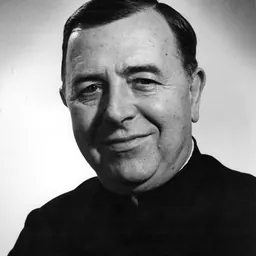


Contemporaries
People whose lives overlapped Mikiel Gonzi's



Frequently asked questions
Who was Mikiel Gonzi?
Catholic bishop (1885-1984)
When was Mikiel Gonzi born?
Mikiel Gonzi was born on 13 May 1885 in Birgu.
When did Mikiel Gonzi die?
Mikiel Gonzi died on 22 January 1984 in Malta.
What was Mikiel Gonzi's occupation?
Mikiel Gonzi was a catholic priest, politician and catholic bishop.
What nationality was Mikiel Gonzi?
Mikiel Gonzi was Maltese.
Sources & further reading
Cite this page
APA: Biography.guide. (2026). Mikiel Gonzi. https://biography.guide/mikiel-gonzi/
MLA: "Mikiel Gonzi." Biography.guide, https://biography.guide/mikiel-gonzi/.
Chicago: "Mikiel Gonzi." Biography.guide. https://biography.guide/mikiel-gonzi/.
Data last updated: 2026-09-20 · Spot an error? Report a correction.
Page generated 2026-09-27 05:31 UTC