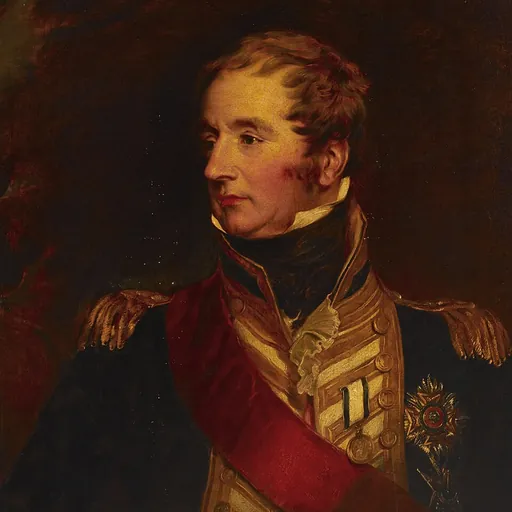
About George Martin
Lived 1764 – 1847 (aged 82–83). George Martin was a British naval officer.
Admiral of the Fleet Sir George Martin, (1764 – 28 July 1847) was an officer of the Royal Navy who saw service during the American War of Independence, and the French Revolutionary and Napoleonic Wars. During his long naval career he took part in several significant battles, for which he was awarded a number of honours and promotions; he commanded ships at the battles of Cape St. Vincent and Cape Finisterre.
George Martin was born into an important naval dynasty, related to the Rowley family, and the grandson of Admiral of the Fleet Sir William Rowley on his mother's side, and great-nephew of Admiral Sir William Martin on his father's side. He spent his early career serving on ships commanded by his uncle, Captain, later Vice-Admiral, Joshua Rowley. He saw action in the West Indies, and had risen to command his own ship by the end of the war with America.
The years of peace temporarily left him unemployed, but the outbreak of war with revolutionary France in 1793 provided the opportunity to impress his superiors. Receiving command of several ships, he fought with Jervis at Cape St. Vincent, and afterwards participated in an action that saw the capture of one Spanish frigate and the destruction of another. He then served in the Mediterranean, at first at the blockade of Malta, and then off Egypt, before going ashore during the temporary peace.
The resumption of hostilities in 1803 saw him returning to service, and in 1805 he saw action at the Battle of Cape Finisterre under Robert Calder. Promoted to rear-admiral shortly afterwards, he provided his testimony for Calder's court-martial, and after a short spell ashore, returned to sea. He took part in the blockade of Cádiz and operations in support of British forces in Italy, before moving ashore towards the end of the wars. He received various promotions and honours, commanding at Portsmouth for several years, and being appointed to a number of chivalric orders. Martin became rear-admiral and then vice-admiral of the United Kingdom towards the end of his life before dying in 1847.
Family and early life George Martin was born in 1764, the son of William Martin, a captain in the navy, and his wife Arabella, the daughter of Admiral of the Fleet Sir William Rowley. George's great-uncle was Admiral Sir William Martin, who had fought in the War of the Austrian Succession under Admirals Norris and Vernon. His name was entered on the books of the yacht on 13 December 1771, but he did not actually enter the navy until 20 November 1776, when he became a captain's servant aboard his uncle, Joshua Rowley's ship. In November Martin was assigned to escort an expedition to the Leeward Islands under Vice-Admiral Sir John Laforey, with a military force commanded by Lieutenant-General Sir Ralph Abercromby. During the battle Irresistible sustained casualties of five killed and 14 wounded. The 74-gun had been present at the battle flying the flag of Commodore Horatio Nelson. Captain had been badly damaged in the battle, and Nelson transferred his pennant to Irresistible the day after the battle. Sir John Jervis was later to record that the skill and daring involved in chasing the Spanish ships past the dangerous reefs at the entrance to the bay made the action "one of the most notable that had ever come under his observation". He served in the Mediterranean with Rear-Admiral Sir John Duckworth's squadron from June 1799, and the following year was part of the blockade of Malta. He was nominated a Colonel of Marines on 23 April 1804, and the following day transferred to the 90-gun . He remained in her until taking command of the 90-gun on 21 November, and was still in command when he joined Sir Robert Calder's fleet and took part in the Battle of Cape Finisterre on 22 July 1805. He afterwards resigned his command, on 16 September, and moved ashore, receiving a promotion to rear-admiral on 9 November. He gave evidence in the court-martial in Calder's conduct at Finisterre towards the end of December, and on 17 January 1806 took up the post of second in command at Portsmouth. He held the position until 9 November 1806, when he returned to sea, joining Collingwood's fleet blockading the remnants of the French and Spanish fleet at Cádiz, before moving to the Italian coast. He was also aboard the 90-gun .
Mediterranean command Martin oversaw the capture of the Italian islands of Ischia and Procida in June 1809, and in October he and his flagship were dispatched with a small squadron to chase several French ships that had escaped from Toulon under Rear-Admiral François Baudin. After a promotion to vice-admiral on 31 July 1810 Martin took command of the naval forces at Palermo, which had been tasked with supporting Sir John Stuart's forces in Calabria. He remained in this role for the next two years, shifting his flag to and then in 1813. He struck his flag on 24 June 1814 and the following day was nominated a Knight Bachelor on the occasion of the Prince Regent's visiting the fleet at Spithead. and on 20 February 1821 he was further advanced to a Knight Grand Cross of the Order of the Bath.
Postwar Martin continued to serve in the navy after the end of the Napoleonic Wars. Advanced to full admiral on 19 July 1821, he was appointed Commander-in-Chief, Portsmouth on 27 March 1824, with his flag aboard the 100-gun . He became Vice-Admiral of the United Kingdom in April 1834, a post he held until November 1846. He was appointed a Knight Grand Cross of the Order of St Michael and St George on 17 May 1837 in recognition for his services against the French at Malta, and was promoted to Admiral of the Fleet on 9 November 1846. He briefly became Vice-Admiral of the United Kingdom again on 10 July 1847 until his death later that month. Martin also served for some time as the vice-president of the Naval Charitable Society.
Don’t just read it —
keep it.
Full-length biographies made to live with: read them, listen on the way to work, watch them tonight.
- E-book
- Audio
- Video
Instant download · yours to keep · every purchase keeps this site free
Important facts
People in George Martin's life
Named in this biography and alive at the same time


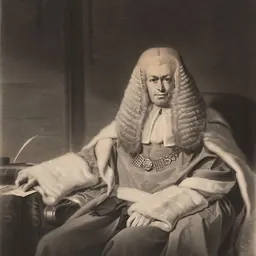
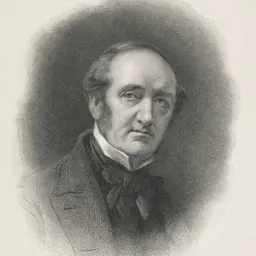

Related people
Same field, nearest in time



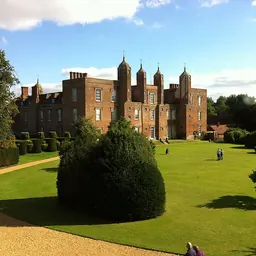
Contemporaries
People whose lives overlapped George Martin's




Frequently asked questions
Who was George Martin?
British Royal Navy admiral (1764-1847)
When was George Martin born?
George Martin was born in 1764.
When did George Martin die?
George Martin died on 28 July 1847 in Berkeley Square.
What was George Martin's occupation?
George Martin was a naval officer.
What nationality was George Martin?
George Martin was British.
Sources & further reading
· DBpedia: George Martin (Royal Navy officer)
Cite this page
APA: Biography.guide. (2026). George Martin. https://biography.guide/george-martin-naval-officer/
MLA: "George Martin." Biography.guide, https://biography.guide/george-martin-naval-officer/.
Chicago: "George Martin." Biography.guide. https://biography.guide/george-martin-naval-officer/.
Data last updated: 2026-09-22 · Spot an error? Report a correction.
Portrait: Wikimedia Commons · author & licence
Page generated 2026-09-27 05:03 UTC